![Gossip Lanka News [English]](https://blogger.googleusercontent.com/img/a/AVvXsEhYm2aFFq-bIW1nWX-RrqnPFoIsVos6_VCVz8BpLt0QJi55GNXHXC2fugeRvL0qUStEuCfs7Sfu6ZiSlhrkldxfGuE_wzy5gitY6rMZ2KSi8VBbGvkgXLks37RwZV-4-HKbWiNLRxB8C_r1e4z3mpxFTMPDJPEADoG8E-bZteWFipeD5KNGbjvCfqEfKw=s300 "Gossip Lanka News [English]")
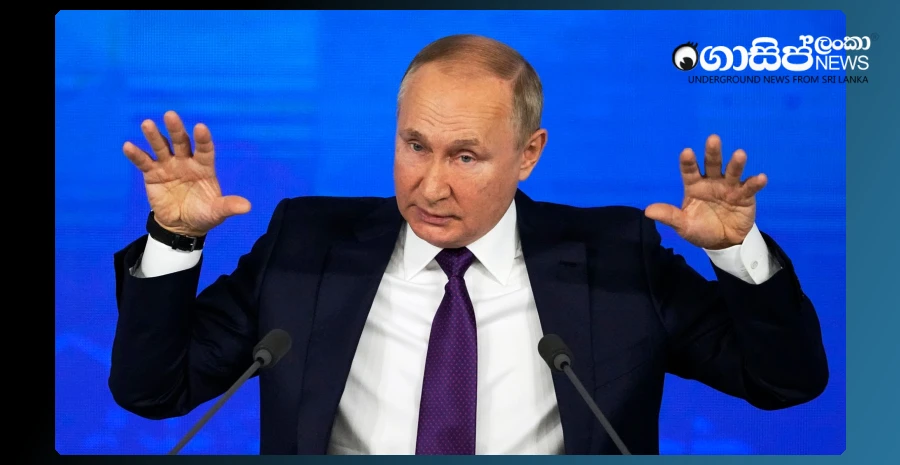
A senior British intelligence official has warned that Russian President Vladimir Putin is attempting to create a wider conflict across Europe, following Russia's failure to achieve its anticipated victories in the Ukraine war. Anne Keast-Butler, Director of GCHQ, Britain's intelligence and security agency, stated that there is an increase in daily hybrid attacks carried out by Russia targeting Britain and Europe.
She further stated that intelligence agencies are actively working to counter Russia's reckless behavior, including hostile acts of sabotage and assassination attempts.She made these remarks during her annual address at an event held at Bletchley Park in Britain, pointing out that Putin's aim is to divide NATO and create disunity among Western countries. Intelligence agencies believe that Russia is attempting to destabilize the economies and institutions of countries through these hybrid attacks, which include cyberattacks, acts of sabotage, and disinformation campaigns. European officials have cited activities such as placing explosives on a railway line in Poland, disrupting air traffic control systems in Sweden, and a hacker attack on a dam in Norway as evidence of this.
In the face of such threats, European countries are increasing their defense spending and strengthening mutual cooperation, with Britain and Poland having made arrangements to enter into a new defense and security agreement. Despite the Russian military continuing the war while suffering heavy casualties, many intelligence officials believe that Putin's ambitions do not end with Ukraine and that one day it could pose a threat to the whole of Europe.
Additionally, Ms. Keast-Butler also focused on China, which has become a global powerhouse in science and technology. She emphasized that relations between Russia and China have grown closer since the start of the Ukraine war, and their joint efforts against Western countries pose a serious challenge to Britain and its allies. She further stressed the importance for Britain and its allies to protect their technological advantage in the face of rapid technological advancements and a contentious geopolitical climate.