![Gossip Lanka News [English]](https://blogger.googleusercontent.com/img/a/AVvXsEhYm2aFFq-bIW1nWX-RrqnPFoIsVos6_VCVz8BpLt0QJi55GNXHXC2fugeRvL0qUStEuCfs7Sfu6ZiSlhrkldxfGuE_wzy5gitY6rMZ2KSi8VBbGvkgXLks37RwZV-4-HKbWiNLRxB8C_r1e4z3mpxFTMPDJPEADoG8E-bZteWFipeD5KNGbjvCfqEfKw=s300 "Gossip Lanka News [English]")
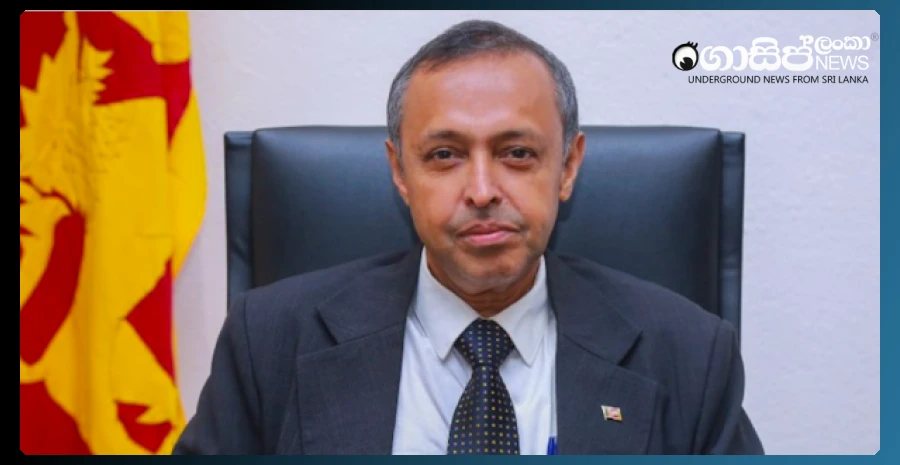
Professor Kapila Perera has decided to immediately resign from the post of Secretary to the Ministry of Transport, Highways and Urban Development. A Supreme Court ruling delivered last week against the violation of fundamental rights of a senior public official who served in the same ministry has directly led to this resignation.
The professor has officially informed the Ministry of Public Administration, Provincial Councils and Local Government of his resignation, and steps have been taken to duly inform President Anura Kumara Dissanayake about this.Professor Kapila Perera, who is thus stepping down from the post of Secretary in the state administration, is expected to actively rejoin his university academic service in the future. Professor Kapila Perera, who previously served as the Vice-Chancellor of the University of Moratuwa for a long period, is a prominent official who also held responsibilities as the Secretary to the Ministry of Education during the administration of former President Gotabaya Rajapaksa.
The Supreme Court ruled on the 19th that Professor Kapila Perera, who was then the Secretary to the Ministry, had violated the fundamental human rights of Mr. W.S. Sathyananda, who was appointed as an Additional Secretary to the Ministry of Transport, Highways, Ports and Civil Aviation, by obstructing him from performing his duties in that post and subjecting him to severe humiliation and serious mental distress. The apex court announced this decision after extensively hearing a fundamental rights petition filed by Mr. W.S. Sathyananda, an officer of the Special Grade of the Sri Lanka Administrative Service, regarding the injustice he suffered. This historic judgment was pronounced by Supreme Court Justice Arjuna Obeyesekere with the concurrence of the bench comprising Dr. Sobhitha Rajakaruna and Janak de Silva.
The petitioner, Mr. Sathyananda, stated before the court that he is an officer with a long and mature experience of about 30 years in the public administration service. According to an official letter issued by the Ministry of Public Administration on December 18, 2024, he was appointed to the post of Additional Secretary to the Ministry of Transport, Highways, Ports and Civil Aviation, and accordingly, he reported for duty properly on the same day. The petitioner further revealed to the court that at about 12:30 PM on that day, the Ministry Secretary, Professor Kapila Perera, came to his official room and ordered him to leave the office premises immediately, saying, "Your service is not needed here." He requested a fair ruling, stating that due to the Ministry Secretary's behavior, which was completely unbecoming of a high-ranking public official, he was severely helpless, humiliated, and subjected to serious mental distress, and that his fundamental human rights were completely trampled upon by this arbitrary conduct.
Pronouncing the judgment, Justice Arjuna Obeyesekere specifically pointed out that according to Rule 107 of the Public Service Commission Rules contained in Gazette Extraordinary No. 2310/29 issued on December 14, 2022, the absolute and statutory power to appoint an Additional Secretary rests solely with the Public Service Commission. Furthermore, it was clearly emphasized in the judgment that according to Article 61 of those rules, any person who attempts to influence or obstruct a decision of the Public Service Commission or one of its committees, directly or indirectly, except in the course of a lawful duty, shall be guilty of an offense, and such an offense may be punishable with a fine of one hundred thousand rupees or imprisonment for 7 years, or both.
Accordingly, the Supreme Court concluded in its judgment that the Ministry Secretary's arbitrary interference with a lawful appointment made by the Public Service Commission seriously undermined the Rule of Law in the country and completely breached the public's trust in high-ranking officials. The Supreme Court pointed out that a public official is a public trustee and must ensure that the powers vested in them are exercised with utmost transparency based on public trust, and that all citizens of the country have the absolute right to expect such exemplary and disciplined conduct from public officials at every level. It was emphasized that merely because a Ministry Secretary has administrative oversight powers, attempting to usurp the statutory powers reserved solely for the Public Service Commission regarding the appointment and transfer of officials is a serious offense.
The Supreme Court concluded that the respondent Secretary had unlawfully violated the professional and personal dignity due to the petitioner as an independent person and a respectable public official, and accordingly unanimously ruled that he had directly violated the fundamental human right to "equal treatment before the law" guaranteed by Article 12(1) of the Constitution.