![Gossip Lanka News [English]](https://blogger.googleusercontent.com/img/a/AVvXsEhYm2aFFq-bIW1nWX-RrqnPFoIsVos6_VCVz8BpLt0QJi55GNXHXC2fugeRvL0qUStEuCfs7Sfu6ZiSlhrkldxfGuE_wzy5gitY6rMZ2KSi8VBbGvkgXLks37RwZV-4-HKbWiNLRxB8C_r1e4z3mpxFTMPDJPEADoG8E-bZteWFipeD5KNGbjvCfqEfKw=s300 "Gossip Lanka News [English]")
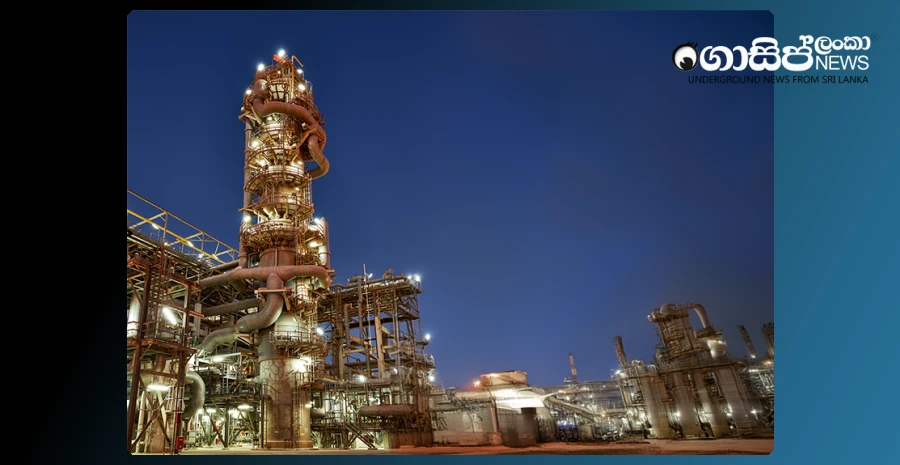
The military conflict, which began in late February 2026 with attacks by US and Israeli forces on Iranian targets, has plunged the global energy market into a severe crisis, with Qatar's liquefied natural gas (LNG) supply becoming the epicenter of this shock. QatarEnergy, the world's largest producer supplying between 20% and 25% of global LNG trade, completely halted production at its main facilities in Ras Laffan and Mesaieed following drone and missile attacks by Iran on March 2, 2026.
Due to these attacks on energy infrastructure, the Qatari government immediately declared a force majeure regarding natural gas deliveries. It is expected that even if the military situation ceases immediately, restarting production will take several weeks or months, owing to the necessary safety procedures to prevent equipment damage and the need for a systematic recommissioning of machinery.This crisis is directly linked to the Strait of Hormuz, a narrow sea lane located between Iran and Oman. Representing a fifth of all global seaborne LNG trade, many exports from both Qatar and the United Arab Emirates must pass through this perilous waterway. Due to threats by Iranian forces to attack commercial vessels, the Strait has now been effectively closed or severely restricted for commercial shipping, with relevant vessel traffic data indicating that many LNG carriers have either halted their journeys or diverted to alternative routes. Although the United States has stated that this sea lane remains open, reports confirm that vessel traffic through it has been completely disrupted.
Although warnings have been issued that crude oil prices could rise to $150 per barrel if current disruptions persist, the shock to the natural gas market has been far more severe and immediate. The Dutch TTF, the European benchmark gas price index, surged by over 50% in the initial days, reminiscent of the 2022 energy crisis. Similarly, the Asian spot LNG price index (JKM) has risen by nearly 40%, significantly impacting countries like India, China, Japan, and South Korea, which purchase over 80% of Qatar's exports. Countries such as India have already begun rationing energy, and buyers are actively scrambling for spot cargoes or alternative suppliers. Financial analysts like Goldman Sachs have warned that if the blockade in the Strait of Hormuz lasts for about a month, European gas prices could increase by 130% or more, severely impacting economic growth in Europe and Asia.
Qatar's Energy Minister Saad al-Kaabi has warned that if this conflict persists long-term, energy exports from the entire Gulf region could cease within a few weeks. He further emphasized that in such a scenario, the global economy could collapse due to soaring prices, inflation, and supply shortages. Unlike crude oil, which can be sent via alternative routes through pipelines or other means, the transportation of liquefied natural gas relies almost entirely on vessels traversing this single perilous sea lane, leaving no easy alternative for Qatari production. This event has sharply shifted the focus of energy risk in the Middle East region from crude oil to gas transportation routes. While American LNG exporters might see short-term gains as buyers turn to alternative supplies, a prolonged war creates a broad risk of extreme price volatility, inflationary pressure, and economic setbacks in gas-dependent economies, and the overall situation remains highly unstable amidst the ongoing military conflicts.