![Gossip Lanka News [English]](https://blogger.googleusercontent.com/img/a/AVvXsEhYm2aFFq-bIW1nWX-RrqnPFoIsVos6_VCVz8BpLt0QJi55GNXHXC2fugeRvL0qUStEuCfs7Sfu6ZiSlhrkldxfGuE_wzy5gitY6rMZ2KSi8VBbGvkgXLks37RwZV-4-HKbWiNLRxB8C_r1e4z3mpxFTMPDJPEADoG8E-bZteWFipeD5KNGbjvCfqEfKw=s300 "Gossip Lanka News [English]")
In an era where complaints about brain drain are rising daily, an unparalleled courageous daughter from Southern Sri Lanka has reached the pinnacle of medical education in this country, bringing new hope to the entire nation.
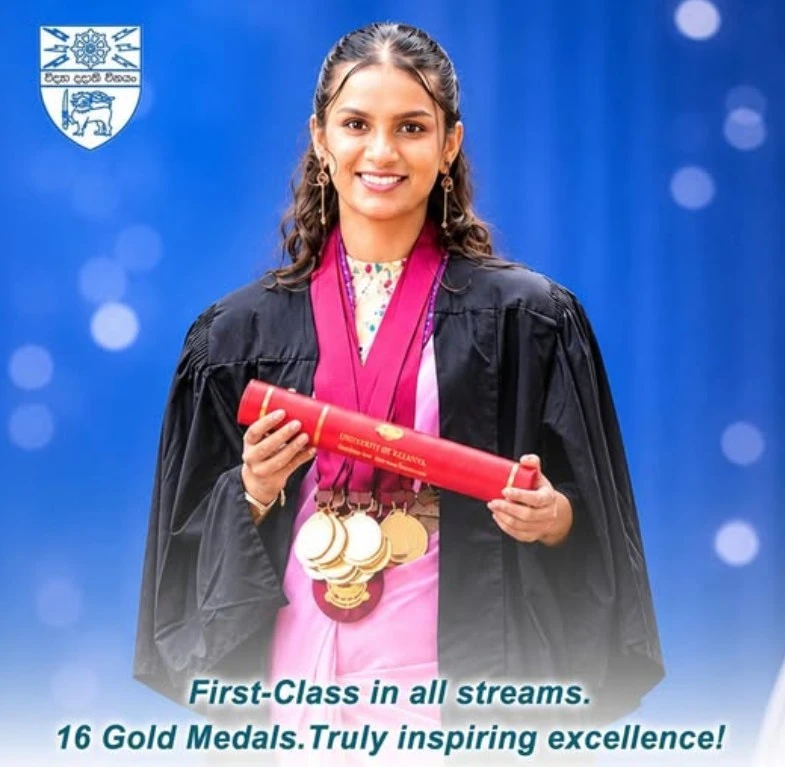
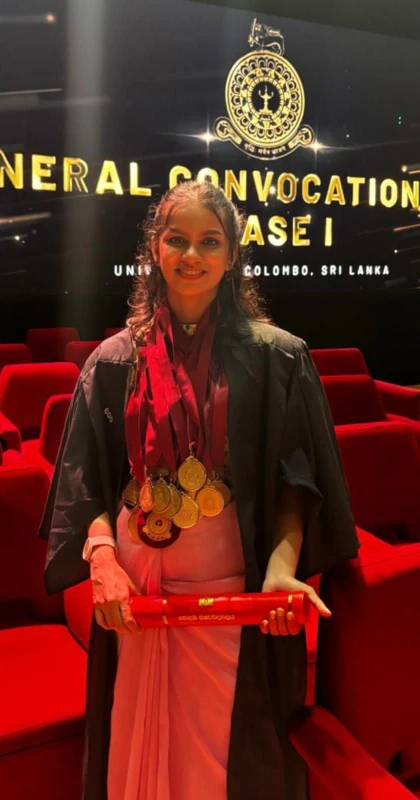
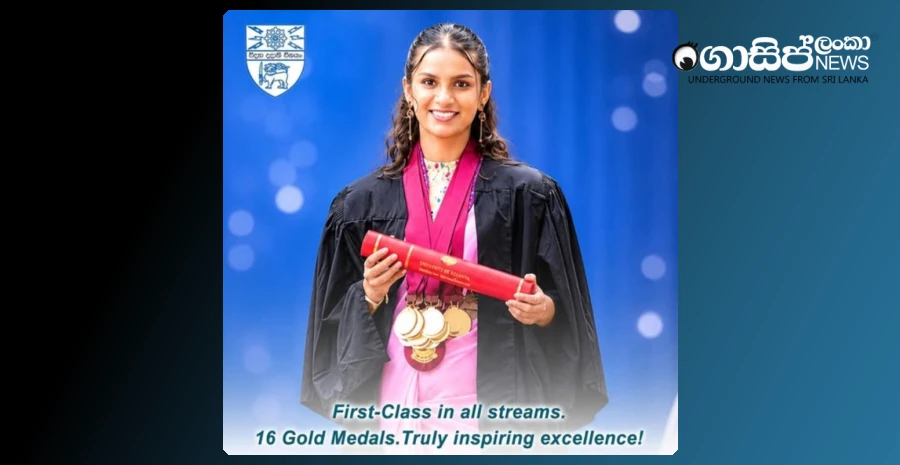
Winning the Valedictorian award, the highest honor for a student graduating from the Faculty of Medicine, University of Colombo, Dr. Hashini Rangika Epa Arachchi has made history as one of the most outstanding medical graduates in recent times. She passed all five major subject streams of her medical degree with first-class honors, securing sixteen gold medals and the University Academic Excellence Award.
This extraordinary achievement by Dr. Hashini, an alumna of Dharmasoka College, Ambalangoda, is not merely the success of one individual. It is the proud story of a girl from an ordinary family in the Southern Province who, through her indomitable courage and dedication, conquered the elite educational framework of Colombo. Today, photographs of her are proudly shared across social media and among alumni groups, as she has become a living inspiration for thousands of schoolchildren, especially young girls who dream of entering the fields of science and technology.
Hashini's excellence is not limited to textbooks or examinations. As a new medical doctor, she has already entered the world of research, exploring new dimensions in cancer treatment. Her experimental paper on 'Cancer Reversion Therapy' – the science of restoring cancer cells to their normal state instead of destroying them through traditional chemotherapy – clearly reflects her broad vision. Her interest in this modern treatment method, which minimizes side effects for patients, is a significant step for the future of cancer treatment in this country.
However, amidst this exceptional achievement, a significant problem arises before us. Is our country's existing medical system prepared to create a suitable environment for the future of a young doctor with such brilliant intellect, who is venturing into a complex field like cancer research that captures global attention? If her innovative abilities are not given due recognition and research facilities, will she, like many talented individuals we have seen recently, be compelled to move to another country where her potential can be fully realized? This is a serious question on everyone's mind.
The sixteen gold medals adorning Dr. Hashini's neck are not mere pieces of metal; they are shining symbols of invaluable hope that, if properly nurtured at the right time, can heal a nation afflicted by illness.