![Gossip Lanka News [English]](https://blogger.googleusercontent.com/img/a/AVvXsEhYm2aFFq-bIW1nWX-RrqnPFoIsVos6_VCVz8BpLt0QJi55GNXHXC2fugeRvL0qUStEuCfs7Sfu6ZiSlhrkldxfGuE_wzy5gitY6rMZ2KSi8VBbGvkgXLks37RwZV-4-HKbWiNLRxB8C_r1e4z3mpxFTMPDJPEADoG8E-bZteWFipeD5KNGbjvCfqEfKw=s300 "Gossip Lanka News [English]")
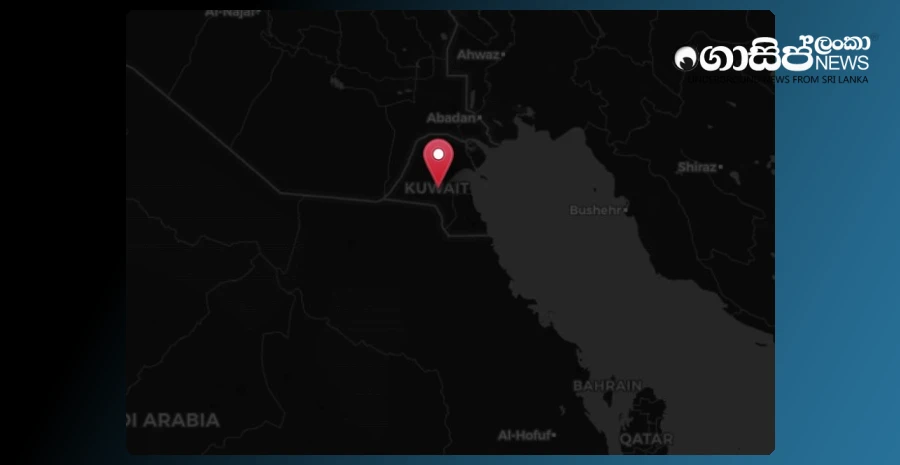
Amidst the ongoing intense offensive situation and fears surrounding global energy supply, Kuwait has taken steps to cut its crude oil production. Kuwaiti authorities have confirmed that two of their border guards have died due to missile and drone attacks targeting the Gulf region.
However, it has not yet been definitively clarified whether these deaths are a direct result of an Iranian attack.Meanwhile, the country's military states that operations to destroy enemy missiles and drone attacks in the air via Kuwaiti air defense systems are continuing without interruption. It was reported that Saudi Arabia, Qatar, and Kuwait faced a new series of attacks last Sunday. A drone attack also targeted fuel depots at Kuwait International Airport, and the resulting fire has now been brought under control, according to the Kuwait News Agency. Authorities in the country describe this incident as a direct attack targeting their essential infrastructure.
Due to threats from Iran to oil tanker traffic through the Strait of Hormuz, Kuwait has temporarily restricted its oil production and refining activities. Kuwait, the fifth-largest oil producer in OPEC, maintained a production capacity of 2.6 million barrels of oil per day last January. However, they have not yet officially announced the extent of this oil cut, and the Kuwait Petroleum Corporation states that production activities will resume as before once the situation improves.
Due to severe disruptions to the global energy supply caused by the wartime situation, world oil prices have risen significantly by about 35% this week. With the blockage of the Strait of Hormuz, the main gateway through which about 20% of the world's oil consumption is transported, ship owners are refusing to send their vessels to that region. Due to the halt in transportation, oil storage facilities in Middle Eastern countries are rapidly filling up, and Iraq has also reportedly taken steps to cut its daily oil production by 1.5 million barrels.
Natasha Kaneva, Head of Global Commodities Research at JPMorgan, points out that if this wartime situation persists for more than three weeks, oil storage facilities in Gulf region countries will be completely filled, and production activities will have to be entirely suspended. If that happens, she warns that the price of a barrel of Brent crude oil will exceed the $100 mark. Currently, Brent crude oil futures prices have risen by 8.52% to $92.69 per barrel, while WTI crude oil prices have increased to $90.90 per barrel. This is considered one of the largest weekly price increases recorded in history.
Meanwhile, this situation has also created a severe crisis for the global natural gas supply. Due to attacks from Iran, Qatar, which contributes about 20% of the world's liquefied natural gas (LNG) exports, has currently suspended its natural gas production activities. The disruption in the supply of this liquefied natural gas, widely used for electricity generation and home heating, has severely impacted the global energy market.