![Gossip Lanka News [English]](https://blogger.googleusercontent.com/img/a/AVvXsEhYm2aFFq-bIW1nWX-RrqnPFoIsVos6_VCVz8BpLt0QJi55GNXHXC2fugeRvL0qUStEuCfs7Sfu6ZiSlhrkldxfGuE_wzy5gitY6rMZ2KSi8VBbGvkgXLks37RwZV-4-HKbWiNLRxB8C_r1e4z3mpxFTMPDJPEADoG8E-bZteWFipeD5KNGbjvCfqEfKw=s300 "Gossip Lanka News [English]")
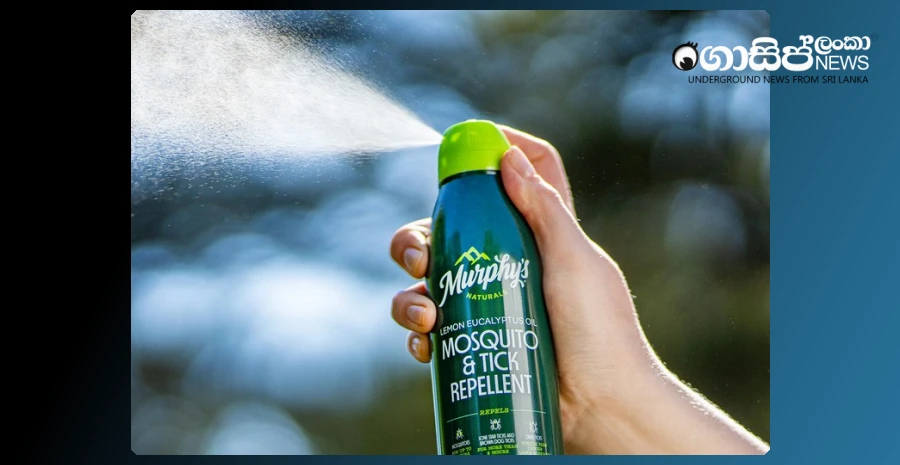
A recent study has revealed that mosquitoes can learn to recognize mosquito repellent liquids, which are widely sprayed and used worldwide by people to protect themselves from mosquitoes, as a signal that food is present. Researchers have pointed out that these repellents containing the chemical Deet (N,N-diethyl-meta-toluamide), instead of repelling mosquitoes, may in some instances attract them.
This finding is extremely significant given that even the UK Health Security Agency recommends the use of products containing 50% Deet to prevent the spread of deadly diseases such as Dengue, Japanese Encephalitis, Malaria, and Zika.Researchers say that just as Pavlov's dogs learned to associate the sound of a bell with food, mosquitoes also learn to associate the smell of Deet with an opportunity to obtain a blood meal. According to Professor Claudio Lazzari of the University of Tours in France, it was previously believed that mosquito repellents worked solely based on their chemical properties, such as toxicity, unpleasantness, or their ability to block mosquitoes' ability to recognize humans. However, this study has confirmed that mosquitoes' responses can vary based on their experiences, which brings about a significant change in the understanding of repellents.
According to this study published in the 'Journal of Experimental Biology', researchers first observed caged mosquitoes attempting to bite a warm blood-filled bag placed within their reach. Of the mosquitoes that obtained warm blood while exposed to the smell of Deet, 60% subsequently attempted to bite when exposed only to Deet. This is a significantly higher value compared to the responses observed in 17% of untrained mosquitoes, 13% of those previously exposed only to Deet, 17% of those that received blood without Deet, and 23% of those exposed to both blood and Deet (but not simultaneously).
In another experiment, researchers found that nearly 60% of mosquitoes accustomed to feeding on blood in a Deet-present environment later attempted to bite a researcher's Deet-coated hand. In contrast, untrained mosquitoes always attempted to bite the researcher's uncoated hand. Dr. Nina Stancic of ETH Zurich in Switzerland praised this research, stating that the ability of mosquitoes to learn to associate such a strong repellent smell with their food source is truly astonishing.
Despite these findings, experts emphasize that this does not mean travelers should abandon the use of mosquito repellents. According to Professor Lazzari, the effectiveness of Deet is not lost in general use, and this change can only be observed under specific laboratory conditions designed to reveal how it affects mosquitoes. Furthermore, Professor Francesca Romana Dani, an entomologist at the University of Florence who was not involved in this study, points out that under normal conditions, mosquitoes are likely to encounter various types of repellents throughout their lifespan, so it is unlikely that their response to Deet would change based on a single experience. However, she further stated that since a single mosquito takes several blood meals every few days, it is important to assess how long the memory of a blood meal obtained in a Deet-present environment persists in them.