![Gossip Lanka News [English]](https://blogger.googleusercontent.com/img/a/AVvXsEhYm2aFFq-bIW1nWX-RrqnPFoIsVos6_VCVz8BpLt0QJi55GNXHXC2fugeRvL0qUStEuCfs7Sfu6ZiSlhrkldxfGuE_wzy5gitY6rMZ2KSi8VBbGvkgXLks37RwZV-4-HKbWiNLRxB8C_r1e4z3mpxFTMPDJPEADoG8E-bZteWFipeD5KNGbjvCfqEfKw=s300 "Gossip Lanka News [English]")
A strange scent is wafting through the political arena of West Bengal these days; it's not the policy discussions for power, but the smell of fish that pierces the hearts of the people.
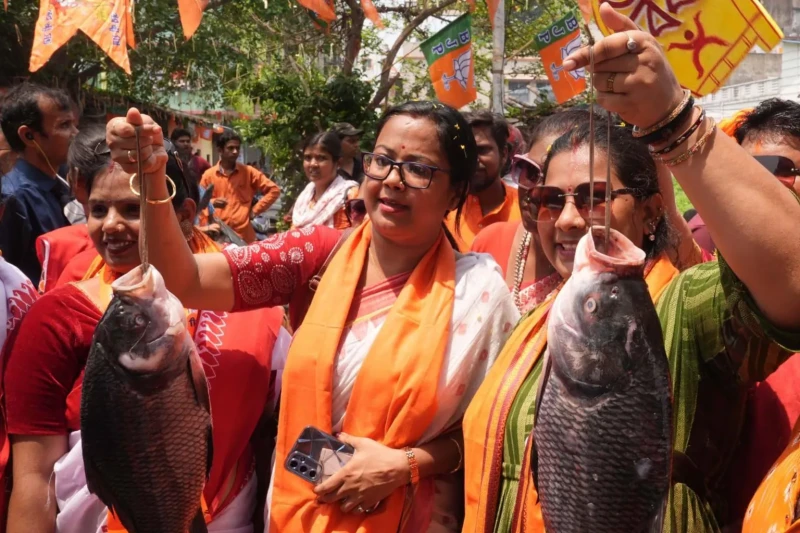
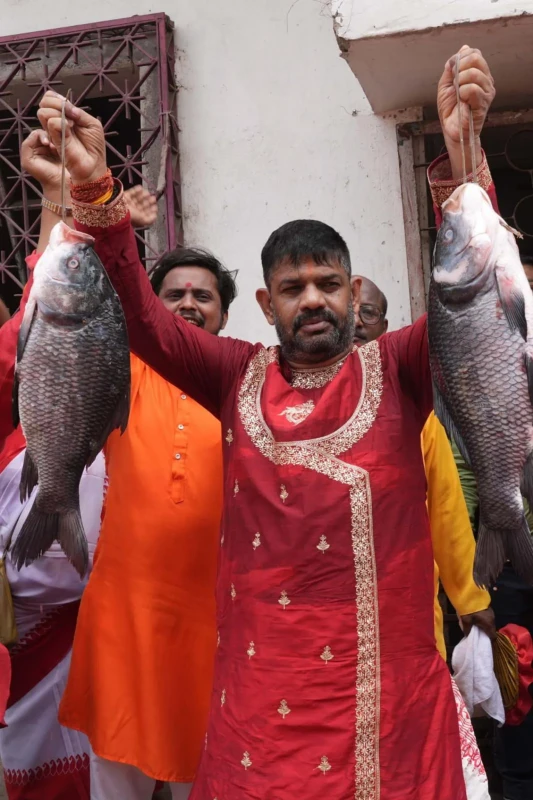
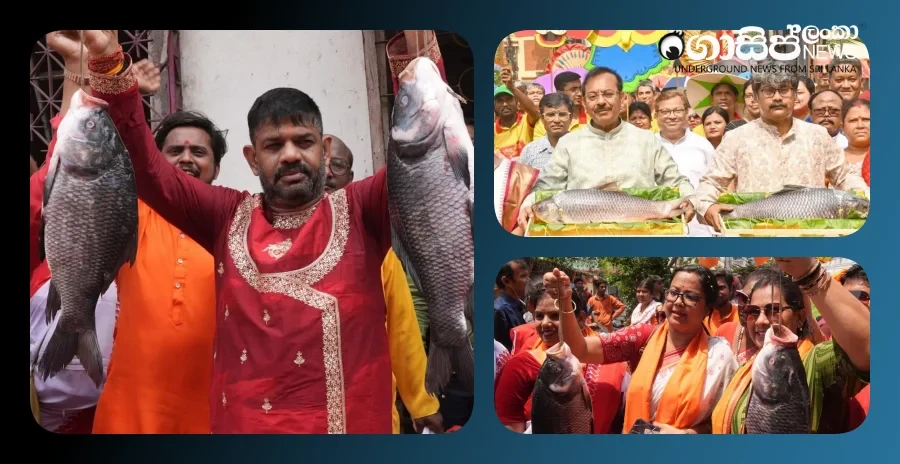
Amidst the general election fervor, Bharatiya Janata Party (BJP) candidates are meeting voters for their election campaign not with printed policy statements, but with a large fish in hand. Barrackpore candidate Kaustav Bagchi and Kolkata candidate Rakesh Singh, carrying a fish amidst drumbeats early in the morning, go among the people as a tactic to visually demonstrate 'I am one of you' rather than delivering a verbal speech.
Narendra Modi's Bharatiya Janata Party is continuously accused of trying to introduce a vegetarian-only food culture in many Indian states. Especially due to their strict policies against cow slaughter, the party has been branded as a symbol of vegetarianism in society. However, for Bengalis, fish is not merely a curry added to breakfast or dinner; it is a sensitive identity intertwined with their history, culture, memories, and daily life. Recent surveys even show that about 65.7% of Bengal's population consumes fish at least once a week.
Chief Minister Mamata Banerjee, weaponizing this cultural bond and fear, launched a strong attack, stating that if the opposition comes to power, Bengalis would even be banned from eating fish. She passionately accused the BJP of banning fish consumption in states governed by their party, such as Bihar, Uttar Pradesh, and Rajasthan, and even attacking fish markets in Delhi. However, BJP candidates strongly refute this accusation, stating that it is a fabricated false narrative designed to cover up the ruling party's corruption and mislead the public.
Even Prime Minister Modi, despite being a staunch vegetarian, entered this strange 'fish politics,' counter-accusing Mamata's government of failing to meet Bengal's fish demand from within the state, despite being in power for 15 years. Although Mamata quickly responded by stating that 80% of the state's fish requirement is supplied domestically, both parties are now using fish as a trump card to demonstrate their economic and cultural dominance.
In Bengal, fish is not just a political tug-of-war; it is a deep class symbol that extends from literature to sports. The inseparable bond between fish and Bengali life is well depicted even in the works of writers like Manik Bandyopadhyay and Amitav Ghosh. Even fans of East Bengal and Mohun Bagan, the strongest rivals in Indian football, demonstrate their identity and class divisions through their preferred types of fish. According to historian Jayanta Sengupta, political parties cannot ignore this deeply symbolic value, and thus they have made it a key component of their election campaign machinery.
Samik Bhattacharya, the state president of the Bharatiya Janata Party, has already invited journalists to join him for fried fish on May 4th, when the election results are released. Regardless of the policies discussed on the election platform, it remains an unresolved question whether a political philosophy or a cultural identity close to the hearts of the people will ultimately determine the balance of power in historical Bengal.