![Gossip Lanka News [English]](https://blogger.googleusercontent.com/img/a/AVvXsEhYm2aFFq-bIW1nWX-RrqnPFoIsVos6_VCVz8BpLt0QJi55GNXHXC2fugeRvL0qUStEuCfs7Sfu6ZiSlhrkldxfGuE_wzy5gitY6rMZ2KSi8VBbGvkgXLks37RwZV-4-HKbWiNLRxB8C_r1e4z3mpxFTMPDJPEADoG8E-bZteWFipeD5KNGbjvCfqEfKw=s300 "Gossip Lanka News [English]")
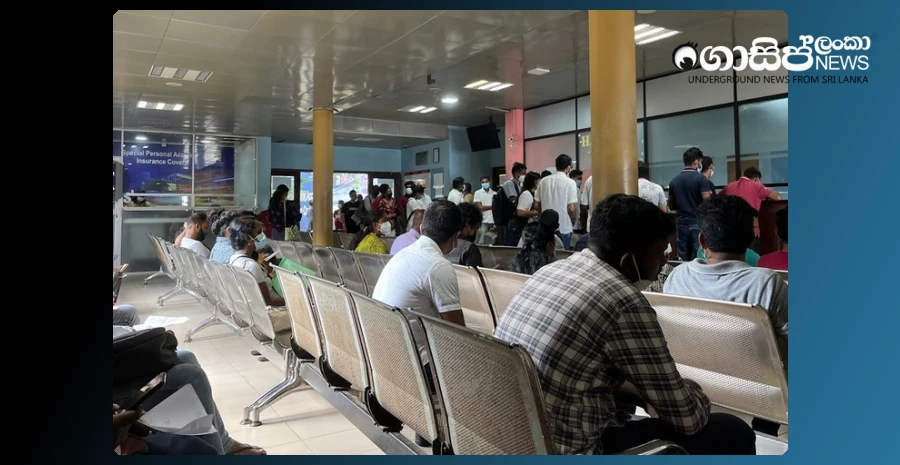
Police have uncovered a massive racket involving the issuance of fake driving licenses, targeting individuals who visit the Department of Motor Traffic in Werahera to obtain services. Based on confidential information received by the Special Operations Unit of the Police Special Bureau, two individuals involved in this racket were arrested during a sudden raid conducted last Wednesday, one of whom is a security officer who worked at the said department.
Those arrested are a 34-year-old resident of Homagama and a 28-year-old resident of Bulathkohupitiya.To apprehend this fraudulent operation, a special undercover agent was deployed under the full supervision of the OIC of the Police Special Bureau. The undercover agent acted as a client who came to obtain a driving license by paying Rs. 10,000, and through this successful operation, the police were able to apprehend the main suspect involved in preparing fake documents. Subsequent lengthy interrogations revealed that the security officer attached to the Department of Motor Traffic had secretly stolen official security stickers used to verify the authenticity of licenses. He had sold one of these stickers to the main suspect for a small sum of Rs. 500. At the time of arrest, nine such stolen security stickers were found in the officer's possession and taken into police custody. The suspects have since been handed over to the Boralesgamuwa Police for further investigations.
Meanwhile, the Commission to Investigate Allegations of Bribery or Corruption (CIABOC) and the Police Special Bureau have jointly launched a comprehensive investigation into another organized corruption process operating within the Department of Motor Traffic. These investigations primarily focus on an incident where a group of senior officials allegedly accepted bribes when issuing garage numbers, also known as CC numbers, to vehicle importers. Further investigations have revealed that the relevant officials carried out this racket by misusing a circular issued by a former commissioner. Although the circular mandated a strict verification process including business registration, tax reports, and physical site inspections, these officials are accused of deliberately complicating the approval process, claiming they would expedite it, with the aim of extorting large sums of money from importers.