![Gossip Lanka News [English]](https://blogger.googleusercontent.com/img/a/AVvXsEhYm2aFFq-bIW1nWX-RrqnPFoIsVos6_VCVz8BpLt0QJi55GNXHXC2fugeRvL0qUStEuCfs7Sfu6ZiSlhrkldxfGuE_wzy5gitY6rMZ2KSi8VBbGvkgXLks37RwZV-4-HKbWiNLRxB8C_r1e4z3mpxFTMPDJPEADoG8E-bZteWFipeD5KNGbjvCfqEfKw=s300 "Gossip Lanka News [English]")
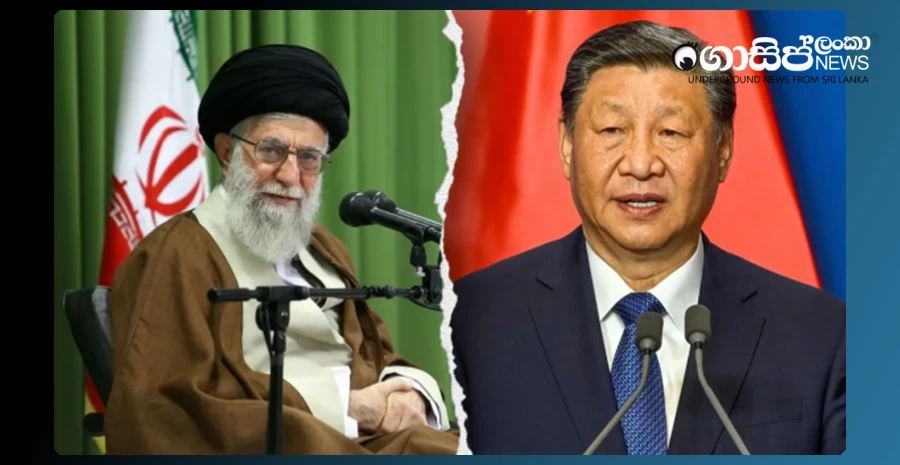
China has strongly condemned the attacks launched by American and Israeli forces against Iran, expressing concern over the escalating conflict and Washington's attempts to overthrow unfriendly foreign regimes, and called for an immediate ceasefire. A spokesperson for the Chinese Foreign Ministry issued a separate statement, saying that China firmly rejects and condemns the attack and assassination targeting Iranian Supreme Leader Ayatollah Ali Khamenei.
During a phone conversation with Russian Foreign Minister Sergey Lavrov on March 1, Chinese Foreign Minister Wang Yi stated that the assassination of a sovereign state's leader, as well as incitement to regime change, is an absolutely unacceptable act.He further pointed out that these American-Israeli attacks are unacceptable and a violation of international law, especially as they occurred during ongoing discussions between Washington and Tehran regarding Iran's nuclear program. The Foreign Minister stated that Beijing is deeply concerned that the spread of these conflicts across the Persian Gulf region could plunge the Middle East into a dangerous abyss. Accordingly, he urged the international community to immediately cease military operations and engage in dialogue and negotiations, and to oppose unilateral military actions carried out without the approval of the United Nations. China and Russia, two of Iran's closest partners, also criticized the United States and Israel during an emergency meeting of the United Nations Security Council regarding these attacks.
The relationship between Iran and China is based on a "comprehensive strategic partnership" established during Chinese President Xi Jinping's last visit to Iran in 2016. The increasingly isolated Tehran regime internationally joined China's Belt and Road Initiative in 2019, the multilateral group known as the Shanghai Cooperation Organization in 2023, and a year later, BRICS, an intergovernmental organization where China is a founding member. China is also the largest buyer of Iranian crude oil, purchasing it at discounted prices, providing economic lifeline to Iran amidst severe American sanctions. In 2025, China purchased over 80 percent of Tehran's oil exports, but this represented only 13.4 percent of Beijing's total seaborne oil imports. However, Dr. Jody Wen, an associate researcher at Tsinghua University's Center for International Security and Strategy, states that these recent attacks will have a significant impact on energy security and strike at China's economic interests in Iran and the Middle East. Specifically, she said that the closure of the Strait of Hormuz, a critical shipping lane that Iran claims to have closed, would affect China's oil supply from the Gulf region and energy prices. According to Chinese customs reports, in 2024, China imported nearly three-quarters of the oil it consumed, with about 44 percent coming from the Middle East. However, it is believed that China has some protective reserves to face this, as it increased its crude oil imports by 4.9 percent in 2025, building up its reserves.
Although China has called for an end to shelling in support of Iran, analysts do not expect Beijing to go as far as providing military assistance to the Iranian regime. Professor Cui Shujun, Executive Director of the Center for Middle Eastern and African Studies at Renmin University in Beijing, points out that he believes providing military and security assistance to Iran would violate the principles of Chinese foreign policy. Instead, he said, Beijing would primarily respond through foreign policy, joining Russia and other countries in international bodies such as the United Nations to call for a peaceful resolution to the Iranian crisis. According to Dr. Yun Sun of the Stimson Center in the United States, if this conflict escalates into a long-term war, China might provide non-military or dual-use assistance to Iran, but will not intervene further. This expert on Chinese foreign policy further emphasized that China will not provide military assistance. She believes that China will not enter into a conflict with the United States on behalf of Iran, as it maintains good relations with the Trump administration. The White House has announced that President Trump is scheduled to visit China from March 31 to April 2, marking the first visit by an American president to Beijing in nine years. Trump and Xi Jinping last met in Busan last October, where they reached a trade agreement set to conclude this year.
One key aspect China sees in this Iranian crisis is the echo of the military operation in early 2026 where American special forces arrested Venezuelan President Nicolas Maduro and brought him to the United States on drug charges. Professor Cui points out that China definitely fears that the US will launch surgical strikes to achieve regime change, targeting nations it considers hostile or dislikes. He further stated that this could become a common tactic used against anti-American nations, a situation China would absolutely not want to see. Associate Professor Dylan Loh, who researches Chinese foreign policy at Nanyang Technological University, states that one lesson China will learn from both these events is that the US and Trump are not merely making threats and false pretenses. He further added that, rightly or wrongly, he (Trump) has repeatedly demonstrated his readiness to use the significant American power at his disposal to advance American interests.
(Source: The Straits Times)