![Gossip Lanka News [English]](https://blogger.googleusercontent.com/img/a/AVvXsEhYm2aFFq-bIW1nWX-RrqnPFoIsVos6_VCVz8BpLt0QJi55GNXHXC2fugeRvL0qUStEuCfs7Sfu6ZiSlhrkldxfGuE_wzy5gitY6rMZ2KSi8VBbGvkgXLks37RwZV-4-HKbWiNLRxB8C_r1e4z3mpxFTMPDJPEADoG8E-bZteWFipeD5KNGbjvCfqEfKw=s300 "Gossip Lanka News [English]")
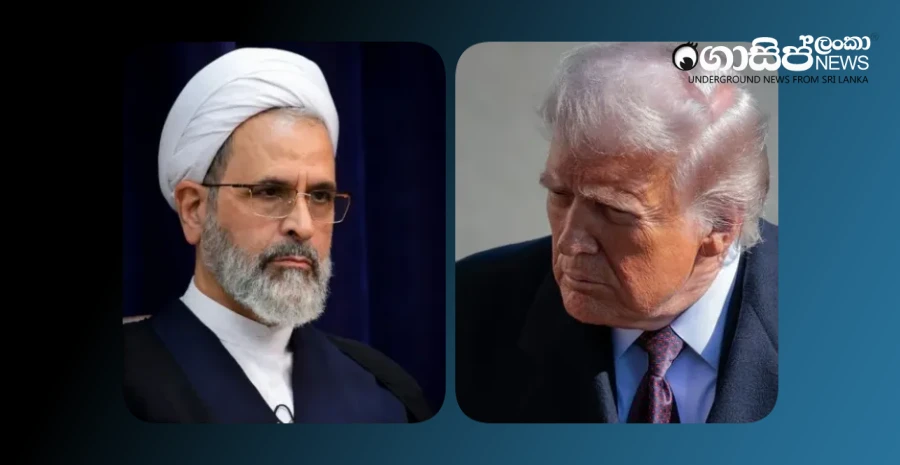
According to the latest report published by The Atlantic magazine, US President Donald Trump has stated that Iran's new leadership is willing to negotiate with him and that he has agreed to it, one day after the attack that killed Iran's Supreme Leader Ayatollah Ali Khamenei and plunged the entire region into war.
In a phone call from Mar-a-Lago, Florida, around 9:30 AM, the President stated that Iranian authorities should have made this decision much earlier. He refused to announce a specific date for the talks, but pointed out that some Iranian representatives involved in discussions in recent weeks had died in the massive attack launched by the US.
After the attack operation ended, Trump urged the Iranian people in a video released on social media yesterday to rise up against the current regime. He did not give a firm answer on whether US bombing operations would be further extended to support a popular uprising, stating that a decision could only be made based on the situation at that time. However, commenting on the celebrations of Iranians both within Iran and in cities like New York and Los Angeles, he expressed strong confidence that a successful popular uprising would happen soon. He also stated that he was satisfied with the response of the Iranian people amidst the bombings, even though there were groups supporting the overthrow of the regime as well as anti-war protesters nearby.
When asked if there was any new hint of assassination threats from Iran against the US since the attack began, the President declined to comment. Meanwhile, US military officials announced that three US service members were killed and five others seriously injured in this operation, marking the first US casualties reported in the current operation.
Trump expects this attack will not hinder the Republican Party's economic policy promotion program for the upcoming midterm elections. He emphasized that the US is currently at its best economic level in history, and that the initial success of the operation has minimized the severe impact that could have occurred on the oil market and consumers. He further elaborated, stating that Iran's actions over forty-seven years have now turned against them.
(The Atlantic)