![Gossip Lanka News [English]](https://blogger.googleusercontent.com/img/a/AVvXsEhYm2aFFq-bIW1nWX-RrqnPFoIsVos6_VCVz8BpLt0QJi55GNXHXC2fugeRvL0qUStEuCfs7Sfu6ZiSlhrkldxfGuE_wzy5gitY6rMZ2KSi8VBbGvkgXLks37RwZV-4-HKbWiNLRxB8C_r1e4z3mpxFTMPDJPEADoG8E-bZteWFipeD5KNGbjvCfqEfKw=s300 "Gossip Lanka News [English]")
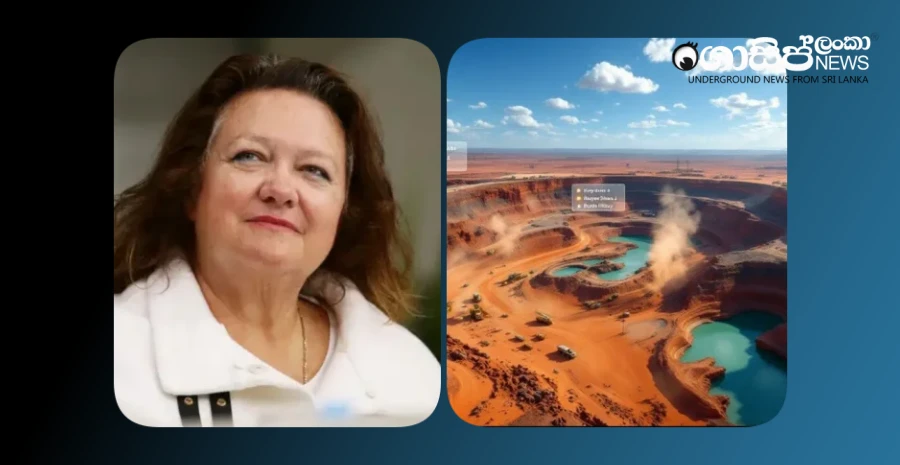
The multi-billion dollar mining industry legal dispute currently being heard in the Western Australian Supreme Court between Gina Rinehart, Australia's richest woman, and Angela Bennett, has reached its final stage.
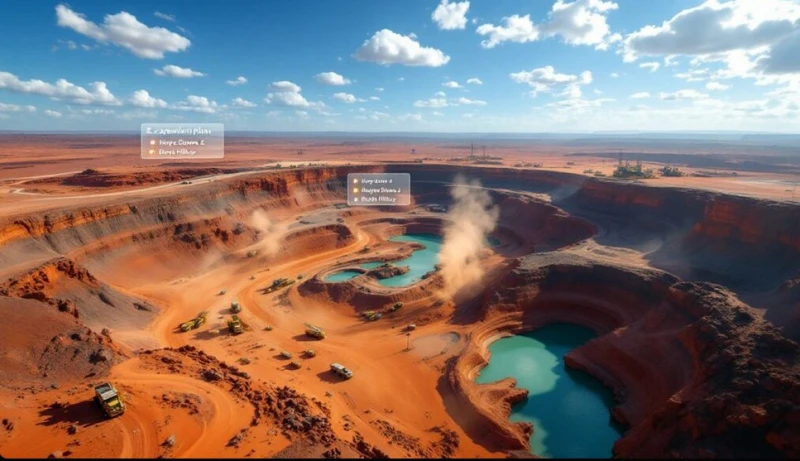
This massive dispute, likened to the plot of the famous television series "Succession", arose over the ownership and royalties of the lucrative Hope Downs iron ore deposit in the Pilbara region, between Gina Rinehart's Hancock Prospecting (HPPL) and Angela Bennett's Wright Prospecting (WPPL).According to reports received on April 12, 2026, the verdict in this case is expected to be delivered on April 15 or 16, determining who should receive billions of dollars in outstanding royalties, asset shares, and future profits.Gina Rinehart, the main party in this legal battle, is the daughter of the renowned iron ore explorer Lang Hancock. After taking control of the family business in 1992, she transformed it into Australia's largest private mining company. According to 2025 reports, with a net worth of AUD 38.11 billion, she is the country's richest person. Representing the other party, 78-year-old Angela Bennett is the daughter of Peter Wright, and with assets exceeding AUD 4.6 billion, she is the country's fourth richest person. Although she does not appear publicly as much as Gina Rinehart, she is resolutely facing this legal process, along with her nieces, Leonie Baldock and Alexandra Burt, to protect the Wright family's legacy.
The origin of this massive dispute dates back to the 1950s, the era of Pilbara iron ore discoveries. School friends and business partners Lang Hancock and Peter Wright formed a partnership called "Hanwright" to explore for iron ore deposits, based solely on a verbal agreement. The Hope Downs deposit, named after Gina's mother, was also explored under this agreement. In 1984, they entered into an asset-sharing agreement, and Peter Wright passed away in 1987, followed by Lang Hancock in 1992. However, the main issue currently arising is the discrepancies between the two parties in interpreting this 1984 agreement. In this case, which has dragged on for over 18 years with more than 7,000 documents submitted, lawyers for the Wright family have pointed out that Gina Rinehart was aware of these obligations through a letter written in 1986.
The Hope Downs iron ore deposit, controlled by Hancock Prospecting under a 50% partnership with Rio Tinto, is one of Australia's largest mining operations, producing approximately 50 million tonnes of iron ore per year. Currently, Hancock Prospecting receives a 2.5% royalty from these operations, and the Wright family is requesting the court to grant them half of that, i.e., 1.25%, applicable retroactively from 2007. Additionally, they are seeking 25% ownership of the Hope Downs assets. Meanwhile, the DFD Rhodes family has made an additional claim for a 1.25% royalty based on a 1969 agreement, further complicating the case.
Concurrently with the dispute between these companies, a massive crisis has also emerged within Gina Rinehart's family. Gina's children, John Hancock and Bianca Rinehart, claim that they should receive ownership of the relevant 50% share of the Hope Downs deposit through a family trust established by their grandfather in 1992. They accuse their mother of fraudulently and falsely delaying the transfer of this inheritance to them. Gina Rinehart has told the media that giving her children too much would deprive them of the joy of working, and she has rejected all of her children's accusations. As business reporter Ross Greenwood has stated, this is a colossal battle over money, ego, inheritance, and control.
The verdict in this case, being heard in the historic Western Australian Supreme Court building in Perth, will have a profound impact not only on the two families but on the entire region. The Banyjima Indigenous people of the area annually receive over AUD 300 million in royalties through the Hope Downs mine, and the court's decision will directly affect Western Australia's economy and tax revenues. Considered one of the longest and most expensive civil cases in Australian history, it will undoubtedly set a new precedent for future partnerships and trust laws in the country's mining industry.