![Gossip Lanka News [English]](https://blogger.googleusercontent.com/img/a/AVvXsEhYm2aFFq-bIW1nWX-RrqnPFoIsVos6_VCVz8BpLt0QJi55GNXHXC2fugeRvL0qUStEuCfs7Sfu6ZiSlhrkldxfGuE_wzy5gitY6rMZ2KSi8VBbGvkgXLks37RwZV-4-HKbWiNLRxB8C_r1e4z3mpxFTMPDJPEADoG8E-bZteWFipeD5KNGbjvCfqEfKw=s300 "Gossip Lanka News [English]")
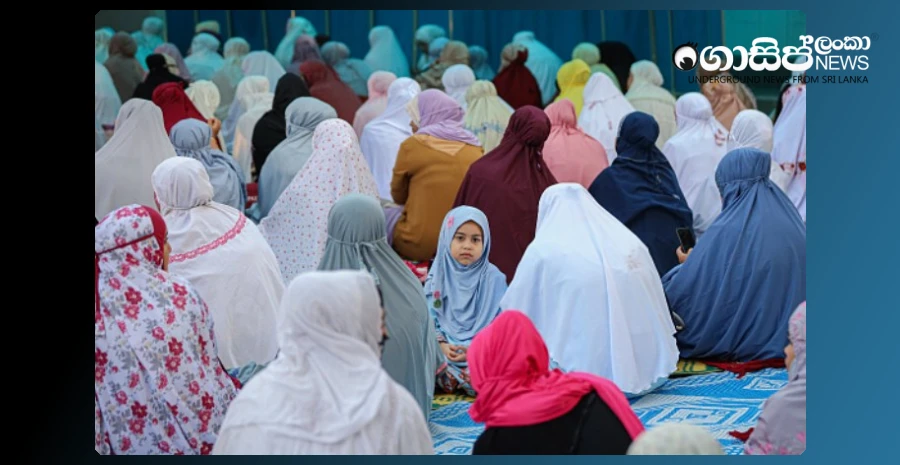
Southeast Asian Islamic groups, inspired by the 1979 Iranian Revolution, have expressed their sorrow over the demise of Iranian leader Ayatollah Ali Khamenei and strongly condemned the attacks launched by the United States and Israel against Tehran. However, analysts point out that Iran's influence in Muslim-majority Malaysia and Indonesia is limited, and these responses are merely expressions of condolences.
Malaysia's opposition party, Parti Islam SeMalaysia (PAS), which modeled its leadership structure on Iran's, and Indonesia's highest Islamic scholarly body, the Indonesian Ulema Council (MUI), were among the first organizations in the region to express condolences. On February 22, PAS Deputy President Ahmad Samsuri Mokhtar, who assumed the chairmanship of the Perikatan Nasional coalition, posted on his Facebook account on the morning of March 1, stating that this was a great loss for the Muslim community. His political advisor and PAS President, Abdul Hadi Awang, also issued a statement strongly condemning the aggression carried out by the United States and Israel regarding Khamenei's assassination. He further stated that this attack is a threat to Iran's security, stability, and sovereignty, and a violation of universal justice standards. He had declared on Facebook on March 1 that this cowardly act by the United States and Israel, which commit war crimes in the Middle East, should be jointly condemned by the international community.
Due to the influence of the 1979 Islamic Revolution, the establishment of PAS's Majlis Syura Ulama and the position of the spiritual leader (Mursyidul Am) were modeled similarly to the role of Iran's Supreme Leader. However, analysts say that Iran's influence over PAS has now diminished due to declining interest among Malaysian leaders. Political Islamic analyst Dr. Mohammad Faizal Musa points out that, unlike older leaders, the new generation of PAS leaders do not value Iran as much. Dr. Faizal, a senior fellow at Singapore's ISEAS Institute, stated that only a small number of people, including Mr. Hadi, see Iran as a guide, and only he continues to call for unity between the Sunni and Shia sects.
Malaysia and Indonesia are Sunni Muslim-majority countries, while Iran is primarily a Shia Muslim state. Therefore, they represent opposing sides of a theological divide within Islam. Dr. Faizal further stated that Malaysian Prime Minister Anwar Ibrahim, who issued a statement on February 28 condemning the American and Israeli attack, remains safely in a morally superior position within the local political Islamic discourse. Additionally, Prime Minister Anwar's coalition partners, the Democratic Action Party and Parti Amanah Negara, also condemned the attack. On the night of March 1, the Prime Minister issued a statement expressing his sorrow and unconditionally condemning Mr. Khamenei's assassination. Other Muslim countries like Turkey also criticized the American-Israeli military operations. In contrast, the Secretariat of the Organization of Islamic Cooperation (OIC) criticized Iran for launching ballistic missile attacks on neighboring member states such as Saudi Arabia and the United Arab Emirates, stating that it threatens regional stability.
Indonesia's MUI organization also issued a statement expressing its profound sorrow over Mr. Khamenei's demise due to the American-Israeli attack. The statement mentioned that they pray he will be a resident of heaven as a martyr. Professor Yon Machmudi, an expert on political Islam at the University of Indonesia, stated that although Iran's Islamic Revolution in the late 1970s inspired some Islamic revival movements in Indonesia, it did not develop into permanent ties with Indonesian Islamic institutions or political parties. He stated that Iran's ability to overthrow a pro-American regime was considered a model at the time. However, he explained that Iran's influence on Indonesian institutions was limited because Indonesia is a Sunni-majority country and Iran is a Shia country. Professor Sudarnoto Abdul Hakim, Chairman of MUI's Foreign Relations, stated that despite sectarian differences, many Sunni Indonesians feel empathy towards Iran as a victim unfairly targeted by American-Israeli attacks.