![Gossip Lanka News [English]](https://blogger.googleusercontent.com/img/a/AVvXsEhYm2aFFq-bIW1nWX-RrqnPFoIsVos6_VCVz8BpLt0QJi55GNXHXC2fugeRvL0qUStEuCfs7Sfu6ZiSlhrkldxfGuE_wzy5gitY6rMZ2KSi8VBbGvkgXLks37RwZV-4-HKbWiNLRxB8C_r1e4z3mpxFTMPDJPEADoG8E-bZteWFipeD5KNGbjvCfqEfKw=s300 "Gossip Lanka News [English]")
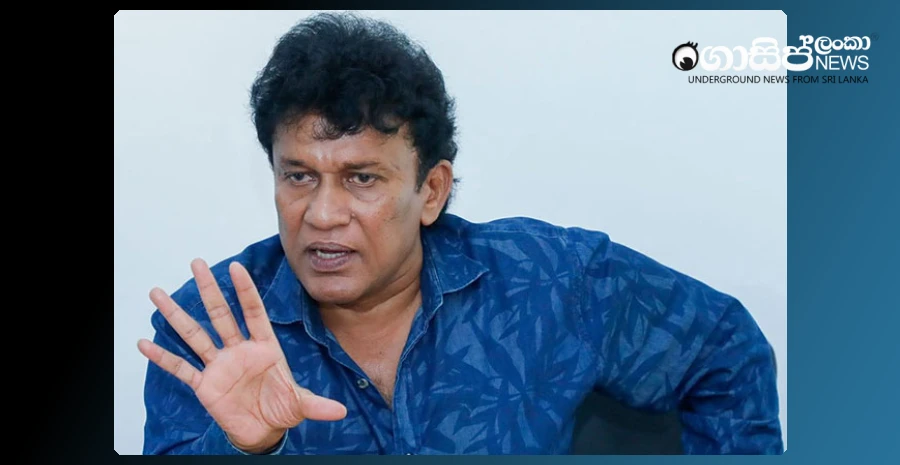
Mr. Mano Ganesan, leader of the Tamil Progressive Alliance (TPA), Member of Parliament for Samagi Jana Balawegaya, and former Minister, states that the government's claim that the proposal to extend the retirement age of judges is an administrative measure taken to resolve the delay in court proceedings is unbelievable and unacceptable. He emphasizes that attempting to change the composition of the judiciary on the pretext of case delays is not a judicial reform, but an attempt to manipulate the constitution at will to achieve political objectives.
The MP states that this attempt to undermine the independence of the judiciary by using the existing delays in the judicial system as an opportunity is a conspiracy against the rule of law, and that finding solutions to judicial case delays is an essential and urgent task.Mr. Mano Ganesan points out that the main reasons for case delays are administrative inefficiency, insufficient staff, delays in approved procedures, and lack of resources, not the retirement age of judges, and that practical solutions for this have been submitted to the Ministry of Justice by magistrates, judicial service members, and lawyers. He accuses the government of preparing to make constitutional changes that threaten judicial independence under the guise of an administrative problem, instead of taking steps to implement those professional proposals. He also states that the government's attempt to dismiss these criticisms as a political ploy by the opposition, and the narrative that only politicians under investigation or on bail are opposing this, has now completely collapsed.
The former Minister points out that the Bar Association of Sri Lanka (BASL), representing nearly 30,000 members, has also officially rejected this proposal, and with leading lawyers and institutions uniting against it regardless of political divisions, the government can no longer hide behind political ideologies. Mr. Mano Ganesan states that no one is asking to stop corruption investigations or to refrain from arresting suspects, and that corruption should be properly investigated and the law enforced against the guilty, but he emphasizes that the law must apply equally to everyone.
He points out that if the government is truly committed to eradicating corruption and crime, these investigations should not be limited to selected individuals, and should also be conducted into allegations against Minister Wasantha Samarasinghe, Deputy Minister Mahinda Samarasinghe, Kaduwela NPP Mayor Ranjan Jayalal, as well as the incident involving over 300 containers, the coal purchase fraud, the disappearance of 2.5 million US dollars, and complaints lodged with the Commission to Investigate Allegations of Bribery or Corruption and the Criminal Investigation Department.
The former Minister accuses that the government's true objective is not to eradicate corruption but to interfere with the independence of the judiciary in line with its political aspirations. Describing this as part of a broader political program to gradually weaken independent institutions and consolidate power, he reiterates his previous statement that this is a "North Korean-style" one-party authoritarian political project. Mr. Mano Ganesan mentions that in the past, when former Executive President Mahinda Rajapaksa acted against former Chief Justice Shirani Bandaranayake, the current President Anura Kumara Dissanayake was at the forefront with him in the struggle held under the theme "Don't touch the judiciary," but today, their paths have diverged.
The MP states that he has consistently advocated for the same constitutional policies regardless of changes in government, and points out that this bill cannot be passed into law by a two-thirds majority in Parliament alone, and that constitutional scholars argue that it may require approval through a referendum. Mr. Mano Ganesan further emphasizes that it is ironic that the decision on whether a referendum is needed or not will have to be made by the Supreme Court judges who directly benefit from the proposed extension of their tenure, and since the President has the constitutional power to directly present this to the people for a referendum without waiting for a Supreme Court decision, President Anura Kumara Dissanayake should exercise those constitutional powers.