![Gossip Lanka News [English]](https://blogger.googleusercontent.com/img/a/AVvXsEhYm2aFFq-bIW1nWX-RrqnPFoIsVos6_VCVz8BpLt0QJi55GNXHXC2fugeRvL0qUStEuCfs7Sfu6ZiSlhrkldxfGuE_wzy5gitY6rMZ2KSi8VBbGvkgXLks37RwZV-4-HKbWiNLRxB8C_r1e4z3mpxFTMPDJPEADoG8E-bZteWFipeD5KNGbjvCfqEfKw=s300 "Gossip Lanka News [English]")
American lawyer Mark Lanier has succeeded in winning a historic legal battle against global tech giants Meta and Google. This trial, which focused not on the content of social media platforms but on proving that these applications were designed in a way that makes children addicted, marks a massive turning point in the technology sector.
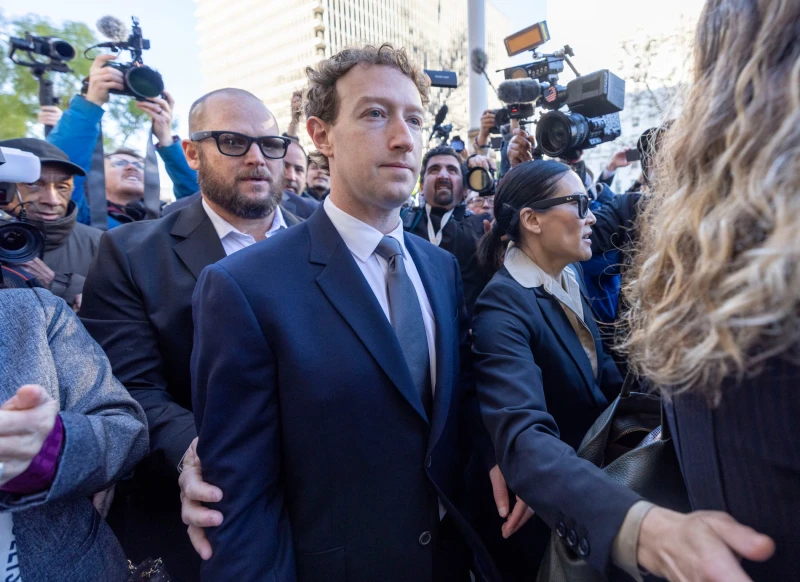
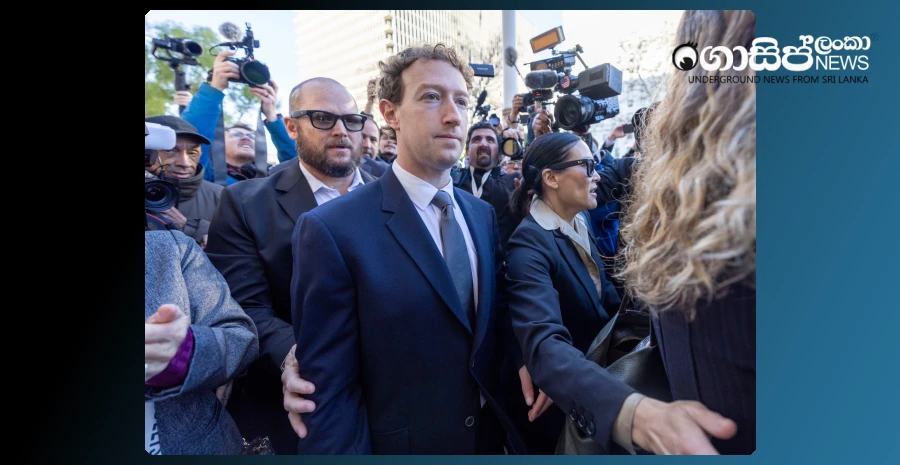
It was alleged that these companies deliberately and maliciously designed their products to addict young children to these applications, causing serious harm to their mental health. The legal field describes this as a situation similar to the massive legal battles against tobacco companies in the past.Meta CEO Mark Zuckerberg attended the trial held in a Los Angeles courtroom, accompanied by his security team. His security guards were seen wearing Meta's latest 'Ray-Ban' smart glasses, which drew everyone's attention. Zuckerberg's attempt to promote his products while passing a group of parents who had lost their children was criticized as a disgraceful act. However, lawyer Lanier, who led the prosecution, raised another serious concern. The prosecution had made a strong effort to keep the identities of the jury members secret due to fears that Google or Meta might examine their personal data. But Lanier pointed out that the smart glasses worn by Zuckerberg's team could easily identify jury members through facial recognition technology by taking photos. After complaining to the judge about this attempt at digital surveillance, which violated the rule prohibiting cameras in the courtroom, they were forced to swear that they had not taken any photos and were subsequently ordered to remove the glasses.
The plaintiff in this case, named 'KGM v Meta et al', was a young woman named Kaley, currently 20 years old. She filed this lawsuit claiming that due to her addiction to YouTube since the age of six and Instagram since the age of nine, she suffered from mental illnesses such as body dysmorphia, severe anxiety, and depression. Snapchat and TikTok were also named in the original complaint, but those companies settled out of court for an undisclosed sum before the trial began. Accordingly, Lanier's legal team had to prove to the jury that Meta and Google deliberately designed their products to be addictive. Kaley stated in her first press interview that this experience was very stressful for her as she had never been to court before.
Lawyer Lanier knew that these giant companies would even use their artificial intelligence (AI) technology to win the case. For that, he decided to use AI to its fullest extent. Lanier, who states he is deeply interested in AI technology, has a five-person team at his law firm dedicated to preparing reports on AI technological advancements occurring within a week. Lanier acquired a company called 'BoodleBox' and used a specialized AI system, which integrated various AI models like Google's 'Gemini', 'Claude', and 'ChatGPT', in over 30 ways for this case. Lanier took steps to create a psychological exemplar for each jury member by inputting data into this AI system, including their age, gender, occupation, family background, and even the people they most respected and disliked, which they provided during jury selection. At the end of each day's trial, court records were fed into this system to predict how each jury member thought about a particular witness or fact and where they might be confused.
Lanier, 65, with 42 years of legal experience, is a devout Baptist Christian. He considers fighting against companies that exploit helpless people to gain wealth as a divine mission assigned to him, calling this case a fair fight and a 'holy war'. Lanier, who sleeps only four hours a day, uses his earnings to maintain religious study centers. His foundation purchased the historic 'Yarnton Manor' in Oxfordshire, UK, built in 1611, in 2021 and converted it into a religious center. He smiles as he says that the money to buy this manor, as well as another study center in Houston, came from his past victory in the famous 'Johnson & Johnson' case.
Before the tech companies, Lanier was known for winning historic lawsuits against leading pharmaceutical companies. In 2018, he succeeded in winning $4.69 billion (later reduced to $2.12 billion on appeal) in compensation for 22 women who developed ovarian cancer because Johnson & Johnson knowingly failed to inform the public that carcinogenic asbestos was mixed with talc in their baby powder. In 2019, he was also able to secure $260 million in compensation from opioid painkiller manufacturers regarding the opioid epidemic. Lanier, who started his own law firm at the age of 29, says he always chooses cases that stand for justice.
On March 25th, the jury found Google and Meta guilty on all charges. Accordingly, Kaley was awarded $6 million in compensation, with $3 million for her suffering and the remaining $3 million as punitive damages for the companies' malicious conduct. Meta must pay 70% of this amount, and Google the remaining 30%. With this victory, more than 2,000 lawsuits have now been filed against social media companies for harming children's mental health. Former Meta employee Frances Haugen stated that the company would have to pay about a trillion dollars in compensation in the future. But Lanier says it will be in the billions of dollars, and he hopes that the companies will change their behavior for the better, more than just paying money.
Kaley, who grew up in a single-mother family in Chico, California, was a girl from a low-income background with learning disabilities. By the age of nine, she was maintaining several accounts on YouTube and Instagram and was spending up to 16 hours a day on Instagram. Unable to be without her phone, she would cry intensely and search for her phone even at night when her mother hid it. Her inclination to take photos using various filters on Instagram led to her disliking her true appearance, and at the age of 10, she even resorted to self-harm.
In his opening statement, Lanier used three wooden blocks (ABC) to explain the simple idea of 'Addicting the Brains of Children' to the jury. Meta's lawyer, Paul Schmidt, argued that Kaley's mental problems were due to her family background and learning disabilities, not social media. However, internal company documents presented at the trial revealed that these companies had used psychological tactics (casino science) used in gambling environments within their applications. A 2012 internal Google memo stated that YouTube's goal was not to attract viewers but to addict them. They also used deceptive tactics (dark patterns) such as hiding buttons that activate safety features without changing their color and automatically deactivating them every 30 days. A 2018 Meta report stated that to win over teenagers, they must be captured in childhood. Although Instagram head Adam Mosseri stated in court that 16 hours of usage was problematic but not an addiction, Lanier questioned Zuckerberg by showing a 50-foot-long poster containing a large number of Kaley's filtered photos.
Although Google claimed that YouTube is merely a streaming platform and not social media, their own artificial intelligence system, 'Gemini', confirmed that YouTube is social media. Furthermore, it was revealed that while the TikTok version operating in China had features like limiting nighttime use, preventing infinite scrolling, and safe AI tactics that identify if a user is a child based on finger size and speed, these were not included in the international versions. The British government plans to ban social media for children under 16, which Lanier commends. The payment of compensation due to Kaley will be delayed by about seven years due to appeals filed by the companies.
Lawyer Lanier's firm is currently filing a lawsuit against the artificial intelligence company OpenAI on behalf of parents who claim their son committed suicide due to ChatGPT usage. In addition, they are preparing to sue the popular children's gaming platform 'Roblox' on charges of enabling child abusers. A film titled 'Puncture', starring Chris Evans, was made in 2011 based on lawyer Lanier's life story, with Lanier himself portraying his character. He currently maintains an Instagram account to share biblical ideas. Lanier says that realistically, this battle in the digital realm will continue throughout his life and beyond, as Mark Zuckerberg's immense power will not be easily relinquished.