![Gossip Lanka News [English]](https://blogger.googleusercontent.com/img/a/AVvXsEhYm2aFFq-bIW1nWX-RrqnPFoIsVos6_VCVz8BpLt0QJi55GNXHXC2fugeRvL0qUStEuCfs7Sfu6ZiSlhrkldxfGuE_wzy5gitY6rMZ2KSi8VBbGvkgXLks37RwZV-4-HKbWiNLRxB8C_r1e4z3mpxFTMPDJPEADoG8E-bZteWFipeD5KNGbjvCfqEfKw=s300 "Gossip Lanka News [English]")
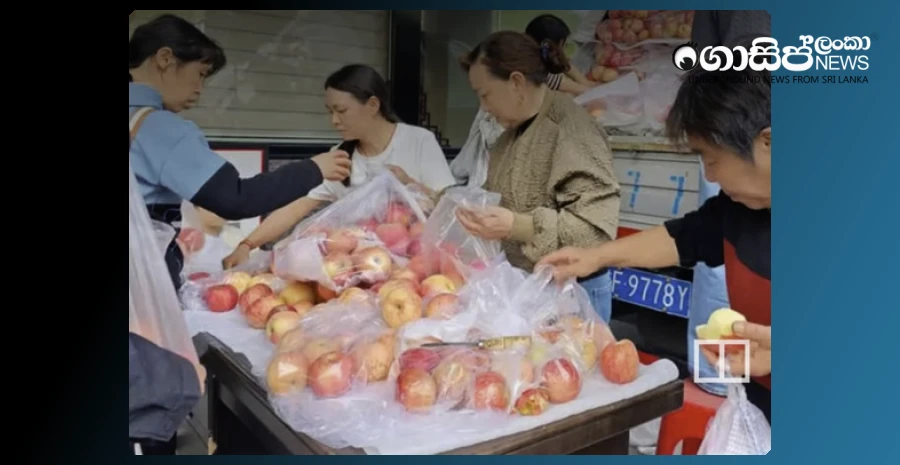
For decades, China has been a global leader in manufacturing sectors such as automobiles, batteries, and solar cells. Now, they have shifted their focus towards producing fresh fruits and high-quality food. Specifically, Yunnan province, located on China's southwestern border, is transforming from a gateway for Southeast Asian products into a globally recognized source of premium food.
The same factors—subsidies, low-interest financing, and state policies—that were used to boost the electric vehicle industry are now being applied to this agricultural project.As a result of these efforts, China has now become the world's largest producer of blueberries. Additionally, in the Himalayan mountainous regions near the Tibetan border, some of the world's most expensive wines, as well as high-quality coffee sold by establishments like Starbucks, are produced. However, it is noteworthy that last year China imported seven times the amount of blueberries it exported. Despite the abundance of domestic products, Chinese local brands have not yet achieved the same global and domestic recognition as imported brands like Peruvian avocados, Thai pomelos, or Philippine bananas.
A significant shift in Chinese consumer dietary patterns has been observed recently. Due to food safety concerns, such as the COVID-19 pandemic and the 2008 melamine-tainted infant formula scandal, people are paying close attention to the origin of food and the reputation of brands. Currently, the annual fruit consumption per Chinese citizen has risen to 60 kilograms, which is higher than the global average of 52 kilograms. Young consumers, in particular, are very concerned about cultivation areas, pesticide use, and preservatives, and parents are inclined to provide their children with fruits that are as fresh and chemical-free as possible.
During a visit to Yunnan province in 2015, President Xi Jinping instructed officials to develop "distinctive plateau agriculture" to boost rural incomes. The goal was to create a world-class green food brand that could bypass low and mid-tier markets and directly access high-end markets. By 2025, approximately 30% of the blueberry harvest, around 7098 tons, has been exported to countries like Hong Kong, Singapore, and Malaysia. However, imports from countries like Peru and Chile have grown to 52,000 tons. Many farmers outside Kunming have abandoned their traditional lotus cultivation to switch to the more profitable blueberry farming. These locally grown blueberries have attracted consumer attention because they are much fresher than imported fruits that travel for weeks by sea.
Due to the China-Laos railway, which opened in December 2021, and the modern cold-chain network, Kunming has become a continental distribution hub. This has increased the number of refrigerated trucks arriving daily at wholesale markets from 20 to 100, and the fruit spoilage rate has dropped from 20% to less than 1%. Fresh durian can now be transported to Beijing within 48 hours. However, when it comes to products like wine, even high-quality wines produced in Yunnan's 2200-2600 meter mountains, valued at hundreds of dollars, are sold under French brands like LVMH in the international market, which clearly indicates that China still faces challenges in terms of reputation.