![Gossip Lanka News [English]](https://blogger.googleusercontent.com/img/a/AVvXsEhYm2aFFq-bIW1nWX-RrqnPFoIsVos6_VCVz8BpLt0QJi55GNXHXC2fugeRvL0qUStEuCfs7Sfu6ZiSlhrkldxfGuE_wzy5gitY6rMZ2KSi8VBbGvkgXLks37RwZV-4-HKbWiNLRxB8C_r1e4z3mpxFTMPDJPEADoG8E-bZteWFipeD5KNGbjvCfqEfKw=s300 "Gossip Lanka News [English]")
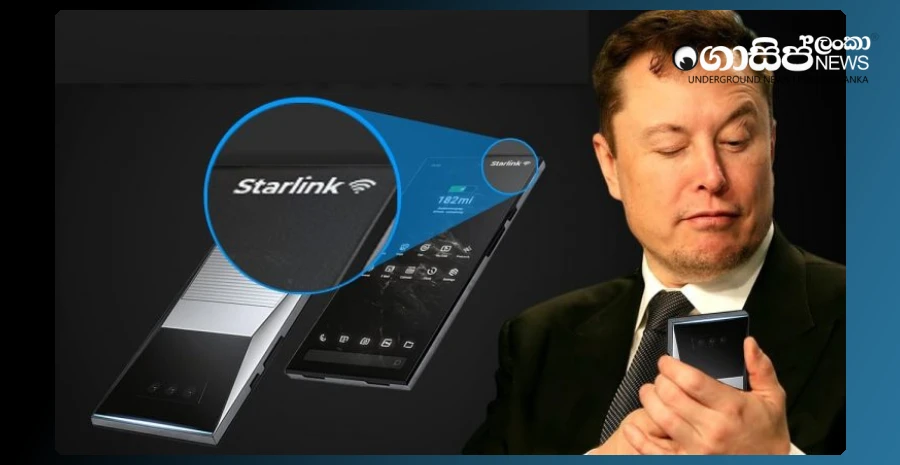
It is reported that Elon Musk's SpaceX company is preparing to revolutionize the mobile communication sector. They plan to provide internet facilities, as well as voice calls and text message services, by directly connecting satellites in space with smartphones on Earth.
According to the Japanese newspaper Nikkei, SpaceX is implementing a new project called "Starlink Mobile" by launching additional satellites to directly connect its satellite internet network with smartphones. Under the Starlink project, which has been operational since 2019, over 10,000 small satellites have already been installed in a low Earth orbit of 550 kilometers, and their goal is to expand this to 40,000 satellites. Musk now aims to use this infrastructure to provide communication services directly to mobile phones, moving beyond the current home and business internet services that require special receiver devices.To set the stage for this mobile communication service, SpaceX has invested $17 billion to acquire wireless frequency bands (2-4 GHz S-band) owned by the American company EchoStar. Using these long-wavelength frequencies, which are ideal for satellite communication, the company is preparing to test "satellite phone" services globally by the end of the year. While current mobile communication relies on land-based towers and fiber optic connections, leading to signal breakdowns in mountainous or oceanic regions, SpaceX's satellite phone system will allow direct signal exchange with satellites from any location with a clear view of the sky. If this service, which is less costly than existing communication methods, is commercialized, it will be a massive revolution in the entire communication sector.
Previously, there were speculations in the financial sector that Musk would develop a mobile device called "Teslafone" powered by artificial intelligence, but now the focus is on using SpaceX's satellite technology for mobile services. Investment bank TD Cowen indicates that competition between SpaceX and major telecommunication companies will intensify in the future. Experts in the field say that the revenue from this mobile communication service will be used by Musk to raise funds for long-term projects such as colonizing Mars. Unlike loss-making artificial intelligence projects, communication services have the potential to generate stable profits based on existing infrastructure. SpaceX's profitable Starlink business already has over 12 million global users, and its profit margin is high, ranging between 63% and 65%. The potential market size for Starlink Mobile service is projected to reach $740 billion.
With Elon Musk's rapid approach, other competitors are also taking steps to enter the satellite phone market. Accordingly, American company Rocket Lab is working to provide communication services to terrestrial devices via its own satellites by acquiring Iridium Communications. A senior official in the space sector stated that satellite phone services do not require changes to terrestrial infrastructure with every new generation of mobile phones, and ground maintenance costs are near zero after the initial satellite launch. Therefore, if this service is successfully implemented, the traditional patterns of the mobile communication market will undoubtedly change completely.