![Gossip Lanka News [English]](https://blogger.googleusercontent.com/img/a/AVvXsEhYm2aFFq-bIW1nWX-RrqnPFoIsVos6_VCVz8BpLt0QJi55GNXHXC2fugeRvL0qUStEuCfs7Sfu6ZiSlhrkldxfGuE_wzy5gitY6rMZ2KSi8VBbGvkgXLks37RwZV-4-HKbWiNLRxB8C_r1e4z3mpxFTMPDJPEADoG8E-bZteWFipeD5KNGbjvCfqEfKw=s300 "Gossip Lanka News [English]")
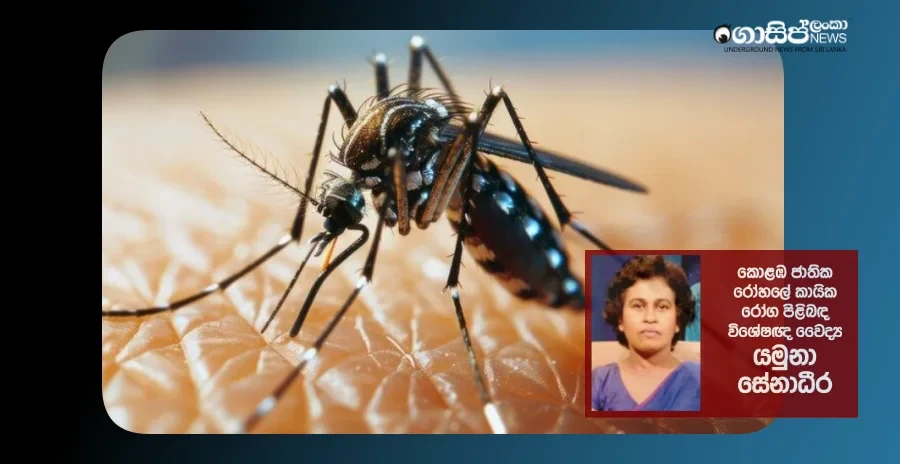
At this moment, with the spread of fever as an epidemic with the rain, not all fever patients need to be hospitalized on the very first day of contracting the fever. Several types of fever are spreading these days.
1. Dengue fever 2. Leptospirosis (Rat fever) 3. Influenza (Other viral fevers associated with the respiratory system) are among the main ones.With the activation of the Southwest Monsoon rains, a large number of dengue patients have been reported daily since 2017, especially in recent times. Due to the rapid increase in dengue infections in Sri Lanka on some days, and the hospital capacity and patient congestion, patients with mild conditions do not need to be hospitalized. Such patients can be cared for at home under medical supervision. At a time when hospital capacity has reached its maximum due to the reported cases, the discussion today is about managing mild patients at home to save hospital beds for severe patients.
Mild patients are considered non-severe dengue patients during the first few days of fever. Young patients are often managed from home after an initial daily check-up under the supervision of a doctor in the outpatient department or fever unit of hospitals.
I emphasize that dengue management should always be done only according to medical advice.
Dengue patients experience a decrease in blood platelets, and some patients can develop dengue shock syndrome. Some may develop dengue hemorrhagic fever, leading to internal and external bleeding. This is why dengue is called a fatal disease or a life-determining condition.
Things to observe in dengue patients include the amount of fluids to be consumed daily, the patient's urine output, blood density (Hematocrit), daily blood tests (FBC), blood pressure, pulse rate, and the nature of the pulse. It is essential to be vigilant about these things and to monitor them consistently.
Blood tests for dengue patients: The NS1 Antigen test helps to quickly identify the dengue virus from the first day of fever onset up to the 5th day.
If this test is positive, the conclusion is that you have dengue. Even if the NS1 dengue antigen test is negative, you could still be a dengue patient.
The IgM / IgG test should be performed 5 days after the onset of fever. IgM can help determine if it is a new dengue infection.
IgG helps to determine if there was a previous dengue infection. 1. FBC (Full Blood Count) is usually done from day 3 of fever.
This checks the platelet count and blood density (Hematocrit / PCV) 83.
A decrease in platelets can be normal, but an increase in Hematocrit is a danger sign. How to care for a dengue patient at home?
Rest (Bed rest): The patient should be in complete rest.
Avoid work, walking, and exertion. The most important thing in this severe disease is fluid administration, which is a key factor in saving the patient's life. Therefore, fluids must be given correctly to the patient.
The amount of fluid required per day is determined by body weight. 50 ml per kg of body weight (up to a maximum of 50kg). Although explained by a simple example, the amount of fluid to be taken daily according to body weight can be shown as follows: 20 kg – 1000 ml (1 liter), 30 kg – 1500 ml (1.5 liters), 40 kg – 2000 ml (2 liters), 50 kg or more – 2500 ml (2.5 liters minimum). This means that the daily fluid requirement is determined by the patient's weight.
When administering fluids to a dengue patient, the most important thing is the correct amount and administration at the correct time.
Using a measurement cup for this is very important.
How much should be given per hour?
According to the patient's body weight, a 40 kg patient can be given 80 ml per hour, a 50 kg patient 100 ml per hour, and a 60 kg patient 100-120 ml per hour. The most important thing to remember here is that the required amount of fluid should not be given to the patient to drink all at once.
The correct method, therefore, is to give small amounts throughout an hour. Small amounts can be given every 10 to 15 minutes.
Why is this important?
In dengue, fluid leakage from blood vessels can occur. Therefore, if too little fluid is given, the body weakens. If too much fluid is given at once, breathing difficulties may arise.
The most correct approach is to provide balanced fluids to the patient.
Accordingly, are only water considered as fluids that can be given to the patient? Can other things not be given?
Jeevani (ORS), coconut water, soup, porridge, and light-colored fruit juices can also be used for this purpose.
If the patient's fever persists, use only Paracetamol for fever every six hours.
Completely avoid the following: artificial beverages (soft drinks), alcohol, high-caffeine products. Red-brown colored drinks should not be given until recovery.
Medications to avoid: Aspirin, Ibuprofen, Diclofenac, Mefenamic acid. These medications can increase the risk of bleeding.
Urine monitoring: Normal: 0.5-1 ml/kg/hour. Measure and record urine output every two or three hours.
Danger signs: If no urine has been passed for more than 4-6 hours, this is a sign to go to the hospital immediately.
Diet: Light foods such as porridge, soup, rice + vegetables. Bananas, papayas, oranges, green grapes should not be consumed.
Oily foods, artificial beverages, highly red/brown foods.
Symptoms requiring immediate hospitalization for a dengue patient.
Severe abdominal pain, frequent vomiting, bleeding (nose / gums / stool), cold extremities, excessive sleepiness, weakness, difficulty breathing, reduced urine output. These symptoms are usually observed during the critical phase.
Special attention
If a child tests positive for dengue, management must strictly follow the advice of a pediatrician.
Dengue is not a simple fever. Life is not determined solely by platelet count or fluid balance. The urine output, blood density (Hematocrit), and clinical signs are all extremely important.
Remembering that a dengue patient's life is saved by correct observation, proper fluid management, and timely administration of prescribed treatment, the patient can be properly managed under medical advice and supervision.
--
Dr. Yamuna Senadheera, Consultant Physician, National Hospital of Sri Lanka, Colombo
(Note - Madhavi Dharmaratne)