![Gossip Lanka News [English]](https://blogger.googleusercontent.com/img/a/AVvXsEhYm2aFFq-bIW1nWX-RrqnPFoIsVos6_VCVz8BpLt0QJi55GNXHXC2fugeRvL0qUStEuCfs7Sfu6ZiSlhrkldxfGuE_wzy5gitY6rMZ2KSi8VBbGvkgXLks37RwZV-4-HKbWiNLRxB8C_r1e4z3mpxFTMPDJPEADoG8E-bZteWFipeD5KNGbjvCfqEfKw=s300 "Gossip Lanka News [English]")
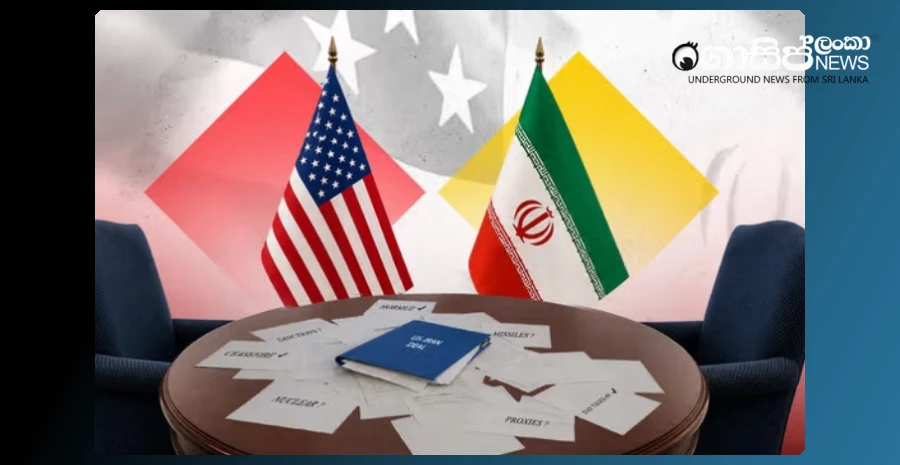
It is reported that serious problems and many questions are currently arising regarding the diplomatic discussions between the United States and Iran. Previously, Mr. Donald Trump, who criticized this nuclear agreement as the worst deal in history, had spent over 20 months and received the support of many experts for this.
Foreign diplomats and experts are closely monitoring the seriousness of the current American effort, the number of working groups established for it, the number of experts involved, and the nature of the future timetable. According to Ellie Geranmayeh, an Iran expert at the European Council, European parties expect experienced and responsible individuals to be involved in these working groups. She also points out that in previous discussions held in Geneva under the leadership of Steve Witkoff and Jared Kushner, complex issues did not receive sufficient attention.European countries are watching to see if Mr. Trump will agree to a deal with less impact than the agreement reached in 2015. The most scrutinized aspect here is the fate of Iran's 970 pounds (440 kg) of highly enriched uranium stock, which is close to bomb-making levels. According to the memorandum of understanding signed last Wednesday, this uranium stock is to be diluted to a minimum level of 3.67 percent, as per the 2015 agreement. However, unlike the 2015 agreement, all this uranium stock is to be retained within Iran instead of being removed from the country, thereby giving Iran the opportunity to enrich uranium again secretly or after a suspension period in the future.
The process of investigation and monitoring is extremely critical in these agreements, and the International Atomic Energy Agency (IAEA) has been tasked with overseeing the uranium dilution process. Concerns exist as to whether Iran will grant inspectors quick access to conduct snap inspections without prior notice and whether it will attempt to bypass inspection bodies. There have also been accusations that Iran has previously misled investigators by claiming the International Atomic Energy Agency is not impartial. Ali Vaez of the Crisis Group points out that due to the prevailing wartime atmosphere, a more hardline government has emerged in Iran, and their motivation to develop nuclear weapons for protection against attacks has increased.
The issue of security and navigation in the Strait of Hormuz is also a major topic of discussion here. Although Iran has agreed to free navigation during the discussion period, no final decision has been made regarding its future. Contrary to international laws, Iran attempts to levy "maintenance" or "environmental" fees from ships passing through, which the United States and other Asian and European countries oppose. While Oman and the United Arab Emirates have alternatives for exporting oil outside the Strait of Hormuz, countries like Kuwait, Qatar, and Bahrain could face a severe economic collapse if they succumb to Iranian demands. Meanwhile, Saudi Arabia hopes to discuss regional security and a non-aggression pact.
Limiting Iran's missile power was another objective of the United States, but the agreements reached on Wednesday did not include provisions regarding missiles. European countries are closely monitoring this issue as Iranian missiles have the capability to reach Israel, Gulf countries, and even Europe. The US agreement to lift missile and oil sanctions, as well as to respect Iran's territory, has provided the Iranian government with new funds and strength. The absence of a credible military threat has reduced America's leverage, and the Trump administration has taken this step due to the upcoming midterm elections in November and anti-war sentiments within the country. Experts like Elliott Abrams state that this will prolong the lifespan of the Iranian government and send a message to the people protesting against the government that they will receive no support from Washington.