![Gossip Lanka News [English]](https://blogger.googleusercontent.com/img/a/AVvXsEhYm2aFFq-bIW1nWX-RrqnPFoIsVos6_VCVz8BpLt0QJi55GNXHXC2fugeRvL0qUStEuCfs7Sfu6ZiSlhrkldxfGuE_wzy5gitY6rMZ2KSi8VBbGvkgXLks37RwZV-4-HKbWiNLRxB8C_r1e4z3mpxFTMPDJPEADoG8E-bZteWFipeD5KNGbjvCfqEfKw=s300 "Gossip Lanka News [English]")
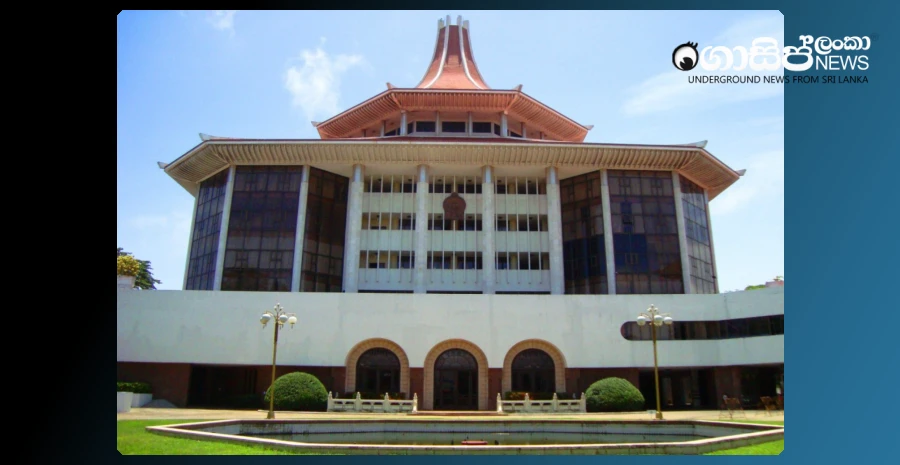
The Supreme Court, nullifying the order given by the Colombo Three-Judge High Court during the previous presidency of Ranil Wickremesinghe, which had dismissed charges filed against a group of defendants including Perpetual Treasuries Company, former Central Bank Governor Arjuna Mahendran, and former Finance Minister Ravi Karunanayake, regarding the Central Bank bond issue that occurred in 2016, has ordered the immediate resumption of that trial. A five-member Supreme Court bench has further informed the High Court that this case, which had a severe impact on the national economy and is of public importance, should be heard daily unless a special situation arises.
The Attorney General had filed this case alleging misappropriation of government funds and causing financial loss during the controversial bond issue by the Central Bank of Sri Lanka on March 31, 2016. Indictments were filed before the Colombo Three-Judge High Court under the Public Property Act against ten defendants including Perpetual Treasuries Company, Arjuna Mahendran, Ravi Karunanayake, Arjun Aloysius, Kasun Palisena, and Geoffrey Aloysius.
However, when this case was taken up for hearing on December 06, 2021, a preliminary objection raised by the defense was accepted by the three-member High Court bench. The argument put forward by the defense lawyers, stating that Perpetual Treasuries Company is not a natural person and therefore charges cannot be maintained against it under the Public Property Act, was accepted. Consequently, it was decided that the case could not be maintained against the main company as well as the other defendants who aided and abetted it, and the High Court took steps to acquit them of the charges.
Challenging that decision of the High Court, the Attorney General first filed appeals with the Court of Appeal and subsequently with the Supreme Court. The five-member Supreme Court bench, having considered that appeal, ruled that although a company is a corporate structure, it should be considered a person under the Interpretation Ordinance. Accordingly, Justice Mahinda Samayawardhena emphasized in his judgment that there is no legal impediment to filing criminal charges against a company under Section 5(1) of the Public Property Act, read with Section 386 of the Penal Code.
The Supreme Court judgment clarified that such secret and complex financial frauds are committed not only by natural persons but also through individuals behind corporate structures, and that these cause immense loss to public property. Although a company cannot be sentenced to imprisonment, it further states that there is the possibility of imposing penalties through fines via legal provisions when found guilty.
During this appeal hearing, Deputy Solicitor General Janaka Bandara appeared on behalf of the Attorney General, while a panel of President's Counsel, including Faiz Mustapha, Faiza Marker, Naveen Marapana, and Shavindra Fernando, presented arguments on behalf of the respondents. The Supreme Court has ordered the High Court to expedite the relevant trial under Section 450(5)(a) of the Code of Criminal Procedure.