![Gossip Lanka News [English]](https://blogger.googleusercontent.com/img/a/AVvXsEhYm2aFFq-bIW1nWX-RrqnPFoIsVos6_VCVz8BpLt0QJi55GNXHXC2fugeRvL0qUStEuCfs7Sfu6ZiSlhrkldxfGuE_wzy5gitY6rMZ2KSi8VBbGvkgXLks37RwZV-4-HKbWiNLRxB8C_r1e4z3mpxFTMPDJPEADoG8E-bZteWFipeD5KNGbjvCfqEfKw=s300 "Gossip Lanka News [English]")
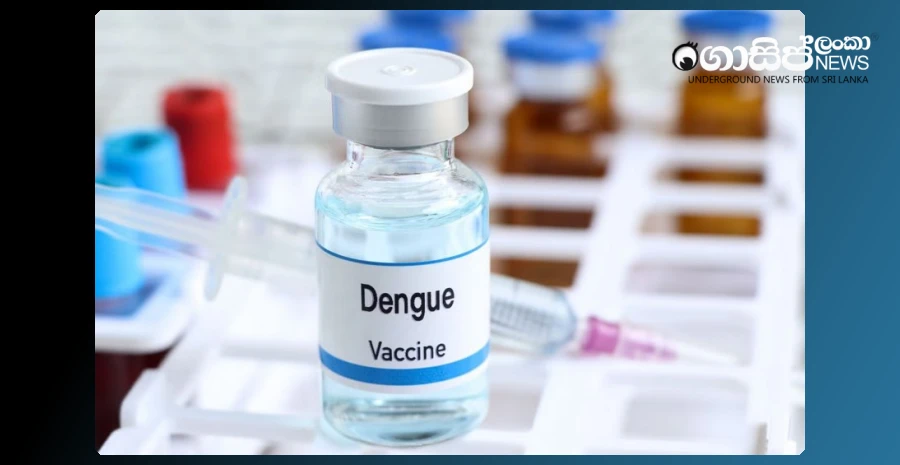
Due to the death of two individuals during a dengue vaccination program in Brazil, authorities there have taken steps to temporarily suspend vaccination activities on June 8. This incident also sends a strong warning message to India, primarily because of the significant similarity between the 'Butantan-DV' dengue vaccine used in Brazil and the 'DengiAll' vaccine slated for introduction in India.
Both of these vaccines are considered tetravalent vaccines, produced from a physical combination of four categories of live but attenuated dengue viruses (DENVs).The dengue virus, commonly found in Brazil and India, consists of four main serotypes: DENV-1, 2, 3, and 4. When an attenuated virus is introduced into the body, it produces specific antibodies as well as cross-reactive antibodies. However, when the level of these cross-reactive antibodies decreases, it can lead to a further enhancement of the activity of a newly entering dengue virus, instead of suppressing it. This condition, known as Antibody-Dependent Enhancement (ADE), is a serious risk that can progress to fatal dengue conditions if not properly treated.
During Brazil's vaccination program, 42 vaccinated individuals experienced severe side effects such as intense abdominal pain, persistent vomiting, and bleeding, with two deaths and one person admitted to the intensive care unit. Brazilian authorities indicate that these side effects were reported in only a very small percentage, 0.008%, of the more than five hundred thousand vaccinated individuals. However, the similarity of such symptoms, which did not emerge during clinical trials, to dengue hemorrhagic fever, and the loss of even one life, have drawn serious attention from medical researchers.
This is not the first time such a situation has arisen due to a dengue vaccine; similar severe side effects were reported three years after the 'Dengvaxia' vaccine from Sanofi Pasteur was administered to over eight hundred thousand children in the Philippines about a decade ago. Both Brazil's 'Butantan-DV' and India's 'DengiAll' vaccines are based on technology developed by the U.S. National Institutes of Health (NIH). This technology, which involves separately attenuating all four viral serotypes and then mixing them together, has been provided to Brazil's Instituto Butantan and India's Panacea Biotec.
During the phase three clinical trials conducted in Brazil, there was a lack of data regarding the vaccine's efficacy against DENV-3 and DENV-4 serotypes, as these serotypes were not widely prevalent in Brazil during that period. Meanwhile, Panacea Biotec of India and the Indian Council of Medical Research (ICMR) jointly completed registrations for the phase three clinical trials of the 'DengiAll' vaccine in January of this year, involving 10,335 healthy volunteers. Participants in this trial process, which begins in August 2024, are scheduled to be continuously monitored for a period of two years.
Given this situation, India must adopt several precautionary measures before releasing its 'DengiAll' vaccine to the market. Regulators must mandatorily analyze blood samples from vaccinated volunteers to confirm antibody activity against all four viral serotypes and the absence of the aforementioned ADE risk. Even after the vaccine's introduction, it is essential to implement a long-term follow-up program and monitor for side effects through periodic blood tests. Furthermore, it is the medical community's opinion that a similar ADE risk exists for the 'Qdenga' tetravalent vaccine, produced by Japan's Takeda company and currently awaiting approval in India.