![Gossip Lanka News [English]](https://blogger.googleusercontent.com/img/a/AVvXsEhYm2aFFq-bIW1nWX-RrqnPFoIsVos6_VCVz8BpLt0QJi55GNXHXC2fugeRvL0qUStEuCfs7Sfu6ZiSlhrkldxfGuE_wzy5gitY6rMZ2KSi8VBbGvkgXLks37RwZV-4-HKbWiNLRxB8C_r1e4z3mpxFTMPDJPEADoG8E-bZteWFipeD5KNGbjvCfqEfKw=s300 "Gossip Lanka News [English]")
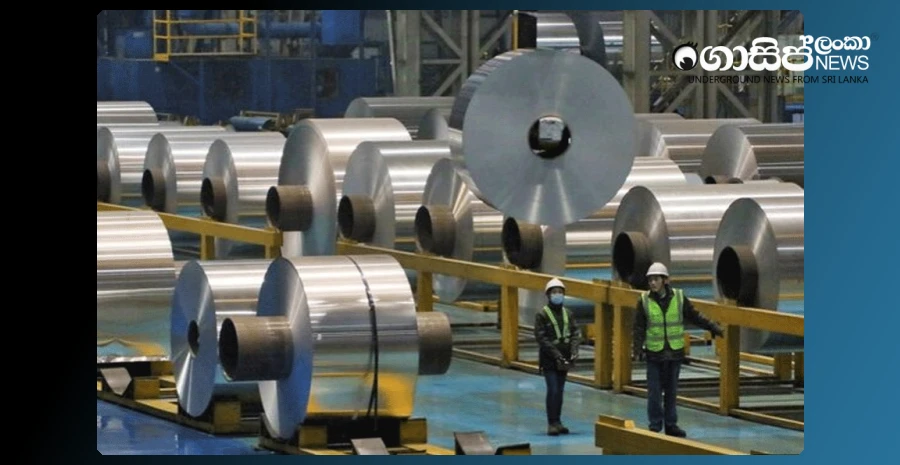
Due to the recent global aluminum shortage caused by the Middle East war situation, the North American automotive industry is facing a severe crisis, with Ford being the most significantly affected. According to Sam Pack, a Ford dealer in Texas, the stock of F-150 and Super Duty trucks, which are the primary source of income for his business, is currently limited to only 42 days.
This is a significant reduction compared to his usual 60-day inventory. He is deeply concerned about not having enough trucks to meet the high demand during the summer season.The use of aluminum instead of steel to reduce vehicle weight and increase fuel efficiency has recently become popular among automakers. The North American automotive industry consumed approximately 3.7 million metric tons of aluminum last year, showing an increase of about 30 percent compared to 2020. However, the disruption of aluminum supply from the Persian Gulf region due to the Iran war has caused prices to rise sharply. Additionally, the 50 percent import tariff imposed by the United States has been a major factor in this price increase. As a result, the price of primary aluminum in America has increased by about 90 percent compared to a year ago, and according to reports, while the global price of a ton of aluminum is around $3500, tariffs and transportation costs have pushed the price in the American market up to $6100.
This situation has affected Ford more severely, primarily due to a fire last fall at a factory in New York, which was their main aluminum supplier. The disruption in production at this factory, operated by Novelis, has caused Ford's adjusted profit to drop by approximately $2 billion. In the first quarter of this year, Ford F-series truck sales decreased from 190,000 to 160,000, and the company expects to produce an additional 150,000 trucks this year to cover the supply shortage. However, while production at the factory is scheduled to gradually resume this month, it is stated that it will not immediately fully address the supply shortage. Ford has requested the Trump administration to temporarily remove the tariff imposed on imported aluminum.
In the face of this crisis, other automakers are also reportedly trying to reduce their reliance on aluminum. Specifically, R.J. Scaringe, CEO of electric vehicle manufacturer Rivian, states that the rising cost of metals is a major concern for them. However, Mark Millett, CEO of Steel Dynamics, says there is no evidence of a return to steel. This is because changing machinery to use steel instead of aluminum for vehicle parts is a costly and time-consuming process. Experts point out that since Ford has designed its vehicle bodies using aluminum, changing its production structure would be very difficult.