![Gossip Lanka News [English]](https://blogger.googleusercontent.com/img/a/AVvXsEhYm2aFFq-bIW1nWX-RrqnPFoIsVos6_VCVz8BpLt0QJi55GNXHXC2fugeRvL0qUStEuCfs7Sfu6ZiSlhrkldxfGuE_wzy5gitY6rMZ2KSi8VBbGvkgXLks37RwZV-4-HKbWiNLRxB8C_r1e4z3mpxFTMPDJPEADoG8E-bZteWFipeD5KNGbjvCfqEfKw=s300 "Gossip Lanka News [English]")
The Ministry of Health has officially announced that two hundred and three (203) meningitis patients have been reported from several areas of the island so far. According to Deputy Minister of Health Dr. Hansaka Wijemuni, these patients have been identified from Deniyaya, Diyatalawa, Rikillagaskada, and Kandy areas.
However, the Deputy Minister requests the public not to harbor unnecessary fears regarding this situation, also pointing out that epidemiologists have already commenced extensive investigations into the matter.Dr. Palitha Karunapema, Chief Epidemiologist of the Epidemiology Unit of the Ministry of Health, states that the primary cause for the spread of this disease is the consumption of unclean food or water. Among the patients identified so far, the highest number, fifty (50), has been reported from the Deniyaya area. Additionally, 28 patients have been reported from Diyatalawa, 25 from Rikillagaskada, and 13 suspected patients from the Welimada area.
Dr. Karunapema further assures that health authorities have already taken all necessary maximum hygienic steps and measures to control the further spread of meningitis. Due to the prevailing adverse weather conditions with heavy rainfall, the tendency for such diseases to spread may increase. Therefore, the Ministry of Health makes a special request to the entire public to pay stricter attention than usual to the cleanliness of the food, beverages, and drinking water they consume, and to ensure the adoption of proper hygienic practices.
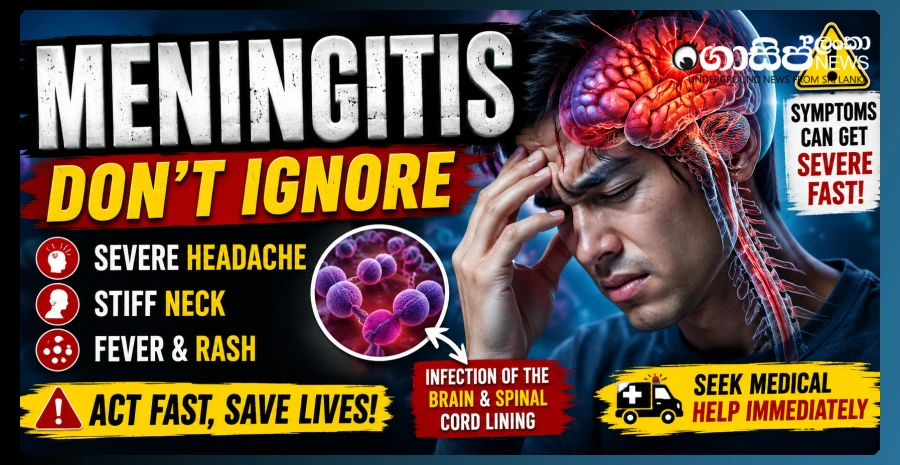
Meningitis, or inflammation of the meninges, is an infection of the thin protective membranes surrounding the brain and spinal cord. While it can be a relatively mild condition when caused by a viral infection, bacterial meningitis can progress to a life-threatening level within a few hours, making immediate medical attention essential if the disease is suspected.
The main symptoms of this disease include high fever, severe headache, stiff neck or discomfort, vomiting or nausea, and sensitivity to bright light. Additionally, confusion, drowsiness, difficulty waking up, seizures like epilepsy, and a red or purple skin rash that does not fade when pressed may occur, although this rash is not always present. In young children and infants, these symptoms can be more vague, and they may exhibit refusal to feed, irritability, high-pitched crying, fever, excessive sleepiness, or bulging of the soft spots on the head.
This disease can be primarily classified into several types, with bacterial meningitis being the most dangerous. If this condition, caused by bacteria such as Neisseria meningitidis and Streptococcus pneumoniae, is not treated promptly, it can lead to brain damage, hearing loss, blood poisoning, coma, or even death. In contrast, viral meningitis carries a lower risk, but medical examination is important as its early symptoms can also resemble a bacterial infection. Furthermore, individuals with weakened immune systems are at risk of fungal meningitis, and a very serious condition that gradually develops due to tuberculosis bacteria.
Many of these pathogens can be transmitted to others through activities such as airborne droplets released when coughing, kissing, close contact, or sharing eating utensils. Meningococcal meningitis, in particular, is a rapidly spreading infectious disease. To diagnose this disease, doctors use physical examinations to check for stiff neck, fever, and skin rash, in addition to blood tests, cerebrospinal fluid analysis, CT or MRI scans, and PCR or culture tests to identify the causative agent.
Treatment for the disease depends on its origin. For a bacterial infection, immediate intravenous antibiotics, steroids, fluids, and oxygen administration, as well as intensive care unit treatment, may be necessary. For a viral infection, supportive care is provided, and for fungal and tuberculosis conditions, specific medications must be administered long-term. However, if severe headache with fever, stiff neck, confusion, or a purple rash occurs, it is essential to seek immediate hospitalization rather than staying at home, and it should be remembered that symptoms can appear in any order.
Vaccination plays a crucial role in protecting against this deadly disease, and the risk can be significantly reduced by vaccines for diseases such as meningococcal, pneumococcal, measles, and mumps. Additionally, practicing hygienic habits such as not sharing eating utensils, covering the mouth when coughing, and frequent hand washing can prevent the spread of the disease. Furthermore, if someone has been in close contact with a patient, taking prophylactic antibiotics under the advice of a public health medical officer is also extremely important.