![Gossip Lanka News [English]](https://blogger.googleusercontent.com/img/a/AVvXsEhYm2aFFq-bIW1nWX-RrqnPFoIsVos6_VCVz8BpLt0QJi55GNXHXC2fugeRvL0qUStEuCfs7Sfu6ZiSlhrkldxfGuE_wzy5gitY6rMZ2KSi8VBbGvkgXLks37RwZV-4-HKbWiNLRxB8C_r1e4z3mpxFTMPDJPEADoG8E-bZteWFipeD5KNGbjvCfqEfKw=s300 "Gossip Lanka News [English]")
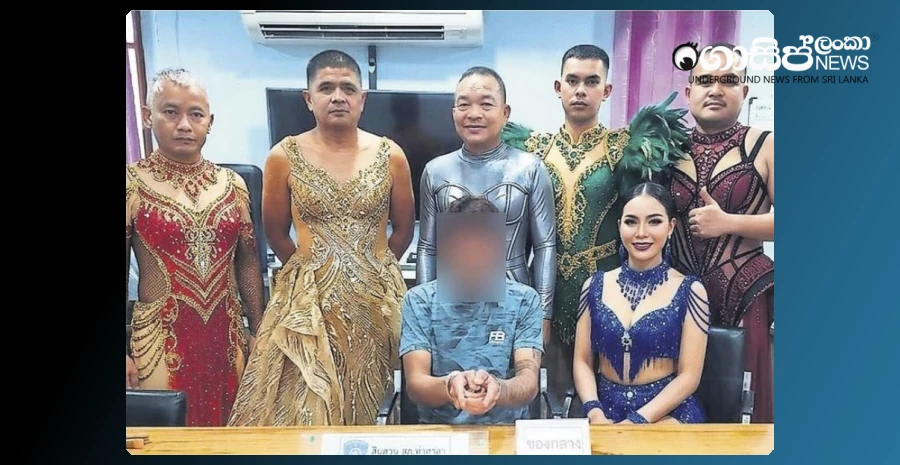
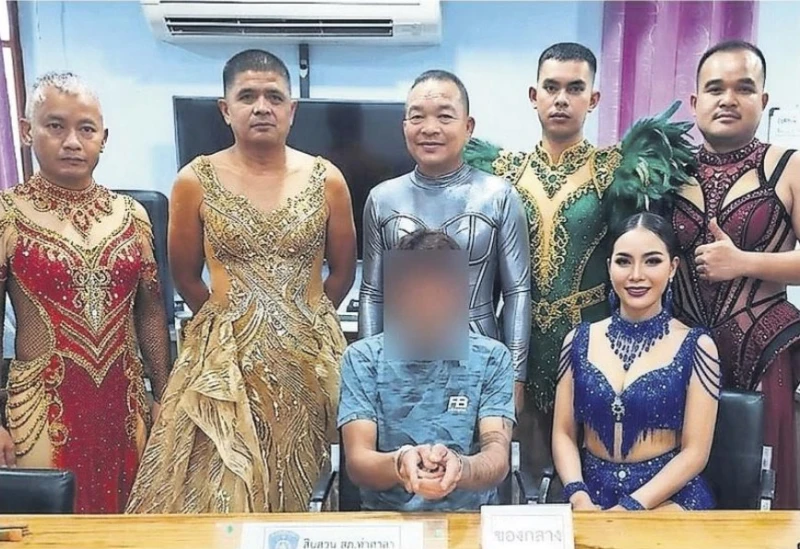
The Thai police have acknowledged that a controversial photograph depicting a group of Thai police officers in fancy dress arresting a drug trafficker is a fake, created using artificial intelligence (AI). In this fake photograph, five male officers and one woman are dressed in elaborate costumes typically worn for festive occasions, and it was so convincingly created that it appeared on the front page of the 'Daily Star' newspaper, as well as in major media outlets such as 'The Telegraph', 'The Sun', and 'The New York Post'.
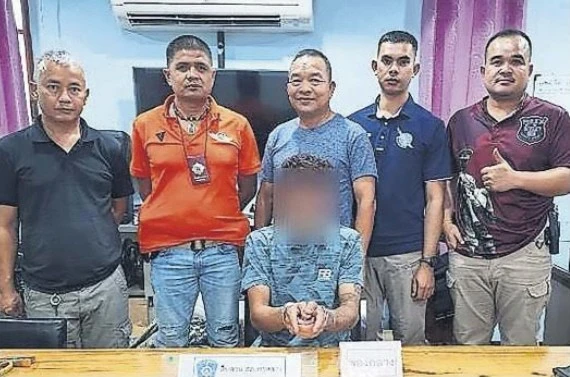
However, although the incident of the suspect's arrest through a covert operation is true, the photograph released in connection with it was entirely edited. According to the real photograph later posted on the Facebook page of the Tha Luang Police Station in Thailand, it only shows five male police officers in regular attire. The woman dressed as a dancer in the fake photograph is not present in the real photograph at all. It is reported that the administrator in charge of the police station's Facebook account released this AI-generated photograph online with the aim of presenting a "more friendly," "cute, and humorous" image of the police to the public.
Following this incident, media outlets including 'The Telegraph', 'Daily Mail', and 'The Sun' have now clarified that their news reports were based on a fake AI photograph provided by the police. Although the unusual nature of the photograph might have raised suspicions among some readers, its release from an official police source made it a significant challenge for media organizations to verify its authenticity. This incident further emphasizes that there is still no definitive method to verify the authenticity of a photograph without direct contact with the photographer, and this situation has become a time-consuming and risky task for major media organizations, as current AI detection software is also not sufficiently reliable for this purpose.