![Gossip Lanka News [English]](https://blogger.googleusercontent.com/img/a/AVvXsEhYm2aFFq-bIW1nWX-RrqnPFoIsVos6_VCVz8BpLt0QJi55GNXHXC2fugeRvL0qUStEuCfs7Sfu6ZiSlhrkldxfGuE_wzy5gitY6rMZ2KSi8VBbGvkgXLks37RwZV-4-HKbWiNLRxB8C_r1e4z3mpxFTMPDJPEADoG8E-bZteWFipeD5KNGbjvCfqEfKw=s300 "Gossip Lanka News [English]")
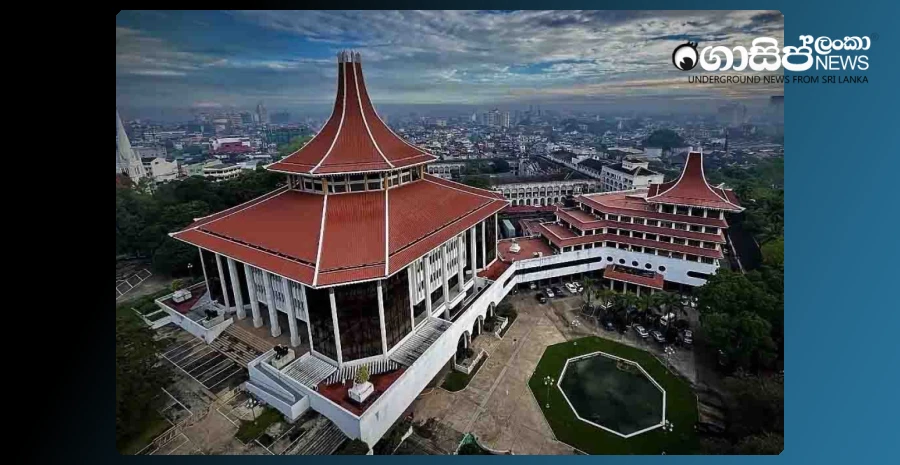
The Supreme Court, delivering a verdict regarding the deforestation that occurred around the ancient Rajamaha Viharaya of Nakolagane, located in Ehethuwewa, Kurunegala District, ordered the Director General of Wildlife Conservation to reforest and restore the damaged forest system. This order was issued after hearing a fundamental rights petition filed by the Centre for Environmental Justice, and the verdict was pronounced by the Supreme Court bench comprising Justices Janak de Silva, Priyantha Fernando, and Sobhitha Rajakaruna.
The basis of this case is the facts presented to the court by the petitioners, alleging that the chief incumbent of the temple had illegally cleared approximately 1,500 acres of forest land said to belong to the said temple. However, during the trial, it was revealed that the head of the temple had presented a deed (sannasa), claiming ownership of approximately 4,500 acres of land and stating that they have the right to use it as they wish.
Considering these facts, the Supreme Court further instructed the authorities to immediately enforce the law regarding the sale, mortgaging, or transfer of properties under the custody of the said temple to other parties, as such actions are contrary to the rules and regulations of the Buddhist Temporalities Ordinance. It was also emphasized that urgent steps should be taken to restore the legal ownership of such lost properties to the temple.
The court concluded that throughout this entire process, the responsible institutions, namely the Director General of Wildlife Conservation, the Central Environmental Authority, the Commissioner of Buddhist Affairs, and the North Western Provincial Environmental Authority, had neglected their legal duties. Accordingly, it is the Supreme Court's position that the petitioners' fundamental rights have been violated through the infringement of the right to environmental protection, as affirmed by Article 12(1) of the Constitution.