![Gossip Lanka News [English]](https://blogger.googleusercontent.com/img/a/AVvXsEhYm2aFFq-bIW1nWX-RrqnPFoIsVos6_VCVz8BpLt0QJi55GNXHXC2fugeRvL0qUStEuCfs7Sfu6ZiSlhrkldxfGuE_wzy5gitY6rMZ2KSi8VBbGvkgXLks37RwZV-4-HKbWiNLRxB8C_r1e4z3mpxFTMPDJPEADoG8E-bZteWFipeD5KNGbjvCfqEfKw=s300 "Gossip Lanka News [English]")
It is clear that Sri Lanka's traditional economic model and export policies have failed. Since the nineteenth century, we have been exporting traditional goods such as tea, rubber, and coconut, with the apparel industry being added in the eighties.
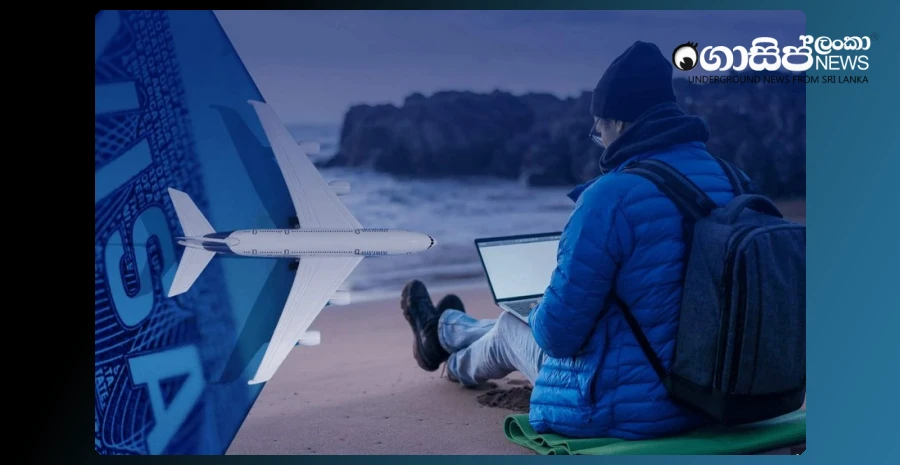
However, since these goods can be easily reproduced by countries like Vietnam, India, and Kenya, they do not create a strong structural demand for the Sri Lankan Rupee. Furthermore, by relying on a sun and beach-based tourism industry, similar to neighboring countries, we face a constant balance of payments crisis. The simple theory is that the world does not need to buy our goods to buy our currency.Meanwhile, a silent revolution is taking place within the Colombo Port City and its surrounding business zones. New Business Process Outsourcing (BPO) centers, offshore gaming companies, and IT engineering services are expanding, and they require call center operators, managers, and software engineers. These institutions rent buildings and also expect food, beverages, and transportation facilities. Although there is no shortage of the necessary infrastructure for this, what we lack is demand for the Rupee. A perfect solution to this problem can be the introduction of a "Digital Nomad Visa". This legal permit allows foreign employees earning income in Euros, Dollars, or Sterling Pounds to live in Sri Lanka while working for their foreign employers.
These digital nomads do not take away local job opportunities or claim local welfare benefits. Instead, they make a tremendous contribution to the local economy by renting houses, consuming local food, using transportation services, and paying for high-speed internet services. By attracting 1,000 such travelers to Sri Lanka, an annual direct local expenditure of USD 3 to 5 million can be generated without exporting a single kilogram of tea. For example, a digital nomad with European financial technology expertise can consult local teams while spending foreign currency in Colombo hotels. This visa system will also greatly help fill the luxurious offices and residential towers being built in Port City with remote professionals such as accountants, IT engineers, and lawyers, and create rental income streams for local homeowners.
Additionally, this enables instant cash flow for food suppliers, domestic helpers, three-wheeler drivers, and telecommunication providers without waiting for an export order. However, the main problem in Sri Lanka is not a lack of potential but a lack of institutional coordination. The Department of Immigration and Emigration, the Ministry of Tourism, the Port City Commission, and the Board of Investment (BOI) currently operate as isolated entities. Changing this situation, Sri Lanka must urgently launch a 90-day integrated marketing campaign targeting European and Israeli IT workers, Asian regional BPO trainers, as well as digital health and accounting freelancers.
These digital professionals come to Sri Lanka not because of our export goods, but because of our geographical location and lifestyle. Being six hours away from Singapore and London, having skilled English-speaking professionals, and the low cost of living in the post-COVID era provide Sri Lanka with three unique advantages. Sri Lanka is in the ideal position to offer these facilities through a simple visa, more so than countries like Bangladesh, India, or Kenya. This is not an alternative to the regular tourism industry but a perfect complement. While a tourist seeking leisure spends $50 a day and stays for 7 days, a digital nomad spends the same amount over 90 days, contributing continuously to the economy by visiting Kandy on weekends and renting vehicles for months.
The most important point is that their monthly foreign salary, received in the country via the SWIFT network and converted into Rupees, creates a stable demand for our currency that tea and rubber could not provide for decades. At a time when the global remote work market is stabilizing, Sri Lanka has a very narrow window to attract mid-level professionals who cannot afford the high costs in countries like the Maldives and are tired of places like Bali. For this, the Department of Immigration and Emigration must simplify visa approvals, and the Ministry of Tourism should introduce packages like "workcation". Similarly, the Port City Commission should take steps to provide six-month rental agreements. While we cannot build a silicon chip industry overnight, opening the country's doors to such professionals, who earn essential foreign exchange, will depend solely on the swiftness of our bureaucracy.