![Gossip Lanka News [English]](https://blogger.googleusercontent.com/img/a/AVvXsEhYm2aFFq-bIW1nWX-RrqnPFoIsVos6_VCVz8BpLt0QJi55GNXHXC2fugeRvL0qUStEuCfs7Sfu6ZiSlhrkldxfGuE_wzy5gitY6rMZ2KSi8VBbGvkgXLks37RwZV-4-HKbWiNLRxB8C_r1e4z3mpxFTMPDJPEADoG8E-bZteWFipeD5KNGbjvCfqEfKw=s300 "Gossip Lanka News [English]")
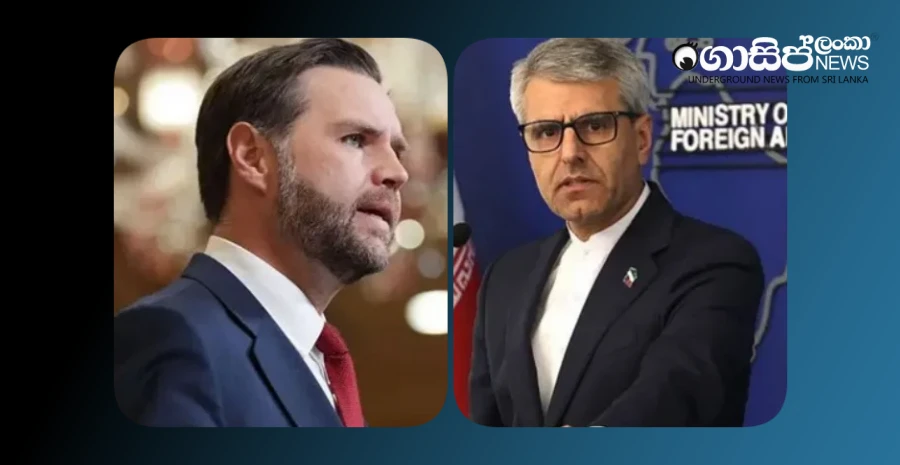
The highest-level direct talks between the United States and Iran concluded without any agreement on April 12, 2026, in Islamabad, the capital of Pakistan. With the breakdown of these historic peace talks, which lasted for nearly 21 hours, there is a risk of further escalation of the existing crisis between the two countries.
The backdrop for these talks was set amidst massive military operations launched by the United States and Israel against Iran and Iranian-backed groups like Hezbollah in Lebanon over several weeks. According to American and Israeli reports, these attacks destroyed numerous Iranian air force, navy, and nuclear infrastructure facilities, and conflicts in Lebanon resulted in over 2,000 deaths and more than 6,300 injuries. The war also severely impacted traffic in the Strait of Hormuz, through which about twenty percent of the world's oil supply is transported. However, due to Pakistan's intervention, Iran agreed to a two-week temporary ceasefire around April 8, and these talks were facilitated in Islamabad, used as a neutral zone, under the leadership of Pakistani Prime Minister Shehbaz Sharif and Foreign Minister Ishaq Dar.
On Saturday, April 11, a delegation led by US Vice President J.D. Vance arrived in Islamabad, including senior advisors such as Steve Witkoff and Jared Kushner. An Iranian delegation, comprising senior officials like Ismail Baghai and Abbas Sarakhshi, also arrived separately. These talks, initiated through the mediation of Pakistani officials, were held behind closed doors overnight amidst tight security. Although initial reports suggested the discussions were proceeding in a positive atmosphere, the strong disagreements between the two sides gradually began to emerge.
By dawn on April 12, it was officially announced that the talks had broken down without any agreement, and the name boards displayed at the negotiation venue were removed within a few hours. Here, the United States primarily maintained a firm stance on Iran's nuclear program, with American representatives emphasizing that Iran must provide a firm promise never to produce nuclear weapons or related equipment again. Furthermore, the US insisted on the immediate opening of the Strait of Hormuz, but Iran refused to agree without American concessions, linking it to a complete peace agreement. In addition, no agreement was reached between the two parties regarding the release of frozen Iranian assets, war reparations, a ceasefire in Lebanon, and a complete cessation of Israeli attacks.
Speaking at a press conference after the breakdown of talks, US Vice President J.D. Vance stated that while it was good news that he was able to hold several meaningful discussions with the Iranians, it was regrettable that an agreement could not be reached because Iran was not prepared to agree to their conditions. He further added that Iran had rejected their best and final offer, and that this situation would negatively impact Iran more than the United States. US President Donald Trump had been remotely monitoring these talks and had connected with Vance several times by phone, stating that whether an agreement was reached with Iran or not, it made no difference to him, and that he would win either way. On the other hand, the Iranian Foreign Ministry announced that the talks failed due to the unreasonable demands of the American side, and that while they should refrain from excessive demands, diplomacy would never end.
Despite the failure of the talks, the two-week ceasefire is still in effect, and Pakistani Foreign Minister Ishaq Dar emphasized the importance of continuously upholding it. Meanwhile, Israeli Prime Minister Benjamin Netanyahu has stated that his operation against Iran is not yet over. This crisis has also been a subject of intense discussion on the international stage, with Pope Leo XIV and Catholic leaders calling for an immediate halt to this uncivilized war. With the breakdown of these historic talks, there is a strong probability of a renewed risk of rising oil prices and instability in the Middle East region and the global economy as a whole.