![Gossip Lanka News [English]](https://blogger.googleusercontent.com/img/a/AVvXsEhYm2aFFq-bIW1nWX-RrqnPFoIsVos6_VCVz8BpLt0QJi55GNXHXC2fugeRvL0qUStEuCfs7Sfu6ZiSlhrkldxfGuE_wzy5gitY6rMZ2KSi8VBbGvkgXLks37RwZV-4-HKbWiNLRxB8C_r1e4z3mpxFTMPDJPEADoG8E-bZteWFipeD5KNGbjvCfqEfKw=s300 "Gossip Lanka News [English]")
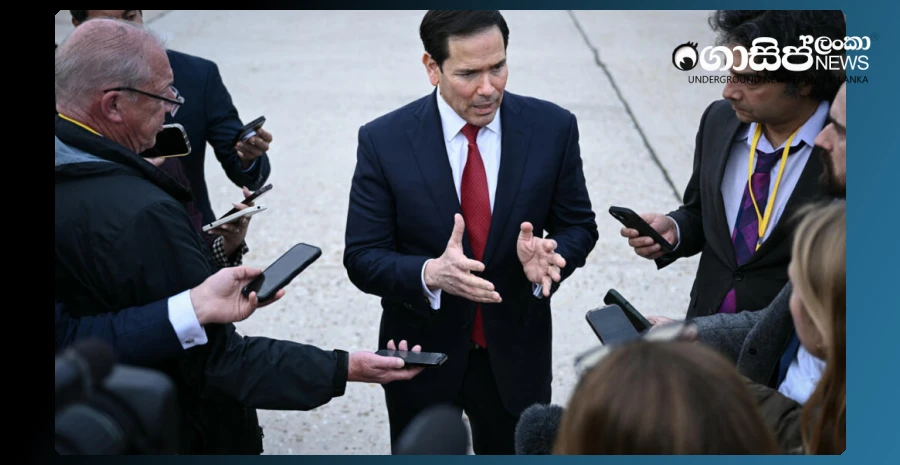
Speaking after the heated meeting of G7 foreign ministers in France, US Secretary of State Marco Rubio stated that the military operation launched by the US against Iran is currently reaching its final stage. He emphasized that the Trump administration is highly confident in concluding the war within a few weeks by achieving its main objectives, rather than dragging it on for months.
It is significant that this statement was made after the American war faced strong criticism at this summit.
Rubio also briefed allied nations on the current status of this four-week-old operation, jointly conducted by American and Israeli forces. The main objectives of the US include destroying Iranian naval and air forces, crippling missile and drone production centers, and largely destroying their ballistic missile reserves to prevent nuclear weapon development. According to official State Department reports, Rubio indicated that these operations are progressing faster than planned. He further stated that once the operations conclude in the coming weeks, Iran will be in its weakest state in recent history. He also confirmed that all these objectives can be achieved without deploying ground troops, though thousands of additional American troops have been stationed in the region to respond to emergencies.
One of the main challenges that could arise after the war is Iran's attempt to impose illegal tolls through the Strait of Hormuz, which carries about 20% of the global crude oil supply. Rubio stated that such a measure is completely unacceptable and that the US is ready to support an international plan to keep the strait open and toll-free once hostilities cease. The joint communiqué issued after the G7 meeting also called for an immediate halt to attacks on civilians and infrastructure, and for the prompt reopening of the Strait of Hormuz for international maritime traffic. However, the communiqué further indicates that efforts to ensure the security of that waterway should only begin after the cessation of hostilities.
This series of attacks was launched by the US and Israel in late February, targeting Iran's nuclear facilities and military infrastructure. It is now in its fourth week, severely impacting the global oil market and maritime traffic. While the US aims to neutralize Iran's nuclear weapons capability and weaken its potential as a regional threat, they have not expressed a direct intention to overthrow the Iranian government. During this operation, currently limited to air and naval strikes, President Trump's 48-hour ultimatum to Iran regarding the Strait of Hormuz has been extended until April 6. Meanwhile, despite accusations from European countries that Russia is providing military support to Iran, Rubio dismissed the idea, stating it would not affect American operations.
During this summit, some controversial situations were also observed between the G7 countries and the United States. European allies strongly emphasized the need for a swift diplomatic solution, and Rubio also faced significant pressure due to President Trump's recent public criticisms regarding NATO and Europe. It was also reported that there was a heated exchange between EU foreign policy chief Kaja Kallas and Rubio concerning the Ukrainian crisis. Rubio reiterated Trump's stance on Ukraine, advocating for a quick ceasefire and a negotiated solution. Despite these disagreements, he further stated that the discussions were very successful, and allied nations expressed their appreciation for the updates provided on the war situation.