![Gossip Lanka News [English]](https://blogger.googleusercontent.com/img/a/AVvXsEhYm2aFFq-bIW1nWX-RrqnPFoIsVos6_VCVz8BpLt0QJi55GNXHXC2fugeRvL0qUStEuCfs7Sfu6ZiSlhrkldxfGuE_wzy5gitY6rMZ2KSi8VBbGvkgXLks37RwZV-4-HKbWiNLRxB8C_r1e4z3mpxFTMPDJPEADoG8E-bZteWFipeD5KNGbjvCfqEfKw=s300 "Gossip Lanka News [English]")
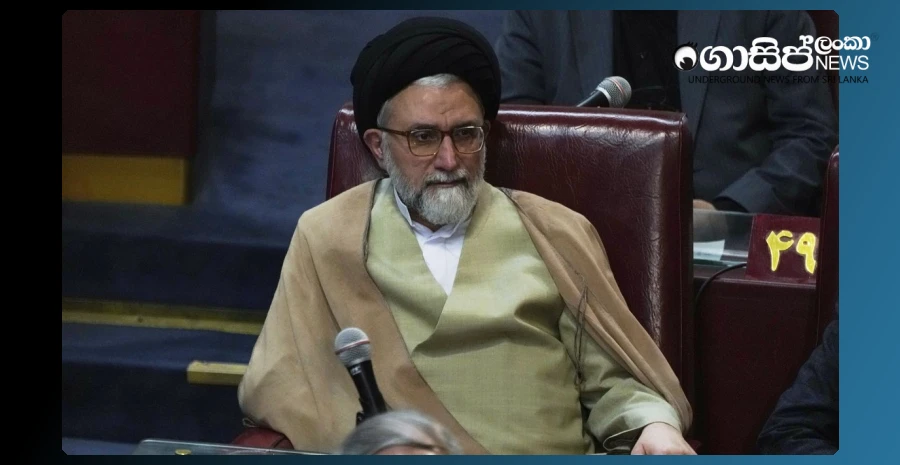
Iranian Intelligence Minister Esmail Khatib has been killed in a night air strike launched by Israel. This has been officially announced by Israeli authorities and later confirmed by the Iranian side.
Israeli Defense Minister Israel Katz stated on March 18, 2026, that the minister was killed in this specific attack targeting the capital, Tehran. He said that this operation was carried out as one step in the continuous authorization given to the Israeli military to target senior Iranian officials without additional government approval, and warned that in this environment of escalating regional tensions, "unique surprises" could be expected across various fronts in the future.
This is reported as the third high-ranking Iranian leader killed by Israel within approximately the last 48 hours. Previously, Ali Larijani, a prominent Iranian security official, and the head of the Basij division of the Revolutionary Guard Corps were also killed in this manner. Iranian President Masoud Pezeshkian stated in a post on the social media network X, that several senior officials, including Minister Khatib and Ali Larijani, along with members of their families and close associates, have died in these attacks. Iranian state television also officially broadcast the news regarding the minister's death.
Esmail Khatib, born in 1961, was appointed as the Minister of Intelligence in August 2021 under then-President Ebrahim Raisi and continued in that position under the current administration. He is the eighth person to be appointed to the position of Iranian Intelligence Minister and previously served as the chief controller of the Iranian Supreme Leader's office since 2010. The United States imposed sanctions against him in September 2022, accusing him of involvement in cyberattacks and other threatening activities, and recently offered a reward of up to $10 million for information leading to him.
This assassination occurred against a backdrop of intensified Israeli operations targeting Iranian assets across the broader region, including Tehran and Lebanon. In response, Iran's missile attacks on Israel and neighboring countries in the Gulf region pose a severe risk of creating a widespread military conflict in the region. Neither the Iranian Ministry of Intelligence nor the Supreme Leader's office has yet made an official statement regarding future actions related to this incident, which has a serious impact on Iran's security and intelligence networks, and the conflict between the parties remains active.