![Gossip Lanka News [English]](https://blogger.googleusercontent.com/img/a/AVvXsEhYm2aFFq-bIW1nWX-RrqnPFoIsVos6_VCVz8BpLt0QJi55GNXHXC2fugeRvL0qUStEuCfs7Sfu6ZiSlhrkldxfGuE_wzy5gitY6rMZ2KSi8VBbGvkgXLks37RwZV-4-HKbWiNLRxB8C_r1e4z3mpxFTMPDJPEADoG8E-bZteWFipeD5KNGbjvCfqEfKw=s300 "Gossip Lanka News [English]")
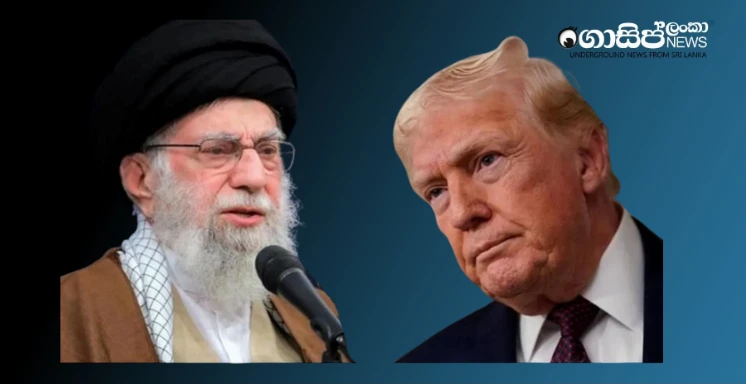
High-ranking officials of the US Department of Defense have briefed President Donald Trump on several covert and military actions that could be used against Iran in the face of severe anti-government actions and repression in that country. Among these military options, launching long-range missile attacks takes a prominent place, and the possibility of launching cyber operations and psychological warfare has been indicated by Pentagon officials, according to security sources who spoke to CBS News.
Against the backdrop of human rights groups stating that over 600 people have died in the three-week-long anti-government protests, Trump has also taken steps to impose a 25% tariff on goods from countries that maintain commercial ties with Iran.Although the Iranian Foreign Minister has stated that Tehran is open to discussions with Washington, he has emphasized that they are ready to face any military situation. However, White House Press Secretary Caroline Levitt has stated that an Iranian official has contacted Trump's special envoy, Steve Witkoff, and that there is a significant discrepancy between Tehran's public stance and the messages conveyed privately. She has warned that the President will not hesitate to take military action if deemed necessary, and that if an American military response occurs, it would most likely involve the use of air power, including disrupting Iranian command structures and communication systems, according to officials who commented anonymously.
Meanwhile, Iran's Supreme Leader Ayatollah Ali Khamenei has organized state-sponsored rallies, accusing America and praising the strength of the Iranian nation, while the repression of protesters continues. The Norway-based Iran Human Rights Group (IHRNGO) indicates that the number of deceased protesters is at least 648, including nine children under the age of 18. Due to internet blockades in effect since Thursday evening, verifying information within the country and media reporting have become difficult, but internal sources warn that the death toll could be higher.
For Iran, which is facing a severe economic downturn and inflation, with food prices having risen by about 70%, Trump's new tariff decision is expected to have a further severe impact. China, Iraq, the United Arab Emirates, Turkey, and India are Iran's main trading partners, and analysts point out that these new restrictions could further exacerbate goods shortages and price increases. Reza Pahlavi, the son of Iran's last Shah, who lives in exile in America, also commented on the situation, stating that the current Iranian government is trying to deceive the world by claiming it is ready for discussions again, and that the Trump administration should intervene urgently to protect the lives of the protesters.