![Gossip Lanka News [English]](https://blogger.googleusercontent.com/img/a/AVvXsEhYm2aFFq-bIW1nWX-RrqnPFoIsVos6_VCVz8BpLt0QJi55GNXHXC2fugeRvL0qUStEuCfs7Sfu6ZiSlhrkldxfGuE_wzy5gitY6rMZ2KSi8VBbGvkgXLks37RwZV-4-HKbWiNLRxB8C_r1e4z3mpxFTMPDJPEADoG8E-bZteWFipeD5KNGbjvCfqEfKw=s300 "Gossip Lanka News [English]")
The arrest of Venezuelan President Nicolas Maduro and his wife Cilia Flores by a US military operation and their transfer to New York has caused a major stir in world politics. According to a statement made by US President Donald Trump, this arrest took place after a series of military strikes launched by the US targeting Venezuela.
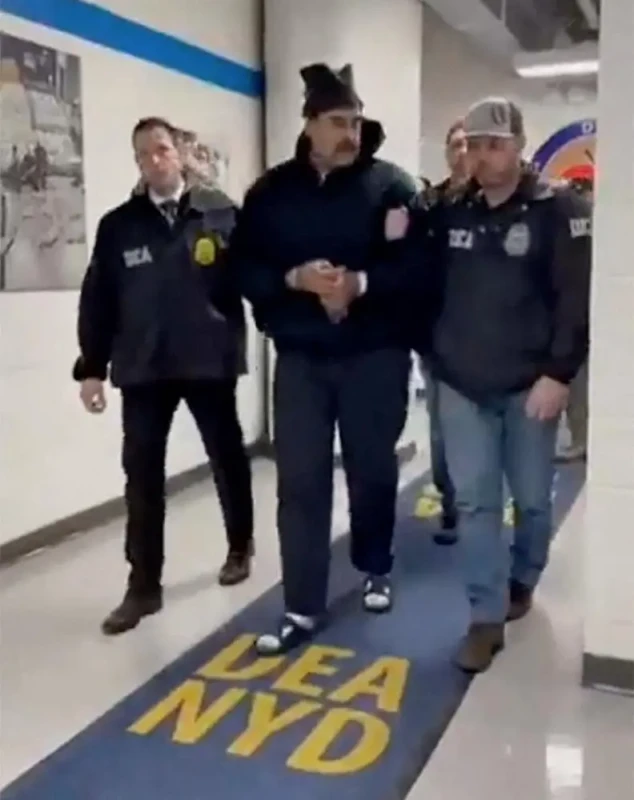
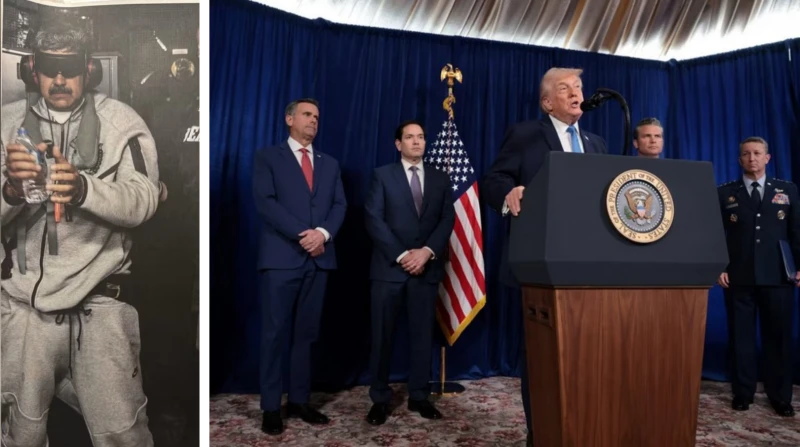
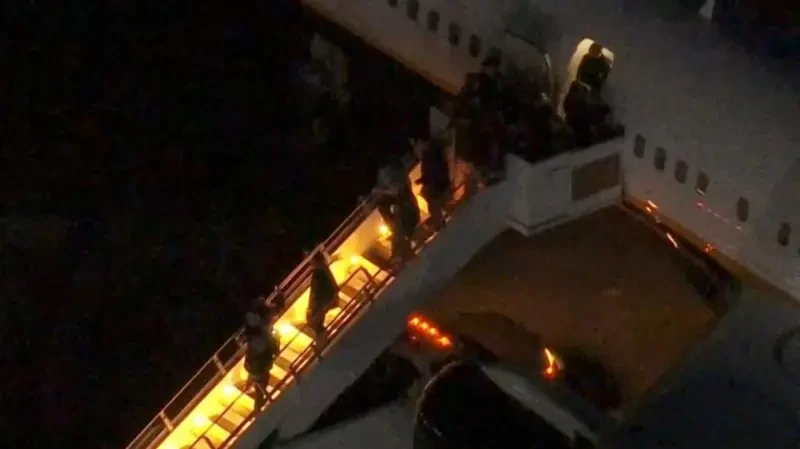
President Trump stated that the US would oversee Venezuela's governance until a safe and orderly transfer of power occurred. With this emergency measure, a national state of emergency has been declared in Venezuela, which the country's government has condemned as an "extremely serious military invasion." After Maduro's arrest, President Trump had previously released a photo of him on social media, showing him blindfolded aboard the USS Iwo Jima.The plane carrying Nicolas Maduro and his wife landed at Stewart Air National Guard Base in New York State. At the time, there was severe cold weather, and a large number of law enforcement officials had gathered at the location. Maduro and his entourage disembarked from the plane and were transported by helicopters to the headquarters of the Drug Enforcement Administration (DEA) in Manhattan. Three helicopters flew over the Hudson River, past the Statue of Liberty, and landed at the Westside Heliport. Subsequently, under heavy security, they were transported by a motorcade to the Metropolitan Detention Center (MDC) in Brooklyn. This detention center is known as an infamous place where prominent individuals like R. Kelly and Sean "Diddy" Combs have been held.
Considering the legal background behind this arrest, indictments have been filed against Maduro and his wife in the Southern District of New York. The charges against them include conspiracy to commit narco-terrorism, cocaine importation, possession of machine guns and destructive devices, and conspiracy to use such weapons against the United States. Previously, Maduro had strongly denied allegations that he was the leader of a drug trafficking cartel. However, US Attorney Pam Bondi stated that formal legal proceedings have been initiated against them. Before being admitted to the detention center, their biometric data, fingerprints, and mugshots were to be taken, and medical examinations were to be conducted. They are scheduled to appear in court next Monday.
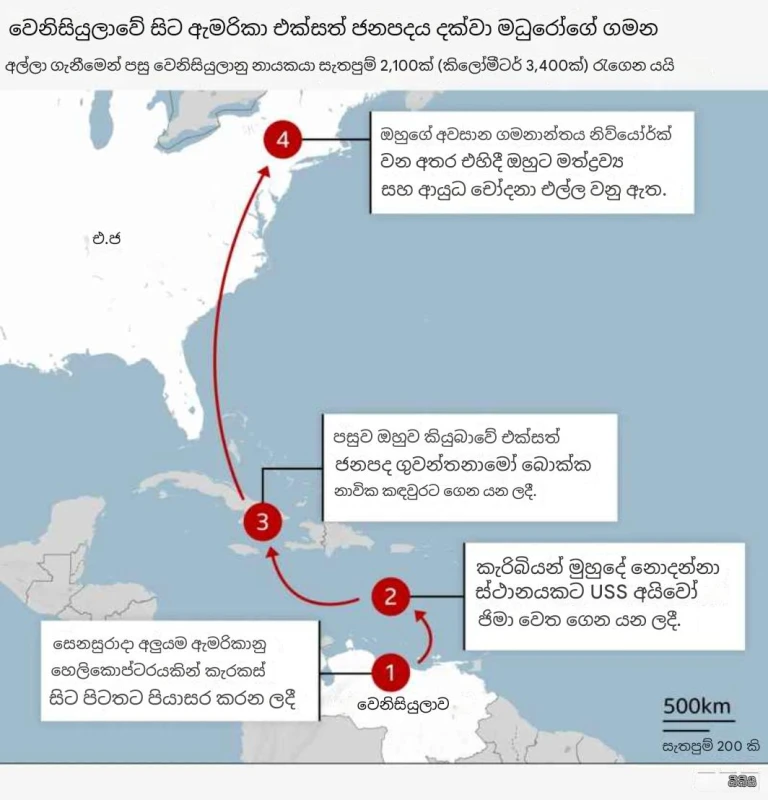
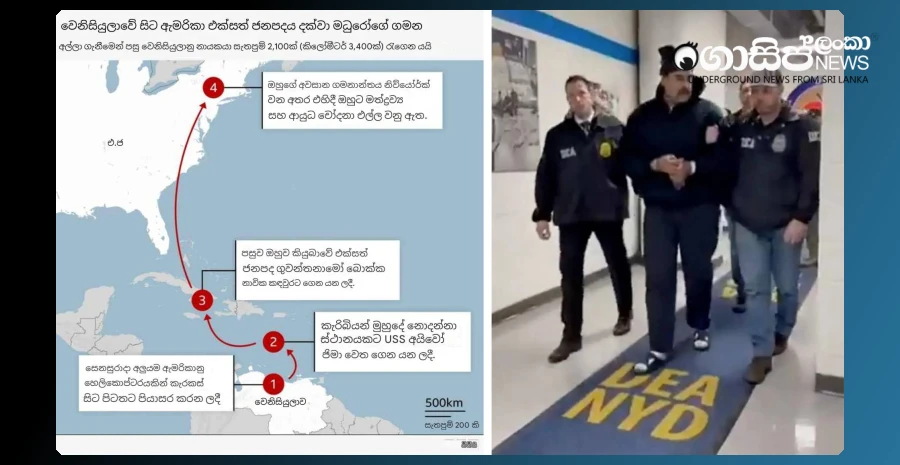
The route taken to bring Maduro from Venezuela to New York was approximately 2,100 miles (3,300 kilometers) long. First, he was transported from the capital Caracas by a US helicopter to the USS Iwo Jima, which was stationed in the Caribbean Sea. Subsequently, he was airlifted to the US naval base at Guantanamo Bay, Cuba, and from there, taken to New York by another aircraft. This complex operation demonstrates the strategic planning of the US defense forces. US Secretary of Defense Pete Hegseth stated that the troops involved in this operation demonstrated "American excellence" and successfully completed the clear mission given by President Trump.
Prior to this arrest, US forces launched airstrikes on several locations in Venezuela. As confirmed by BBC Verify, these attacks targeted five locations around the capital Caracas. These locations include La Carlota Air Base (Generalissimo Francisco de Miranda Air Base), Fuerte Tiuna military complex, La Guaira port, Higuerote Airport, and the El Volcan antenna system. Satellite images have confirmed severe damage to the Fuerte Tiuna military complex, with several buildings destroyed and smoke rising from others. This is a key center for overseeing Venezuela's defense operations.
With Maduro's arrest, political instability has emerged in Venezuela. The Supreme Court of Venezuela has named Vice President Delcy Rodriguez as interim president. The court stated that this step was taken to ensure the continuity of state administration and national security. Rodriguez addressed the nation via state television, stating that Maduro is still the country's only president. However, with US intervention, the future political path has become uncertain. Some analysts suspect that Trump's objective might not be to establish democracy but to plunder Venezuela's oil resources.
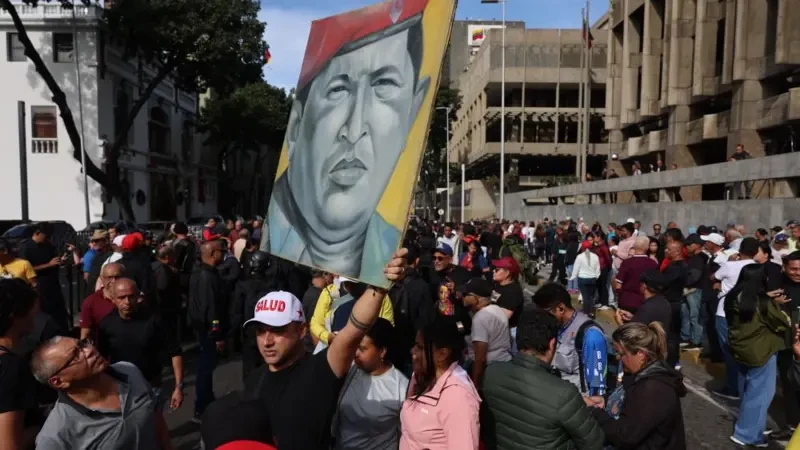
The people of Caracas have shown mixed reactions to this event. The city streets are largely deserted, and people are seen queuing in long lines outside supermarkets and pharmacies to obtain food and medicine. In some areas, supporters of Maduro's government gathered and protested, with Caracas Mayor Carmen Meléndez calling it a kidnapping of Maduro and protesting against it. On the other hand, some ordinary citizens, like Dina, stated that they were grateful to the US for removing Maduro and now had some hope for the future. However, many remain fearful due to the bombings and uncertainty about the future.
The border area between Venezuela and Colombia also remains unusually quiet. Trade and transport activities, usually very busy at this border, have ceased, and people are waiting to see what will happen. One-third of the millions of refugees who left Venezuela are in Colombia. With the collapse of Venezuelan authorities, there is a risk of clashes between guerrilla groups, paramilitary groups, and drug traffickers operating in the border region. If a proper transfer of power does not occur, the rule of law in this area could further deteriorate.
The international community has reacted differently to this event. UN Secretary-General António Guterres expressed "deep alarm" regarding the US military action, stating that it was a violation of international law and a dangerous precedent for the region. An emergency meeting of the UN Security Council has been called for Monday with the support of Colombia, Russia, and China. Brazilian President Lula da Silva condemned the US action as a serious blow to sovereignty, and the Uruguayan President also stated that he rejects military interventions. However, Argentine President Javier Milei celebrated Maduro's downfall, calling it the end of a "narco-terrorist dictator." British Prime Minister Keir Starmer stated that he would not shed tears over the end of Maduro's rule but would ascertain the facts and respect international law.
The Venezuelan community residing in Doral, Florida, USA, took to the streets to celebrate this news. Many praised Trump's intervention, expressing belief that it would bring economic relief to Venezuela. Young people like Luis Atristain stated that Trump had done a real service for the Venezuelan people. Their hope is that the country can be rebuilt by revitalizing Venezuela's oil resources. However, some, like Rosana Mateo, point out that even if Maduro is removed, they do not approve of other officials from his regime remaining in power. The US Secretary of Defense emphasized that the US would determine the terms of what happens next.