![Gossip Lanka News [English]](https://blogger.googleusercontent.com/img/a/AVvXsEhYm2aFFq-bIW1nWX-RrqnPFoIsVos6_VCVz8BpLt0QJi55GNXHXC2fugeRvL0qUStEuCfs7Sfu6ZiSlhrkldxfGuE_wzy5gitY6rMZ2KSi8VBbGvkgXLks37RwZV-4-HKbWiNLRxB8C_r1e4z3mpxFTMPDJPEADoG8E-bZteWFipeD5KNGbjvCfqEfKw=s300 "Gossip Lanka News [English]")
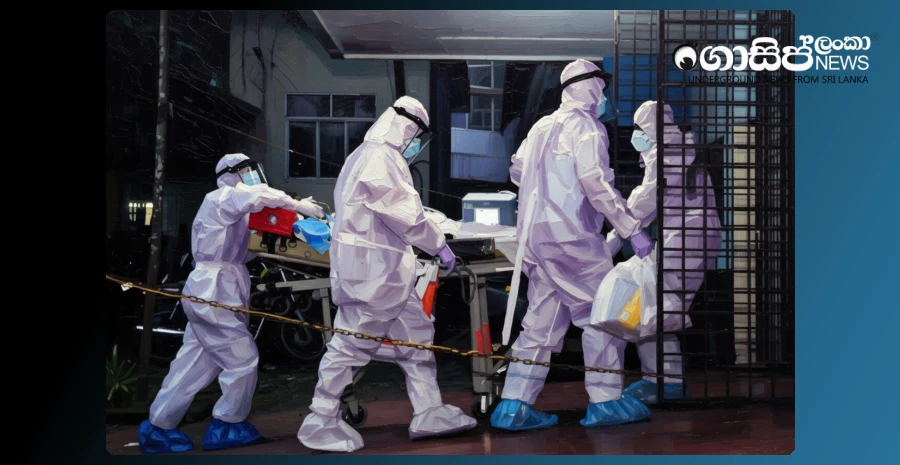
Following the reporting of fatal Nipah virus cases from India's West Bengal state, many countries in the Asian region have taken steps to implement strict health safety measures. The World Health Organization (WHO) is also closely monitoring this virus, which is transmitted from animals to humans. Several neighboring and regional countries of India have already intensified their passenger screening processes at airports and across borders.
Specifically, countries like Thailand, Nepal, and Indonesia are keeping a close watch on air passengers arriving from West Bengal. In light of this situation, Sri Lanka's health sector remains vigilant, and Sri Lankan health authorities state that the public should not harbor undue fear regarding this matter.Two confirmed cases of Nipah virus have been reported from India's West Bengal state since last December. According to reports, these infected individuals are said to be health sector workers. Following the discovery of these patients, the Indian Ministry of Health immediately took action, tracing 196 individuals who had close contact with the infected and subjecting them to tests. According to a statement issued by the Indian Ministry of Health,
All of their test reports have been negative, confirming that they have not been infected with the virus. The Indian Ministry of Health emphasizes that all necessary steps have been taken to control the spread of the virus, and the situation is being continuously monitored. They point out that there has been no widespread transmission as sometimes exaggeratedly reported by the media.
However, the Thai government is not taking this situation lightly and has initiated special screening procedures at its three main airports. Passengers arriving from West Bengal, India, via international airports such as Bangkok and Phuket, are being rigorously screened. It is mandatory for passengers arriving on these flights to provide a health declaration, and their body temperature is checked, and they are monitored for symptoms. Additionally, Thailand's Department of National Parks, Wildlife and Plant Conservation has intensified inspections at natural tourist attractions. Thailand's Department of Disease Control states that they are working with full confidence to prevent the entry of this epidemic into their country.
Nepal has also commenced screening individuals arriving via Kathmandu airport and its borders with India. China has strengthened disease prevention measures in border areas and has initiated risk assessments and special training for medical staff. Countries such as Vietnam, Malaysia, and Indonesia have also tightened health checks at airports and ports, expanding fever surveillance. Taiwan's health authorities have proposed classifying this virus as a "Category 5 disease," which would empower them to take special control measures required for diseases posing serious public health risks. The Myanmar Ministry of Health has advised its citizens to avoid non-essential travel to West Bengal.
Nipah virus is a disease transmitted from animals (especially fruit bats) and pigs to humans. It can also be transmitted to humans through contaminated food containing the virus, particularly by consuming date palm sap from trees frequented by bats. Although very rare, there is a possibility of the virus spreading from an infected person to another through bodily fluids. It can take 4 to 14 days for symptoms to appear after contracting the virus.
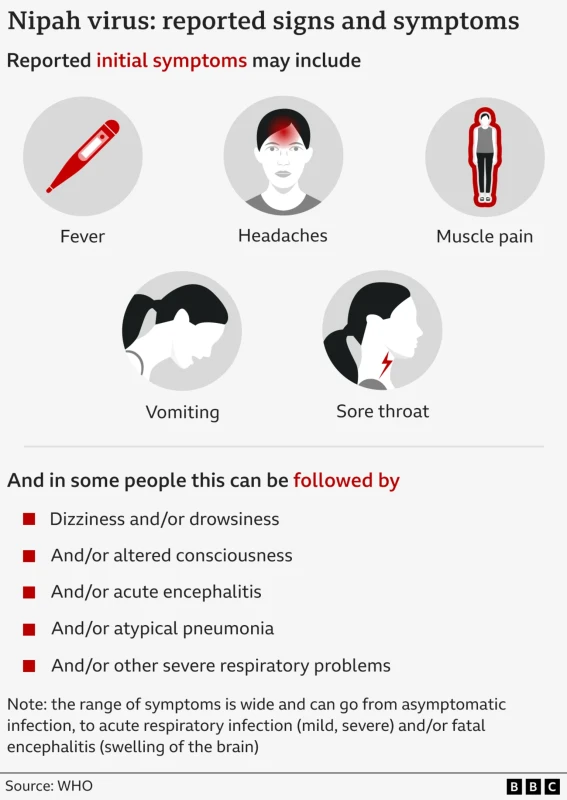
Initial symptoms may include fever, headache, muscle pain, vomiting, and sore throat. As the disease progresses, conditions such as dizziness, drowsiness, and pneumonia can occur, and in severe cases, brain swelling, or encephalitis, can lead to death. To date, no specific vaccine or medicine has been found for this virus, and the World Health Organization (WHO) indicates that the patient mortality rate is high, ranging from 40% to 75%. For this reason, the WHO has included Nipah virus among the top 10 priority pathogens that could cause an epidemic, alongside COVID-19 and Zika virus.
The virus was first identified in 1998 during an epidemic associated with pig farms in Malaysia. The virus was named after the village where it was first discovered. During that epidemic, over 100 people died, and approximately one million pigs had to be culled to control the virus. Subsequently, the virus was also reported in countries like Bangladesh and India. India's Kerala state has been a major area affected by the Nipah virus in the past. In 2018, 19 cases were reported in Kerala, of which 17 died. In 2023, two out of six confirmed cases also resulted in fatalities.
Despite such a regional risk, Deputy Health Minister Dr. Hansaka Wijemuni emphasizes that the people of Sri Lanka should not harbor undue fear regarding this virus. He points out that Sri Lanka's health sector is closely monitoring the situation and conducting necessary surveillance to prevent the virus from entering the country. However, he states that there is currently no need to screen every passenger at airports. He explains that this is because a person infected with the Nipah virus would be too severely ill to travel by air, making the probability of an infected person arriving by air very low. Health officials point out that this virus is not easily transmitted through the respiratory tract like COVID, but rather through direct contact with a patient's bodily fluids, thus its spread rate is relatively slower.
Currently, no Nipah virus cases have been reported in Sri Lanka, and in the event of a suspicious patient being found, Sri Lanka possesses the necessary specialized test kits to examine him or her. The Deputy Minister stated that this disease has never spread as an epidemic in Sri Lanka throughout history. Therefore, he points out that it is not practical at this moment to panic unnecessarily or spend a large amount of money and time on unnecessary tests just because the disease has been reported in a neighboring country. However, the Ministry of Health is continuously studying regional epidemic situations, and the Deputy Health Minister has assured that the health system is prepared to take necessary actions to face any emerging risks. Sri Lanka is implementing its public health protection program considering WHO guidelines and regional health conditions.