![Gossip Lanka News [English]](https://blogger.googleusercontent.com/img/a/AVvXsEhYm2aFFq-bIW1nWX-RrqnPFoIsVos6_VCVz8BpLt0QJi55GNXHXC2fugeRvL0qUStEuCfs7Sfu6ZiSlhrkldxfGuE_wzy5gitY6rMZ2KSi8VBbGvkgXLks37RwZV-4-HKbWiNLRxB8C_r1e4z3mpxFTMPDJPEADoG8E-bZteWFipeD5KNGbjvCfqEfKw=s300 "Gossip Lanka News [English]")
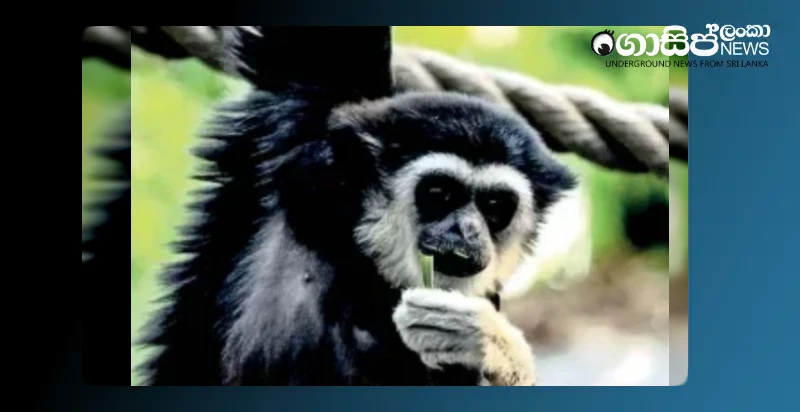
A white-handed gibbon, which had resided for many years in a cage at the Dehiwala National Zoo, passed away on the 18th. The animal was approximately 22 years old at the time of its death, a fact confirmed by the Zoo's Director General, Veterinarian Chandana Rajapaksa. This gibbon was one of a pair brought to Sri Lanka in 2006 from Ostrava Zoo in the Czech Republic, under an international animal exchange program. They lived together for many years, but after its companion died about a year and a half ago, this gibbon lived alone in its enclosure. According to zoological data, the natural maximum lifespan for this type of gibbon is around 25 years, indicating that the 22-year-old animal died of old age, close to its natural maximum lifespan. The gibbon was observed to be ill on the 17th, prompting the zoo's veterinary team to immediately provide necessary treatment. However, despite the veterinarians' efforts, the animal died the following day. A post-mortem examination has been conducted to determine the exact cause of death, but zoo authorities state that the reports have not yet been received.