![Gossip Lanka News [English]](https://blogger.googleusercontent.com/img/a/AVvXsEhYm2aFFq-bIW1nWX-RrqnPFoIsVos6_VCVz8BpLt0QJi55GNXHXC2fugeRvL0qUStEuCfs7Sfu6ZiSlhrkldxfGuE_wzy5gitY6rMZ2KSi8VBbGvkgXLks37RwZV-4-HKbWiNLRxB8C_r1e4z3mpxFTMPDJPEADoG8E-bZteWFipeD5KNGbjvCfqEfKw=s300 "Gossip Lanka News [English]")
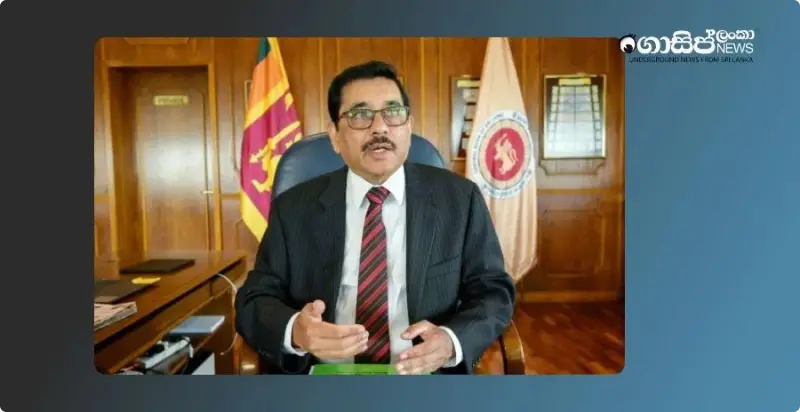
Central Bank Governor Dr. Nandalal Weerasinghe announced that the Central Bank of Sri Lanka is prepared to utilize all available macroeconomic safeguards, including those in the fiscal, monetary, and external sectors, to withstand potential sudden shocks to the economy in the face of Cyclone Ditwa and its subsequent impacts.
He emphasized this while addressing the ‘2025 Sri Lanka Economic and Investment Summit’ held yesterday in Colombo, and with this statement, the prevailing uncertainty regarding the potential impact of climate change on the economy has somewhat subsided.The Central Bank Governor pointed out that, compared to past crises, Sri Lanka is now in a much stronger position to absorb such sudden shocks.
He mentioned that plans were in place for sudden external shocks that occurred earlier this year, and that sufficient buffers exist in the fiscal, monetary, and external sectors, as well as in the banking system, to manage challenges such as climate change. He added that these reserves are more crucial for such crisis situations than for normal conditions, and that state bank accounts are already active for obtaining domestic and international aid.
Dr. Weerasinghe stated that the government is capable of managing short-term financial relief, and the country's external sector is also in a better position than before. Regarding the financial sector, he said that the Central Bank is ready to provide liquidity support to the banking system if needed, but such intervention has not been required in the past few days.
He recalled that the Central Bank has intervened in the past to manage liquidity stresses, preventing system instability by injecting over LKR 250 billion into the market during the pandemic and providing emergency support to cover the severe liquidity shortage in 2022.
Central Bank data also indicates that the security of Sri Lanka's external sector has grown. Due to increased foreign exchange purchases and an improvement in the balance of payments, foreign reserves have risen to approximately USD 6.2 billion by the end of October 2025. The Central Bank Governor further stated that while Sri Lanka remains vulnerable to climate shocks and global challenges, the institutional objective is to safeguard broad economic stability even amidst such volatilities.
Tags:
Trending