![Gossip Lanka News [English]](https://blogger.googleusercontent.com/img/a/AVvXsEhYm2aFFq-bIW1nWX-RrqnPFoIsVos6_VCVz8BpLt0QJi55GNXHXC2fugeRvL0qUStEuCfs7Sfu6ZiSlhrkldxfGuE_wzy5gitY6rMZ2KSi8VBbGvkgXLks37RwZV-4-HKbWiNLRxB8C_r1e4z3mpxFTMPDJPEADoG8E-bZteWFipeD5KNGbjvCfqEfKw=s300 "Gossip Lanka News [English]")
Reminiscent of the massive flood situation Sri Lanka faced in May 2016, water levels in the low-lying areas surrounding the Kelani River basin are rising rapidly. An analysis of current weather data and river water levels indicates that this time, Gampaha District, Kelaniya, and the low-lying areas around Maha Oya could experience an impact similar to or even more severe than the catastrophic situation experienced then.
To scientifically understand this situation, comparing historical and current data of the Kelani River is extremely important. Considering the data from the Nagalagam Street water gauge in Colombo, a 'major flood' level is generally considered to be 7 meters. Although this value rose to 7.65 meters in 2016, it currently stands at 6.2 meters, but irrigation authorities have issued warnings that this value could rise rapidly.
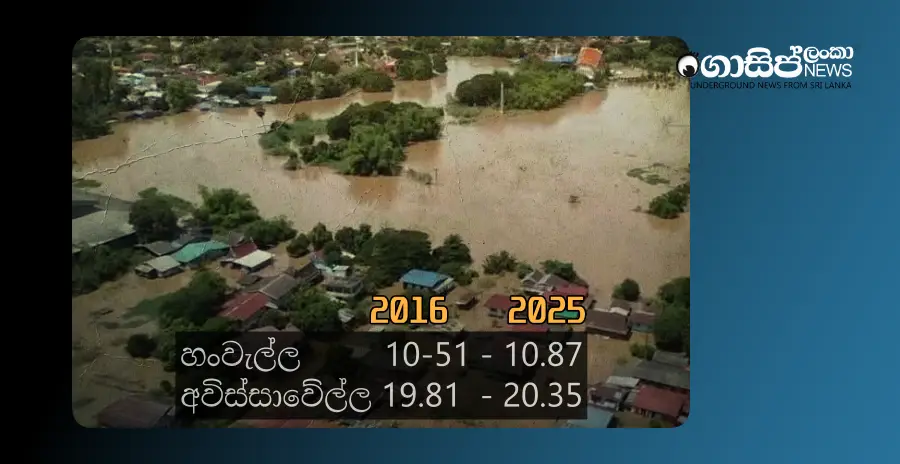
While the situation at Nagalagam Street is as described, the situation in the upper regions is more severe. Examining the data from the Hanwella water gauge reveals that the 10-meter mark, considered the major flood level, has already been exceeded. The most significant point is that the current water level has risen to 10.87 meters, surpassing the maximum value of 10.51 meters recorded at the Hanwella gauge in 2016.
Furthermore, focusing on the upper catchment areas, data from the Avissawella water gauge clearly illustrates the severity of the situation. In that area, where 19 meters is generally considered the major flood level, the current water level has risen to 20.35 meters, surpassing the highest value of 19.81 meters recorded in 2016.
Based on this data, prior warnings were issued that the water capacity of major rivers would increase as this massive volume of water, which fell in the catchment areas, flowed downstream. The flood situation observed throughout Gampaha District today practically confirms the predictions that many low-lying areas face a higher risk of inundation compared to 2016.
For the full report see table click here

Tags:
Trending