![Gossip Lanka News [English]](https://blogger.googleusercontent.com/img/a/AVvXsEhYm2aFFq-bIW1nWX-RrqnPFoIsVos6_VCVz8BpLt0QJi55GNXHXC2fugeRvL0qUStEuCfs7Sfu6ZiSlhrkldxfGuE_wzy5gitY6rMZ2KSi8VBbGvkgXLks37RwZV-4-HKbWiNLRxB8C_r1e4z3mpxFTMPDJPEADoG8E-bZteWFipeD5KNGbjvCfqEfKw=s300 "Gossip Lanka News [English]")
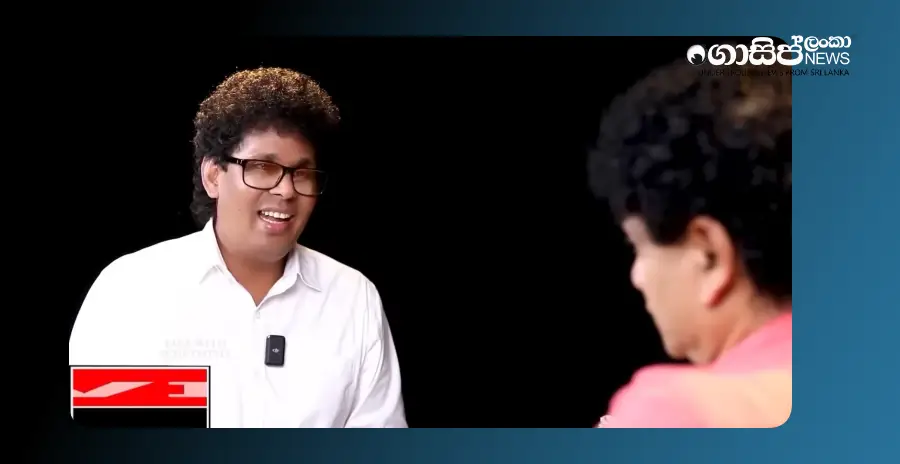
Minister Wasantha Samarasinghe, who appeared on Sudath Thilakasiri's YouTube channel, held a lengthy discussion on contemporary politics. The written transcript of that discussion is as follows.
Sudha: Oh, Wasantha, you gave a beautiful speech in Parliament. But the fellow wasn't there when you spoke, was he?
Wasantha: Well, that's what happens when you throw stones from glass houses. He speaks in Parliament and then always leaves. He says what he thinks and then leaves. The problem is, the whole country knows what these people have done and said. So, as a government, we are fulfilling the promises made to the people of this country. We are working. That's why some people are agitated.
Who are those 'some people'? Those who plundered the public wealth of this country, those who thrived on that wealth after plundering it, now know that the law is being enforced in the country. It doesn't matter if they are former presidents, ministers, or their wives. There are cases against entire families. Entire families are in jail. So, soon it won't be about visiting 'Appachchi' (father); it will be about going to Bogambara or Welikada to "visit the whole clan."
So, in an environment where the law is fairly enforced, thieves, corrupt individuals, fraudsters, criminals, and murderers know that this government is fulfilling its promises to the people of this country. Those are the ones who are scared.
Sudha: But despite what you said, someone said, "My father has done no wrong, no theft, Anura Kumara, as president, should cleanse and free him." As a first duty, Prime Minister Harini Amarasuriya did that, even though it was thought that Chichi would be acquitted regarding his rocket.
Wasantha: Regarding Chichi's rocket, I think, Sudha, you should have found Chichi's interview too. Before you ask that question, I know what I'm saying. Chichi came as a "Rocket Scientist" and did it with Chathura.
Sudha: Chathura... Chathura... Yes.
Wasantha: Chathura walks into Araliyagaha Mandiraya, and Chichi hit it in "my zone." You remember, Sudha? Now, these are the things we need to check. He supposedly did an engineering degree at Southampton University, did Space Engineering. And he supposedly did his Masters there too. He said he's doing his PhD in Colombo now. I think it should be over by now. It says it will be over in 2012-13, that he registered to do a PhD. In the mathematics department. So, he went there without doing A/Ls in Sri Lanka and going to a Sri Lankan university.
Let's assume he went for something else. I'll put that story aside. We also need to see why this question came up during the discussion about "SupremeSAT." BOI (Board of Investment) officials know these questions are coming. So Manivanan knows the incident, he knows the inside story. Chichi has given a statement, saying "Manivanan interviewed him over the phone."
This SupremeSAT owner... then the BOI has an investment of 12,100 million. Sudha, that was in 2013. This company started in May 2012. That satellite was launched in 2013 in China. That's where we put a flag after paying the cost.
Now, the CID has started investigating a hidden part of this issue. Investigations have now resumed. So, 12,000 million that was in the accounts of "SupremeSAT-1" around 2013-14, vanished by 2014.
Sudha: Sri Lankan Rupees million? Or Dollars?
Wasantha: 12,000 million Sri Lankan Rupees. So, an account went on for two years, and we need to explain how this happened by this year. Auditors need to explain. The BOI needs to ask, "Where is your investment?" Because we gave tax concessions for 10 years right from the start. All of that is what's here. All those buried topics have resurfaced.
They tried to show that money was coming from Chichi's satellite. However, when presenting statistics, officials had made a mistake. Because in normal mathematics, or accounting, amounts in rupees are entered in rupees and cents, in thousands, in millions, in billions.
So the problem here is, when they asked about "SupremeSAT," they started saying that SupremeSAT was generating income. There was no such income in 2020. So the Prime Minister is the second citizen of the country, isn't she? The number that was in rupees in the answer given to the Prime Minister was converted to millions, Sudha.
So when you convert to millions of rupees, what should you do? You should round to the last two digits. That means if the last six digits are in rupees, those six digits should be rounded to the last two digits. That's how normal accounting reports are done. Because when you write "millions" at the top.
I'll tell you one from memory. It reads as 19,617 million. Because "millions" is at the top. Dot or comma doesn't matter. But what is the actual amount? 19 million 617,500. That's what's in the account in rupees. So how do you denote the amount in the account in rupees? You should keep it as it is. Why thousands? 19 million 617,000. So when you remove the last three zeros, you remove 500. What do you do for millions? When you round 19 million 617,000 to the last two digits, it's 19.62. Six and two. When you say 617,000, one from seven is added to this side. Six and two. That's how numbers are written.
Sudha: Hmm.
Wasantha: How were the answers written to the Prime Minister? Converted to thousands, and "millions" written at the top. So the answers were read as numbers and then as millions.
Sudha: So they just read the paper given to them?
Wasantha: It's not just given. This answer came a month ago. It was re-investigated. After investigation, it was said to be wrong. Even then, they spoke to me. I, along with another deputy minister, Eranga, we discussed it, and in our Digital Ministry... we looked into what was happening. It was wrong. We then said, "The numbers you sent are wrong. Immediately, correct it and send it, not that one." But they sent the same thing back.
Sudha: So if the same thing came, they should have checked it, shouldn't they?
Wasantha: Why did I say that? That's... the officials in the Prime Minister's office who are supposed to put these questions have a responsibility. Many questions are asked of the Prime Minister. So, preparing her... this question came to us before. We re-inquired about it. But the answer sent was the same. There's a problem here. That's why we didn't answer last time. Because of this, if she had said, "This is the same question that came up," she could have taken more time.
Sudha: So whose fault is it then?
Wasantha: No, it's the officials. All the officials are wrong in this. The officials in the Prime Minister's office should say this. The BOI officials are like this. Now, even after we have said this, shouldn't they re-examine the mistake in this, Sudha?
Sudha: Yes, so, any disciplinary action against them?
Wasantha: No, now the relevant Prime Minister, the Prime Minister's Secretary, has inquired about it. The Secretary has been asked to take appropriate action. Because that's how this mistake happened. For seven and a half years, the total of these accounts was only 342 million. Then the government's royalty, this "SupremeSAT" company has been given Sri Lanka's space. Sudha, today, to launch a satellite, tenders must be called. Absolutely.
Sudha: Yes, yes... the satellite, yes.
Wasantha: Exactly.
Sudha: We should be proud, shouldn't we?
Wasantha: Yes, as a country, this has happened because of pride. That's why I said the rocket that was sent cannot be found.
Sudha: But the rocket is there, right?
Wasantha: No, it's like this. Not the rocket, the satellite was there.
Sudha: Yes, yes... the satellite.
Wasantha: So whose satellite is this now?
Sudha: Whose?
Wasantha: That's the question. It's not a satellite that belongs to us. So this means... then this company using the satellite should tell us about the ownership of this satellite. Who went from their side? Who submitted tenders? Who were the other bidders? Now, the public should be able to know these things.
Sudha: Absolutely, they should.
Wasantha: After the investigations are over, these people should reveal these things. Therefore, they must explain how 12,000 million suddenly decreased by 11,600 million. Because in the second year itself... 2014-15, it ends by 2013-14. Now the problem is that commercial operations supposedly started, to earn income in 2015.
There's a lot of hidden information, Sudha. If you want, we can talk only about "SupremeSAT" today. That's why we have said, regarding this investigation, "Conduct investigations immediately." How was the right to place a satellite, our space in Sri Lanka, given to this company? What was the tender submitted? Who were the competitors? How has this company paid us the royalty? For twelve years, seven and a half or eight years now, royalty should have been paid. What if it hasn't been paid?
Not only that, a fraud committed by this company is that they obtained BOI facilities by claiming to invest 12,000 million. After obtaining that, they made these disappear from the account reports in the second year itself. We will have to state facts about those too. Right. We will have to state those facts. When those happen, there are problems internally too.
Sudha: Now, after the Prime Minister made that speech, Wasantha Samarasinghe came here and spoke about this, meaning, outside of that, is there an internal conflict? Now, Harini's faction and the JVP's faction are divided into two? While they were laughing and talking in the chamber...
Wasantha: It's like that, Sudha. That is, when the Prime Minister was giving these answers that day, this was recently during our economic debate... as that debate was going on, we knew they would ask about the satellite too. From the other side, we knew they would ask that. So we were prepared for it.
Not only that, we wanted to correct that mistake by the officials without letting the Prime Minister be inconvenienced. That's our collective responsibility. And we fulfilled what we collectively said. We told the truth to Parliament. That's when those companies and everyone got upset, thinking, "Their plan got messed up." Then they thought, "Now this is a JVP - NPP conflict. This is a problem for the Prime Minister." There's no such problem at all. We are working well.
Sudha: There is such a thing inside? No problem at all?
Wasantha: Sure. 100%.
Sudha: So Nawalla says, "He was inside"? (Laughing).
Wasantha: I saw people brought to "see Appachchi" the day before yesterday.
Sudha: Sampath came, came... Yes, right?
Wasantha: Yes, from Anuradhapura side, Horowpathana side.
Sudha: Indeed.
Wasantha: Yes, those people. Do you know why? The one who brought them couldn't wait for half an hour. They blasted their chakras, you saw, didn't you? That Tissa Kutti...
Sudha: Not Tissa Kutti, it's a master plan, apparently.
Wasantha: Tissa Kutti's master plan got its head cut off. The real problem is this. We need to understand the reality on the ground now. As a government, the President, the Cabinet, the 159 members of Parliament, we assure you there are no issues, no problems. We are doing this work very well. They are trying to say, "Oh dear, isn't that the story of the goat... will something like that fall?" Don't be afraid by following this government, it won't fall.
Sudha: But despite saying that, no matter how much is said, the public opinion is that no matter how much the JVP/NPP cries out, they won't vote for Rajapaksa. A few big ones, a few small ones, one or two... with this surname again... but they say they won't even touch the big ones.
Wasantha: Thanks, Sudha. It's like this, we have filed complaints in our country for a long time, from 2010 to about 2015. In addition, we filed complaints after 2015 as well. We filed complaints until about 2022. Among those complaints, we named Mahinda Rajapaksa, Ranil Wickremesinghe, Ravi Karunanayake, Namal Rajapaksa, Yoshitha, all those Ratharan, Arun, Moon, didn't we?
Then the complaints at the CID were closed and put in cupboards. Now, the director who was reinstated for that, Shani, has been made the CID director. So, the necessary facilities are now being provided for this process to proceed legally. There is now a request to expedite this judicial process. If necessary, the President has instructed the Minister of Justice to look into how to expedite the judicial process. Not only that, we don't interfere with the courts.
Sudha: Then they said "interfering," I think about forty judges were transferred. There are cases involving powerful ministers, those issues are talked about. That's what's next. That finger is pointed here too. "Now you transfer a judge and appoint..."
Wasantha: What am I appointing? It's a judge who's appointed, isn't it? Who has the right to transfer judges? Now, the person close by doesn't know. No, it's the Judicial Service Commission. And a team including the Chief Justice of the Supreme Court does this work. Not us. We want to appoint our judge, to hear our case... they did those things. Remember the Shirani Bandaranayake topic? Everyone knows that. I'm saying we don't instruct to change that.
Sudha : "The biggest political mistake made by the JVP/NPP is interfering with the judiciary and not making it independent," Namal said. Regarding the failure to maintain the independence of the judiciary. So look, now judges who were in the courts have been removed...
Wasantha: There are relevant institutions for that, aren't there? They are the ones who do it. So, there is a process involving the Judicial Service Commission, or the Chief Justice and his team. Other than that, our Minister of Justice probably doesn't even know what's happening in this.
Sudha: That's what I'm saying, about some of these transfers.
Wasantha: Now, some of these are not transfers, but promotions. Those are also taken as "transfers." From the Magistrate's Court to the High Court, from the High Court to the Appeal Court, from the Appeal Court to the Supreme Court... that's how it goes, isn't it? There's a way these things proceed.
So, when the Judicial Service Commission does its job, we cannot take it over, can we? Because we know that a judge is appointed there, not a 'Kapalkaraya' (a derogatory term, possibly meaning a stooge or someone without proper qualifications). Therefore, a judge is the one who hears cases. So, the question isn't "Is it you today, or me tomorrow?" Any judge who comes will hear cases based on the facts presented by the lawyers.
So, some of those accusations are made without any basis. Not only that, our government intervened to make the judiciary independent, rather than interfering with the judiciary or court proceedings. We don't have such an accusation against us, Sudha.
The "Forged Deed" Allegation Against Wasantha Samarasinghe
Sudha: However, despite what you've said, there's not just a big accusation against you, but a charge from the court. It's from the esteemed court. From the Mount Lavinia court. Sudha, this is about a 'game' you played...
Wasantha: Yes, that's what I was about to say. Now I need to tell you this. Because the court has not yet named us in that case.
Sudha: No pressure applied?
Wasantha: Not pressure... So, this complaint is filed with the police.
Sudha: So what's the accusation now?
Wasantha: They are saying that "forged deeds were created and land belonging to a trade union was leased out." Now we are proving that. These people (the complainants) are the ones who created the forged deeds. We have the original deeds.
I previously gave a statement to the Fraud Bureau in 2024, saying, "These people have forged the deed, they have created fake deeds. They went to take care of it." When they registered in 2017, we have registered deeds dating back to the 1960s. We have deeds belonging to this trade union, belonging to the NWC. And I was the chairman of the NWC in 2017.
So, officials from the Department of Labour and the Minister of Labour are involved in this 'game'. In 2014, we filed a case in 2017 regarding an incorrect registration. Our fundamental constitution does not include a "Deputy Secretary." There is no Deputy Secretary in this constitution. We have a President, Secretary, Treasurer, Vice President... that's our structure.
Sudha: Alright.
Wasantha: So we don't have Deputy Secretaries. But the person who filed a case against me is someone claiming to be a Deputy Secretary. Because I'm not going to say that I illegally acquired property by forging deeds. They are the ones who forged the deeds. The land sold with forged deeds in Katunayake... the land sold with forged deeds in Polgahawela... we are litigating over a land in Mathugama.
That's why these people tried to forcibly take this property, and those politicians collaborated. The previous Ranil government supported that group and their actions. Manusha Nanayakkara was there at the time. In April 2024, a document regarding a "Trade Union Executive Board" was issued by the Department of Labour. When such a document is issued... there is a case in the Court of Appeal. Until a decision related to that case is made, such an action cannot be taken. So, we have obtained an injunction from the Kaduwela Court for this. That injunction has been extended even now.
Sudha: So, you mean there's a 'game' going on here too?
Wasantha: We've caught the 'game' now. That's what I came to tell you. We've caught this 'game' now. Now, when the court asked us to give a statement... it was the final court that told me, Brother Mahinda, and our Brother Ranjan. Because we have leased that trade union building as an association. The ownership of that property belongs to a trust. I am also there as an owner of that trust.
So, we have been here for six years regarding this. It was in the second year that these people... in '24, they started filing this case. Because such a document shouldn't be created fraudulently. We requested the final constitution from the Department of Labour through an RTI (Right to Information Act), Sudha. They gave us a constitution.
Who gave the constitution? They gave us one saying "a constitution amended in 2002." The Labour Commissioner who was there at the time gave it... This constitution given by the Labour Commissioner in charge of the Trade Union Registration Division, on the seventh floor, is incorrect.
Here is the constitution given to us by Labour Commissioner General Saranathissa in 2014, with his signature. This is the correct constitution, considering the dates. Then (the department) says, "We don't know of such a thing." What a department! Even within our own government, they are saying this.
We asked, "How can you say you don't know? Mr. Saranathissa gave this in 2014. How can you show us a 2002 one? Then show us the letter stating that the trade union's constitution was changed." "Ah... that's not in the file either."
"Show us the letter you sent stating that the constitution was accepted." "Ah... that's not in the file either."
Isn't that amazing then? We said, "We don't accept what you're saying. We have a letter from Mr. Saranathissa from 2014 stating 'Here is the constitution'."
The Department of Labour is a defendant in our 2017 Appeal Court case. We said, "Now, you, the department, send answers to the Attorney General, don't you? You seek advice, don't you? Let's see the case file." And Sudha, in the case file, there is also the same constitution given by Mr. Saranathissa in 2014, sent to the Attorney General. That's because there was a problem there too; it's an attachment in the Attorney General's case file. It's under the attachment. The department couldn't hide it, I think those officials couldn't. There are several officials behind this.
Then I showed this work, which we proved, to the Minister of Labour. The other officials of our union went and proved it. We showed it to the Secretary of the Ministry. Right, now a theft has clearly occurred. A serious crime, a mistake. A 'game' was played to change our constitution and give the trade union's ownership to various other thieves. Those thieves are the ones who fraudulently registered a deed and have now filed a case for that as well.
Alright, so now I'll conclude by saying... they have created a forged deed. We have the original deed. We have now given it to the CID, saying, "Start an immediate investigation. How can these people register a forged deed when the original deed exists?" These thieves... So, even those gentlemen who have obtained presidential lawyer titles by associating with thieves will have to answer for these things.
Sudha: Alright. Now, Wasantha Samarasinghe also said for a while, "We won't import even a grain of rice." But look, it was imported. Last year, and this year too, until about March, we imported it. Will it not be imported again now?
Wasantha: No, Sudha, it's like this. The Maha season in our country is over. Paddy production in the Maha season is 2.5 million metric tons (25 hundred thousand). In this Yala season, it's 22 hundred thousand. So (the total) is 47 hundred thousand. Annual rice consumption is 24 hundred thousand metric tons.
That means the average ratio is 1.6 (rice yield from paddy). 1.6 means, Sudha, we can produce an average of 3 million metric tons of rice (from 4.7 million metric tons of paddy). We consume a maximum of between 4500 and 7000 metric tons per day. Taking it this way, 2.4 million is needed per year. 200,000 per month.
Now, if 3 million is produced, how many hundred thousand should be left? 6 hundred thousand should be left. So where is that? That's what I'm saying will happen. When those 6 hundred thousand are left, Sudha, the problem is that our country's mill owners have six months' stock. Paddy from the Maha season is milled when the Yala season arrives. That's how they play this rotation. We have also given money to the banks from the government for that.
Sudha: Alright.
Wasantha: 30 billion, mind you... 30 billion is given as loans to banks to buy paddy. Not only that, if you go and look now, in Polonnaruwa alone, 15 mills have 90,000 metric tons of Kiri Samba. The total production of Kiri Samba in Sri Lanka for the entire year is 270,000 metric tons. Just those 15 mills alone have Kiri Samba from one season. I'm talking about a certain amount of stock here.
Sudha: Are you answering now out of fear of the millers, out of fear of the 'daddies' (powerful figures)?
Wasantha: No, no, no, no, no... The millers hold onto it for six months with the idea that they can make the best rice. So that's how this rotation goes anyway. Second, we have some other industries developed now. Have you heard that we make Sake from rice in our country?
Sudha: No, I haven't...
Wasantha: Have you heard that we make beer? Beer production started recently. 20,000 metric tons go for regular beer annually. 1500 per month. For Sake, a Sake factory is currently being built.
Sudha: So, for export?
Wasantha: Including for within Sri Lanka. Sake is filled with this. There is now a local Sake production. You can find these in Sathosa beer-wine shops now, and in the country. Now he has been allowed to expand his factory. Sake is being made. Because it's not imported from abroad, then our rice, our raw materials are in our country.
That means they say it can be made to an (alcohol) content of between 13% - 14%. This isn't a wine, it's a Sake made for beer drinkers to drink, for wine drinkers to drink. Their demand is 800 metric tons per month.
Then there's the poultry feed industry. We have good... we produce 22 million (kilos) of chicken meat per month in poultry feed production. We produce nine million eggs per day. There are 130,000 hens (parent stock). There are 13 million egg-laying hens. Their second layer has 8 million.
Now, this can't be done without food, Sudha, right? So they need to be fed. And to feed them, a certain amount of paddy is purchased. That's why, as a solution, we allowed them to import maize. Because then the rice is saved for consumption.
However, beer and sake... so we made a decision. "Right, industries need to diversify. More products made from rice should be created. Biscuit types, food types should be made. Give it for that. We will try to increase our production. If we can't, we will import rice. That means if we can't increase our productivity, we will import rice."
That means, Sudha, the problem we have now is that our productivity is low. We imported rice from India and they gave us rice at Rs. 190-200 with a Rs. 65 tax in Sri Lanka.
Sudha: Yes.
Wasantha: That means (there) a kilo of rice is Rs. 135. We buy paddy today at Rs. 120. It takes 1.6 to make one kilo of rice. Our productivity is low. That's why we have to do this work to protect the farmer as well.
So, at that time, we thought we needed to increase paddy production in our country. Fallow fields need to be cultivated. Here's an example... in this Yala season alone, 80,000 hectares, 15% more than the last Yala season, have been cultivated. 15% more has been cultivated.
At that time, when we watch the news, it clearly shows "no fertilizer subsidy on time," doesn't it? Always the fertilizer... I said yesterday.
Sudha: That's what Namal said yesterday.
Wasantha: 99.5% of the fertilizer subsidy for the Yala season has already been given. Only 140 million more needs to be given. But these channels keep saying "no."
Sudha: That's a lie, a blatant lie, then.
Wasantha: So action can be taken against those who tell such lies. No, now the Department of Agriculture, the Minister of Agriculture, has made a statement about this. Because the "Food Security Committee" is in the Presidential Secretariat. The Senior Additional Secretary was summoned... Lal and I are co-chairing it.
We convene this every two weeks. We discuss fertilizer distribution in the country, paddy procurement, storage, availability of other foods, potato and onion production, the status of pumpkin production, food security regarding imported goods, canned salmon... we discuss all of these, Sudha.
Decisions are made for that. Now, when it's time to harvest potatoes and onions, if the price of our farmers' potatoes and onions increases by a certain amount, it's difficult, so we have been proposed to make decisions to protect those farmers. So, they say those lies everywhere they get caught. Those lies are told, as you say, to be cut and put on social media.
When you go to the ground, have you seen farmers protesting anywhere, saying "no fertilizer"? Even though Namal said it in Parliament, farmers don't come out onto the streets saying, "We didn't get fertilizer money." They haven't said that, have they?
Sudha: It's said on the news, on TV. Isn't what Namal says in Parliament what's being broadcast?
Wasantha: Have you seen farmers saying it anywhere? No, right? That means the fertilizer subsidy has already been sent to the farmers' bank accounts. We had prepared that right at the start of this season. Even now, only 45% of our (harvest) has been cut. 55% remains to be cut. In some areas, there are still small paddy fields. But this is the situation... 99.5% of the fertilizer subsidy has already been given.
Sudha: I have a question today. Now, Sake from Japan comes here, promoted to our people. Then one of our best beverages, which went beyond whiskey, was "Dankutu Special." Why don't you... I mean, if you are promoting Sake here now... that was something beyond whiskey. Now whiskey means Scotch. From Scotland. Something that caught the world's attention. Why can't something like that be brought to a standard...? Now you must have drunk it, I have drunk it too. If there was whiskey again, I would drink that. Now it's not there. Now it's completely gone. Why can't attention be paid to something like that? It can capture the world. Hali Arrack...
Wasantha: Hali Arrack. You are talking about two types in our country. One is legally distilled arrack in our country. The other is illegally distilled arrack.
Sudha: Kasippu (moonshine).
Wasantha: Kasippu. Hali Arrack is an extension of that. That means it's illegally made within the village. Next, there's toddy. There's Kithul toddy, Palmyra toddy, Coconut toddy. All these are consumed by people in our country. At one point, the Beruwala Pradeshiya Sabha had given licenses for 12,000 coconut trees, for 28,000. From that, you can understand what's happening. Three times the amount of toddy from a tree is made outside and given to people.
That's why... if it's not developed as an industry related to that, what happens is, without developing this as a necessary industry, we have to go house to house with this...
Sudha: No, not that... I mean, that as an industry now.
Wasantha: So now we can focus on making this from Palmyra toddy. There's a focus on making this from Kithul. Coconut toddy... there's how to make it. And also, products made from rice are being made. That's there...
Sudha (interviewer): And cannabis too, now?
Wasantha: That's... cultivated in industrial zones, cultivated in Green Houses, and the oil made from it is given for export.
Sudha: If you were in the opposition before, "Cannabis..."?
Wasantha: No, that cannabis... we haven't given permission to cultivate cannabis. We have given permission to cultivate it in Green Houses within industrial zones. It cannot be cultivated outside. Then the factory needs to export the oil made from cannabis as a raw material. Permission has been given to seven industries. Four of them are working together. So, targeting an export market, we have given permission to cultivate in Green Houses. Not in Thanamalwila or Anuradhapura.
That's why I came to tell you this. Rice goes for these diversified products. Then there's a problem here with the statistics of our country's rice market, and a real rice problem. That's why we, as the government, think we need to intervene to control the situation in the rice market on one side.
Sudha: Need to control mill owners too?
Wasantha: The government has a plan for that. I will tell you about it. So the government is preparing to intervene in the interventions made to control the rice market. It needs to intervene. That's what we have inside... the Cabinet has decided to buy rice for any industry from the market. If it's not enough, we will import rice at that time, and if consumption is not enough for the country's needs, we will fulfill it.
Sudha: They asked, "What's the government for?" if rice is to be imported. They said that the wholesale dealer in Pettah would do it.
Wasantha: Yes, exactly. That's why the fertilizer subsidy was made 10,000, 25,000. Fertilizer subsidy is also given for cultivation in the Yala season. To cultivate fallow fields, to plough fields, the facilities related to the tractor for the field, building canals and bunds, giving fertilizer.
So, the 75,000 hectares cultivated in the Yala season became 540,000 in this Yala season. We are planning to bring this to 650,000 by the next Yala season. The Maha season is 450,000. We have 850,000 cultivated fields. If at least 10% - 15% of the remaining fallow lands start to be cultivated within a few years, not even a grain of rice will need to be imported into Sri Lanka.
Sudha: When will that target be given?
Wasantha: Now, we have the capability to build this within three years... there will be no need to import even a grain of rice in two years. That means the extent to which this industry develops... just imagine, if our Sake is made and there's good demand for our Sake, it needs to be exported. Bring in dollars. So what should be done? Within the diversification of products needed for that, more rice can be taken to make Sake and send it to the export market. We need to create a market.
Then, if our country's production is not enough, we might have to import from abroad. Beer is made, right? So look at our country's beer companies now. Only royalty is left for Sri Lanka. Everything else goes. Unless there's tax, we lose out, don't we? So, when our own country's product is made and sent abroad, dollars can be brought in.
That's why we are now preparing for the export of chicken meat in the poultry industry in our country. Not just chicken meat, but chicken feet, claws, all of these can be kept. So, as these industries diversify, rice and maize will be needed as raw materials for them. This year, our country produces 300,000 metric tons of maize. We consume 600,000.
Sudha: Brother Wasantha, in India, cattle are considered divine. Do you know that India has supplied the most beef to the World Market during this period?
Wasantha: That's it, Sudha... we say that as some industries modernize, as some industries expand, we have to make decisions about some things, considering our economic growth. So India makes decisions considering India's economy, India's progress, India's export market. So we, as a country, must also make those decisions. That's why I said now the chicken meat industry, the egg industry...
Sudha: The cow considered divine?
Wasantha: There are diversities in countries, aren't there? And there's also that industry there. So look at leather. How many types of leather shoes, leather products are made in India? So they are made from cowhides. So that's it as an industry, they don't eat meat. But as an industry, they carry out that process.
Casinos and Economic Development
Sudha: What was said when in opposition, today that side does the same things... that means, when in opposition, allergic. Today, those are good things. Now, things that were "heavily criticized for casinos," today the President comes to open casinos.
Wasantha: No, what did we say?
Sudha: No, the President says to open casinos... No, they say that falsely too.
Wasantha: The largest private sector investment in our country is "City of Dreams" - done by John Keells company - 1.4 billion dollars. Now, is this investment only about casinos? There are supermarkets, shopping malls. Then there are hotels inside this. There are apartments inside this, right? There are conference halls inside this. So all of these are inside this.
Now, to open a casino... someone else opens the casino. So they consider this investment a landmark investment, the largest investment in Sri Lanka. So there's no reason for the President to be invited there, or not to go. I also went on the day the President went. I also went there.
Sudha: You mean, I'm talking about the casino?
Wasantha: No, not the casino. That's what I said, the casino was opened later. They started that process by bringing in another investor for the integrated investment of "City of Dreams." We are saying that as a government, we are working to encourage investments in our country. So how did people gamble in casinos before?
Sudha: Before, they would come to build, then they would come to steal. Then you couldn't even find it. But was it regulated? No. Wasn't there talk of illegal casinos?
Wasantha: There was. That's why we brought the Regulatory Authority Act. It was passed in Parliament yesterday. Now we can establish a regulatory authority, create regulations, create laws. Not only that, but also for those who haven't paid taxes to pay taxes...
Sudha: Now people come from India to gamble in casinos in Sri Lanka. Let's say they win millions while gambling. How do they take that money?
Wasantha: Exactly. You asked a good question. Now, how many years have you and I known about casinos in Sri Lanka? Not a single rupee won by people there has been taxed. When a win occurs in the National Lotteries Board, or the Development Lotteries Board, 10% is taken.
Sudha: It's taken.
Wasantha: Why for casinos? 14% should be paid. Not a single rupee has been paid for that.
Sudha: So who has been monitoring this now?
Wasantha: It hasn't been monitored. There's no regulation either. A normal casino takes 18% tax from the turnover of a social club. 45% tax is taken from the profit. I'm saying if a winner takes 100,000, they should pay 14% - 14,000 as tax. Now that responsibility is given to the relevant institution. That relevant institution should deduct the taxes and send them to the Inland Revenue.
Sudha: So even someone who came from abroad will have to pay tax and leave?
Wasantha: Absolutely. Absolutely. Whoever wins, when they win... let's say they won 1 million. 140,000 is deducted, and 860,000 should be given to them. The government tax is 140,000.
Sudha: More than 30% win in casinos?
Wasantha: Yes.
Sudha: More than 30% win from the 'Yanaya' (the machine/game). 70% lose.
Wasantha: Yes.
Sudha: So, has it gone to that side?
Wasantha: No, I only went once in my life...
Sudha: No, I'm saying there's no problem with that, Sudath, right? If you have money, you go. I have money.
Wasantha: No, not only that, people... no, people need to see what's happening in the world, right? That's what I'm saying. We are saying that these casinos were not regulated, not controlled, and no income came to the country. What happens to the country's income?
Sudha: When was that fixed now?
Wasantha: Only this time. The act was passed. We have brought this Gambling Controlling Act. We can establish this Regulation Body and within about six months, we can go and inspect all casinos in Sri Lanka. People who come pay an Entrance Fee. And we need to see if winners pay fees. We are creating the body to establish all the necessary laws and regulations for this regulatory process. Then we will work to achieve both the lost income and the regulation.
A Prosperous Country - A Beautiful Life
Sudha: What was in the policy statement during the election? What kind of country did they promise? "A prosperous country, a beautiful life."
Wasantha: Yes.
Sudha: When will that be achieved?
Wasantha: We are building it now.
Sudha: When will we see that?
Wasantha: Now you ask a good question, do you know why? You and I remember, Sudha, a bankrupt country. A country that didn't pay loan installments. The largest bank in Sri Lanka still made a profit of 106 billion last year (Bank of Ceylon). A country where LCs (Letters of Credit) were not accepted. A country that didn't issue a visa to a Sri Lankan to go to any country in the world.
That means farmers didn't get fertilizer, workers' salaries didn't increase, pension disparities for retirees were not removed. Hospitals ran out of medicine. Children couldn't study. We are proud of where we have brought a bankrupt country like this.
Sudha: Protests are coming... now postal strikes are coming, protests are coming. Railway strikes are coming. These are happening one after another. Why is this?
Wasantha: This is not a government with elephant ears that listens to legitimate problems. Not elephant ears, but mouse ears. So we know very well, having been in the trade union movement, that to solve a problem, we discuss and intervene in that problem. So some problems arise, and we need to look at their basis too. Perhaps some trade union movements try to exaggerate problems to gain power when there are no problems.
Sudha: I remember last year, the year before, how Wasantha Samarasinghe was... he ran, ran, ran... he gave it. We need to think carefully about these things. These internal issues, whether they are fair or not.
Wasantha: Sudha, we gave it, didn't we? A government in history that increased private sector employees' salaries by Rs. 5000, Rs. 9000. That's not there. Public sector employees' salaries increased by 25% in basic. Even with all allowances, it's 24% - 50%. There's no government in history that increased it by that much.
Pensions, Sudha... our innocent mothers and fathers, elders, retired without the salary they received since 2016. When they had their salary, it was 10,000. When they retired in 2016, it wasn't 10,000. They were like that. Some had pension disparities since '93. All pensions were brought up to 2020. Everyone's salary was adjusted as if they retired then.
Among them, there's another small part. The others are those who retire after 2025. There's a small issue for those between '20 and '24. A pension solution, a public sector salary solution, a private sector salary problem solution... So, there were no public sector recruitments for the working people. 60,000 have been given permission to be recruited so far. 60,000.
Sudha: Yes, I saw today that anyone can apply to the Petroleum Corporation without any influence.
Wasantha: Not just the Petroleum Corporation. I'll show you... So, Brother Wasantha, when we come to this program, we talk about all the lists. So there's a weakness, isn't there? You don't know the market well enough, do you, in the opposition?
As you say, there might be such a problem. We are indeed running with this work. There might be a lack in the market. We will fix that. Because there are government TV channels. There are newspapers. Progressive people like you come forward. There are people who intervened and supported to build this government. People still listen to you.
That's why we say that. We are doing these works. For any public service recruitment... there was interference when going to foreign countries, Sudha. They went to Israel, falsely signed agreements, and how hard they tried to send people to Israel? Now, how much did our Brother Vijitha, as minister, discuss with Israel? He solved the problem.
Only one agreement could be signed with Korea. People in other provinces are also asking. How difficult was it? Why? A person, a secretary, went and signed agreements representing the country. That means there are actions that disgraced our countries in front of the world. As the Foreign Minister, he, and the chairman and board of directors of our Foreign Bureau, had to carry out a massive operation.
So we are doing everything. Have you heard anywhere, "Oh, Wasantha Samarasinghe is making the list at the bureau... Oh, Vijitha Herath has a list at the bureau..."? No. We tell the young people of the country who applied for jobs. If it's Israel, when drawn from the lottery, that's what's there. If another official plays a game, we'll look into that too. 60,000 registered to go to Korea in five days, didn't they? Just imagine... 60,000 saying they want to go abroad in five days means they still don't have the qualifications to stay in the country.
Sudha: That means, Sudha, our people went abroad in the past because they didn't have the qualifications to stay in the country. Now the people who went are coming back. I'll give you an example. People come to Sri Lanka and work, invest, cultivate, do agricultural work.
Good. That's what I'm telling you, people around the world are now very eager to come to Sri Lanka. There are still some who want to go abroad, earn some money, and come back. Because we still haven't been able to bring our country's wages to the level of a developed country. So we are doing that work. So, as you said, if this market is not enough, yes, we will do the market too.
Sudha: Do you admit it's not enough if it's not enough?
Wasantha: I admit it. I humbly admit it's not enough. I humbly admit it. We will shout... we will do it. We just listen to empty talk, Anura's laundry, JVP/NPP's laundry... laundry, right? Have we ever asked for a single private rupee?
Sathosa Rice and Fuel Price Crisis
Wasantha: That's what I said, Sudha. As you said, the young brothers and sisters on social media doing YouTube in this country, our friends, everyone who intervened to build this government... the government's work... Now, let me give you an example. Did you say we would sell rice through Sathosa? We started buying paddy last Maha season, we bought 3500 metric tons. This Yala season, we have started buying paddy. We plan to buy 40,000 metric tons this season.
Sudha: Now you're building a mill too?
Wasantha: Yes, that's what I'm about to tell you. Now we are milling the paddy we bought, turning it into rice, and putting it on the market. Under the name Sathosa. We are selling rice under the name National Sathosa. We called for competitive bids. The paddy we have will be milled, put into bags with our design, and delivered to us. This was selected by calling for tenders among competitive bids.
Otherwise, we gave it to so-and-so, didn't give it to these... by placing newspaper advertisements (these are not free), by placing newspaper advertisements and calling for tenders, this is now selected, and we are delivering milled rice. Now this milling process is moving forward. It won't stop here. The government will intervene in the process of controlling 10% - 15% of the rice market in Sri Lanka.
Sudha: Will Dudley Sirisena also mill?
Wasantha: If Dudley Sirisena mills, there's nothing I can do. Because not only Dudley Sirisena, but mill owners in this country have intervened to bring technology, to set up paddy mills... They have also taken government loan facilities. But as soon as there's a shortage, they exploit it.
That's what they do. So we are saying that there is a certain demand for rice in our country's market. That means people eat rice, don't they? They eat rice for two meals, and flour for one meal. That's the size of it in our country. So when giving rice to these rice-eating people, there must be justice.
We buy paddy at 120 to do justice to the farmer. We sell rice at 230. Raw rice is 220. Boiled rice is 230. So we buy paddy at 120. When that 120 paddy is milled into raw rice, it should be sold at 220. When boiled and milled, it should be sold at 230. That's the formula we have.
Then we will intervene in the rice market in the future. For that, we have called for prices from the private sector, and anyone who wants to mill can come then. We are talking about 1000 years from now... the rice market is not just like milling rice in a mill. Vitamins needed for pregnant mothers can be added to this rice. Nutrients needed for children can be added to this rice.
There are other products with rice. The World Food Organization has discussed that with us. With such a forward-looking vision, we have now prepared a plan to mill the paddy bought by Sathosa of the Paddy Marketing Board and take it to the market. Not only that, we have now started implementing the Navaskan plan, which integrates cooperatives, Sathosa retail, and the Cooperative Wholesale Corporation within the wholesale market, making them stakeholders in our country's supply chain.
Sudha: Alright, final question. Now, before the election, they said about fuel... "As soon as we come, we will reduce fuel prices." It says here, "Kanchana gets this much, so-and-so gets that much." That relevant minister says, "We can't reduce it yet because of the agreements they signed..."
Wasantha: Forcibly... The fuel procurement in our country is done through tenders, Sudha. So, let me tell you these days, the largest tender in Sri Lanka has now started to float. That means the tender has now been launched. Coal supply. It's 300 million dollars. That's the biggest tender in Sri Lanka. This usually goes into billions. It changes according to market fluctuations.
You know, you're a person who travels to countries around the world, aren't you? Whether you go to America, Australia, or England, fuel prices change daily, don't they? We haven't reached that point yet. We... because we don't buy fuel daily.
Sudha: That part that went to Kanchana, was it Rs. 60 or something? Now the problem is that the premium has been reduced for us, right? Is that why for us?
Wasantha: No, where is that 60 going now? No, it's not that "Kanchana got 60 for fuel," we have said that "commissions went from these." We said it by name.
Sudha: Yes, alright, we said it too. You said it, we said it, thinking it was true. That's there, isn't it, like this?
Wasantha: When we investigate the former ministers, the agreements signed, and the interventions made, we have a serious problem. When the premium, which was five or six rupees, suddenly goes to 30 or 35 rupees for fuel prices, there's a problem, Sudha. Some agreements have you stuck.
Sudha: No...
Wasantha: No, those agreements are now ending. So we have talked to them too. We have discussed fuel supply with oil-producing countries in the world. Especially when the President went to the Middle East, he met them and talked. Some countries were willing to give oil to other countries in the world... they produce oil, they give oil.
But we are making a plan for that. We have an energy process. We are building a refinery with Sinopec in Hambantota... building a Power Hub in Trincomalee... modernizing the oil tanks, starting to operate the oil tanks as a large oil storage facility. And while working to make Trincomalee an energy hub with solar, we can further reduce fuel prices.
Sudha: When will that be?
Wasantha: So, with this ongoing process and the changes in world market oil prices, we will do this. Because what was in the Petroleum Corporation...
Sudha: They asked, "What's the government for if world market oil prices go up, they go up, and if they go down, they go down?"
Wasantha: No, that government asked just... those were things said by mistake. No, no, no... what did we say? These people had imposed a tax of over 100 on fuel and kept it... now the tax is still there.
Sudha: Why is the tax still there now?
Wasantha: That's what I was about to say. The tax is there because who took all the losses of the Petroleum Corporation? The government. The Treasury. So what happens if the Petroleum Corporation had this loss? Even today, the Petroleum Corporation is at a loss. So, for this loss taken by the Treasury, some payment needs to be made to cover that loss. Otherwise, who will pay? The people. Otherwise, the people pay.
That's why when the Treasury takes the loss of the Petroleum Corporation and the loss of the Electricity Board, it says that we need to cover this in some way. So, while creating space for these institutions to develop freely, we have also given them the responsibility to contribute this.
Sudha: Alright, the story is very beautiful. There's a lack of marketing. Tell the people, when will there be an environment where they can breathe freely after 70 years, taking a breath in certain places? Words alone cannot be limited. Because we are in the government now.
Wasantha: What you're saying is right. We ask, according to the mandate the people of our country gave us, have we stopped theft, fraud, waste, and corruption or not? We have stopped it. We have stopped it. But officials are still doing it. That's what I said. As politicians, no one from the President, the Cabinet ministers, a mayor of a municipal council, a chairman of our Pradeshiya Sabha, or a member of parliament has been accused of this.
Second, we know that such things happen among officials. Officials also know. That's why we have told officials, "Immediately, immediately clean your hands and join this work. This journey cannot continue any further. We are bringing in systems for this."
Not only that, this law is being enforced. An act was created, the "Act on the Acquisition of Illegally Acquired Assets." If someone files a complaint, they will have to explain how it was found during the investigation. So now there is law in the country. And the problems of the people of the country, the working people, the youth (no public service recruitment for five years), employment, the farming community... all these have been addressed.
Not only that, this year alone, within six months, development projects worth 1400 billion rupees (14,000 crores) are being implemented. So, considering all these situations, the country is on the right track. Therefore, we need a short period. We have taken a very short time from that short period. We took this government for five years, we say to stay for all five years. But by the end of the first three years, this country will be irreversible, to see the hope of the people of this country, "the beautiful dream of living in a prosperous country"... we will definitely work to take this country there. We will have to struggle for another two years for this. The President said very clearly to our Brother Anura... "We will have to struggle for a year or two to bring this fallen country out of this situation. You help us with that." We invite the people we know. To uphold the trust you placed, we, the government appointed in recent history, are carrying out those tasks.
Sudha: Stay like that. Now we have to say that freedom has been given in Parliament. Reduce lying a bit and start telling the truth. Hmm... at least then there will be an argument, a debate.
Wasantha: No, are there people who need to be afraid?
Sudha: No, some people shout out of fear, don't they? Not that they need to be afraid, they shout out of fear. That means they will have to go inside. Now, after the cases are over, they will have to go inside, won't they? Because Mahindananda, Nalin Fernando, Chandrasena, S.M. Ranjith, Kiriella, Rajitha are hiding now after giving talks... So the Rajapaksas should also be afraid, shouldn't they? Otherwise... why is that?
Wasantha: Yoshitha Rajapaksa should be afraid, yes.
Sudha: How much truth and falsehood is there? They entangled those local doctors who came home, about 90 years old. Namal Rajapaksa has cases, doesn't he? Yoshitha Rajapaksa, Shiranthi Rajapaksa, Mahinda Rajapaksa, Chamal Rajapaksa... Then Gotabaya Rajapaksa, Basil Rajapaksa... Then who? Savendra, Shashindra Rajapaksa. Inside, right?
Wasantha: Yes. So these people are also going. There are cases now.
Sudha: Now I'm saying, should those on that list of names be afraid?
Wasantha: Everyone has cases.
Sudha: Those people should be afraid, shouldn't they?
Wasantha: So they should be afraid.
Sudha: Thank you very much.
Wasantha: Thank you very much.