![Gossip Lanka News [English]](https://blogger.googleusercontent.com/img/a/AVvXsEhYm2aFFq-bIW1nWX-RrqnPFoIsVos6_VCVz8BpLt0QJi55GNXHXC2fugeRvL0qUStEuCfs7Sfu6ZiSlhrkldxfGuE_wzy5gitY6rMZ2KSi8VBbGvkgXLks37RwZV-4-HKbWiNLRxB8C_r1e4z3mpxFTMPDJPEADoG8E-bZteWFipeD5KNGbjvCfqEfKw=s300 "Gossip Lanka News [English]")
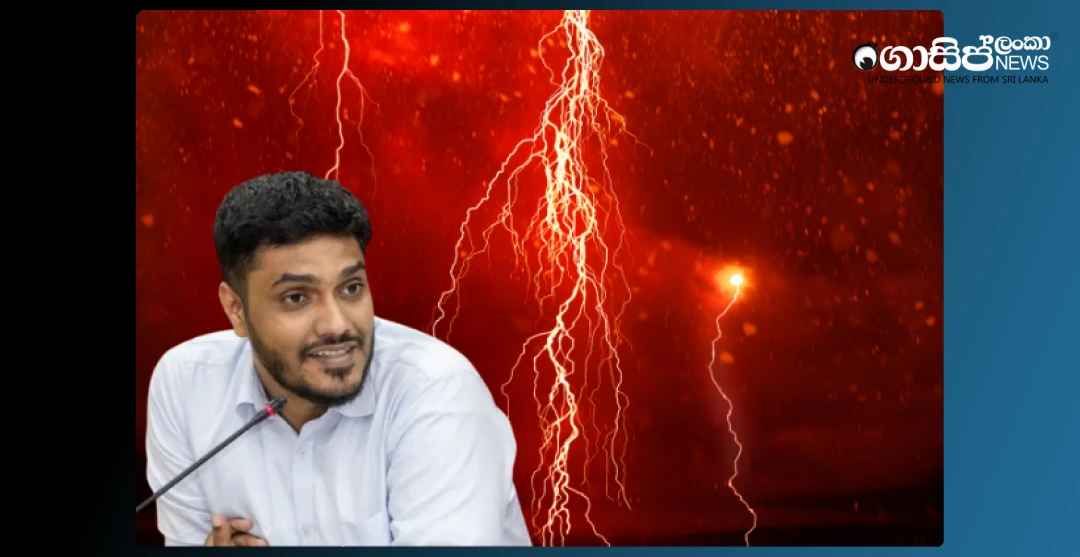
The main reason for the complete breakdown of the national power grid this morning (17), which plunged the entire island into darkness, has now been revealed. According to Deputy Minister of Power and Energy Akram Illiyas, the beginning of this massive crisis was marked by a powerful lightning strike on the Upper Kotmale Hydroelectric Power Plant.
As pointed out by the Deputy Minister, a serious technical fault occurred when one of the two main power generation units operating at the Upper Kotmale power plant was struck by lightning. This immediately led to a breakdown in the national system's power balance and frequency, creating a chain reaction that resulted in the loss of electricity for the entire country.
This sudden power outage that occurred in the morning had a severe impact on normal daily life. Daily operations in hospitals across the island, traffic signal systems on highways, and many essential public services were simultaneously plunged into a severe crisis. Due to the inactivation of water pumping stations with the power outage, the National Water Supply and Drainage Board also had to make a special request to the public to use existing water sparingly.
However, the engineers of the Ceylon Electricity Board and system operators have now succeeded in fully restoring the main high-voltage transmission network that was inactive. The system operator company announced that the national electricity transmission system is currently fully active. Operations to restore the distribution system, which supplies electricity to domestic and commercial consumers through substations at the regional level, are also continuously underway.
Although the transmission network has been reactivated, the challenge this power outage has left for the national system is not yet fully over. With the shock to the national system from the Upper Kotmale incident, all three generation units of the Norochcholai Lakvijaya Coal Power Plant, with a massive capacity of 900 megawatts, were simultaneously disconnected. It will take another two to three days to reactivate these inactive coal generation units and integrate them back into the national system.