![Gossip Lanka News [English]](https://blogger.googleusercontent.com/img/a/AVvXsEhYm2aFFq-bIW1nWX-RrqnPFoIsVos6_VCVz8BpLt0QJi55GNXHXC2fugeRvL0qUStEuCfs7Sfu6ZiSlhrkldxfGuE_wzy5gitY6rMZ2KSi8VBbGvkgXLks37RwZV-4-HKbWiNLRxB8C_r1e4z3mpxFTMPDJPEADoG8E-bZteWFipeD5KNGbjvCfqEfKw=s300 "Gossip Lanka News [English]")
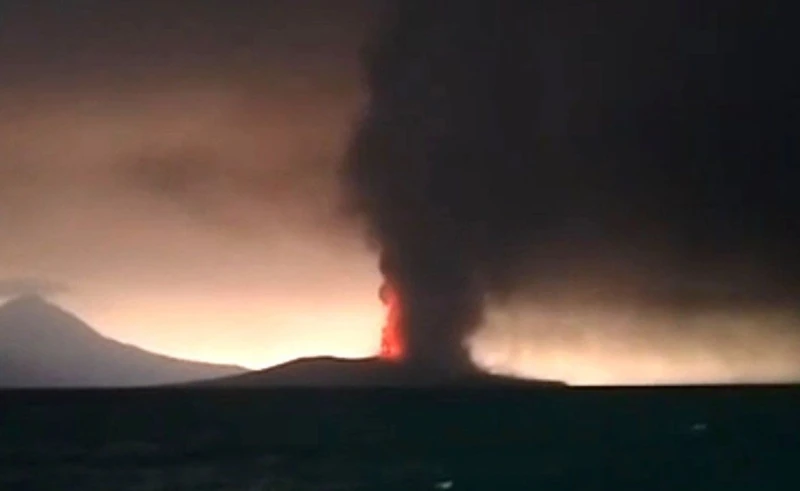
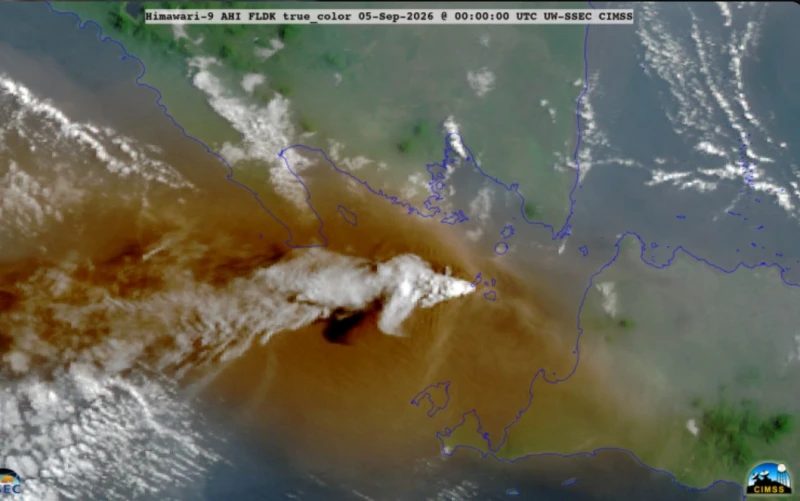
A powerful ash cloud has entered the atmosphere as the Anak Krakatau volcano, located in the Sunda Strait between the Indonesian islands of Java and Sumatra, continuously erupted for nearly 25 hours starting from the night of September 4th. The ash ejected into the sky traveled up to 15 kilometers high and spread over a distance of more than 150 kilometers, leading authorities to temporarily close several airports, including Jakarta's main airport.
Although hundreds of thousands of air passengers have been severely inconvenienced by this emergency, authorities confirm that there is no tsunami threat given the current situation. ANTARA NewsThe most powerful eruption of this volcano, which had been active since early July, began around 23:07 on Friday, September 4th, with loud roars and lava ejections. This continuous eruption, lasting nearly 25 hours, ended in the early hours of Sunday, September 6th, after which normal levels of black ash emissions were reported again. However, scientists say there is a high probability of further eruptions in the future. These ash clouds have spread across five provinces, and due to health issues like eye irritation among people in some areas, school classes have been moved online, and fishermen have been advised to avoid going to sea. VOI.ID
At the peak of the volcanic eruption, eight airports, including Jakarta's Soekarno-Hatta, had to be temporarily closed. As a result, thousands of flights were canceled, affecting a large number of passengers. Several international airlines, including Singapore Airlines, also canceled flights to Jakarta, and alternative transport services such as trains and buses have been deployed to manage the situation. The government is also focusing on measures to create artificial rain to reduce the amount of ash in the air. The Guardian
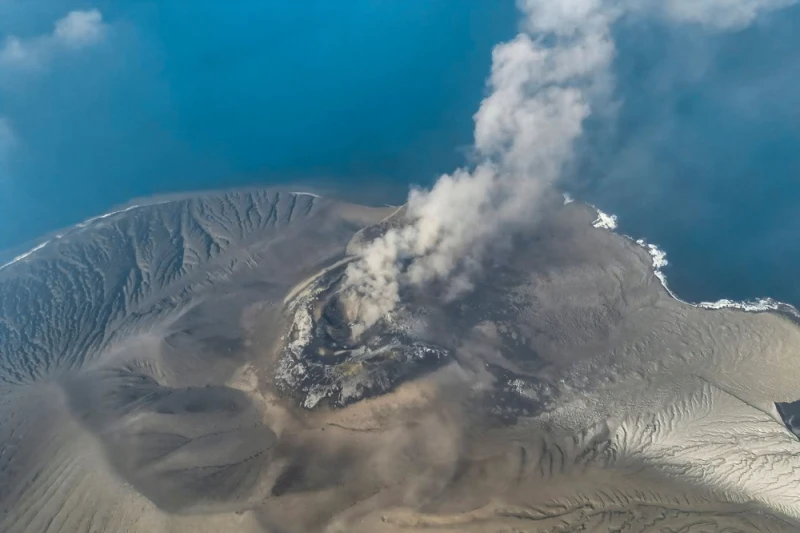
A 3-kilometer exclusion zone has been imposed around the volcano, prohibiting tourists and locals from entering. Although people are fearful, recalling the severe tsunami caused by a part of this volcano collapsing into the sea in 2018, the Department of Meteorology and Geology has confirmed that the current new volcanic crater is still small in size, so there is no change in sea level or tsunami risk. Therefore, coastal residents are urged not to be misled by false tsunami rumors.
Looking at the history of the Krakatau volcano, the massive eruption in 1883 claimed over 36,000 lives, and two-thirds of the existing volcano was destroyed and collapsed into the sea. Later, in 1927, a new volcanic crater emerged from the seabed and was named "Anak Krakatau," or "Child of Krakatau." This volcano gradually grew over the years and collapsed again in 2018, killing over 400 people. Geologists conclude that the current eruption, while disrupting air traffic, is not capable of causing a severe tsunami because the volcano, which is currently rebuilding, is not as large as it was in 2018.