![Gossip Lanka News [English]](https://blogger.googleusercontent.com/img/a/AVvXsEhYm2aFFq-bIW1nWX-RrqnPFoIsVos6_VCVz8BpLt0QJi55GNXHXC2fugeRvL0qUStEuCfs7Sfu6ZiSlhrkldxfGuE_wzy5gitY6rMZ2KSi8VBbGvkgXLks37RwZV-4-HKbWiNLRxB8C_r1e4z3mpxFTMPDJPEADoG8E-bZteWFipeD5KNGbjvCfqEfKw=s300 "Gossip Lanka News [English]")

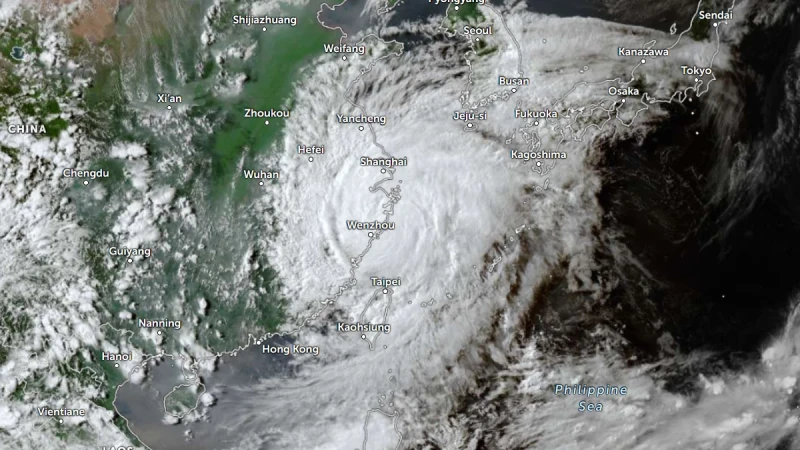
Typhoon "Dolphin," the most powerful tropical storm to affect China in 2026, made landfall on the eastern coast of China on Sunday evening, August 9. With maximum winds of approximately 150-151 kilometers per hour, the typhoon first entered the Yuhuan area of Zhejiang province around 5:30 PM, and then the Wenzhou area about an hour later.
Typhoon Dolphin, equivalent to a Category 1 hurricane on the Saffir-Simpson scale, was the 13th named storm of the 2026 Pacific typhoon season. Chinese authorities had previously issued red alerts, and by Monday morning, August 10, the typhoon, moving inland, gradually weakened into a tropical depression.Originating near the Marshall Islands in late July, this typhoon recorded a lifespan several times longer than an average typhoon, traversing a long path of nearly 6,000 kilometers. Before entering China, the storm affected Okinawa Prefecture in Japan, injuring six people and causing power outages in tens of thousands of buildings. Additionally, the typhoon brought heavy monsoon rainfall to some parts of the Philippines, leading to floods and landslides.
Due to the severe threat of the storm, over 1 million people (more than 1.5 million according to some reports) were evacuated from Zhejiang, Shanghai, Fujian, and nearby areas to safe locations. In Wenzhou city alone, over 900,000 people were evacuated, and more than 1,000 emergency relief camps were opened. Additionally, 390,000 people were evacuated from Taizhou, and between 98,900 and 150,000 from Fujian province. Nearly 215,600 people were also directed to safe places from Shanghai. Numerous precautionary measures were implemented, including the suspension of ferry and cruise services, the closure of tourist attractions like Shanghai Disneyland and Legoland, and the cessation of operations at Yangshan Port.
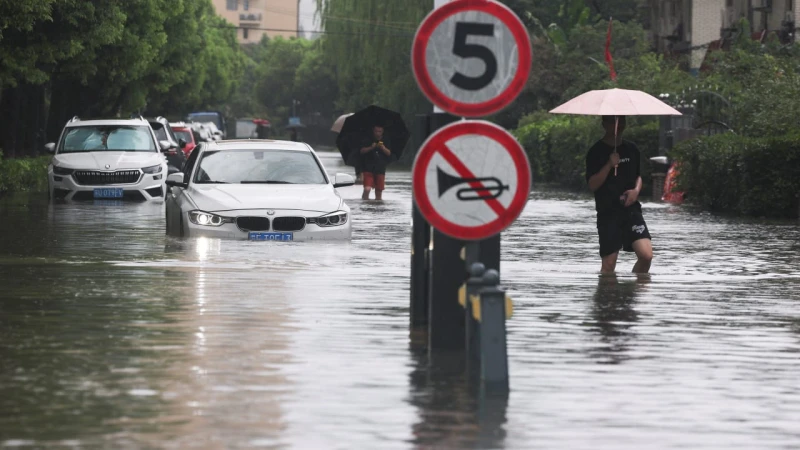
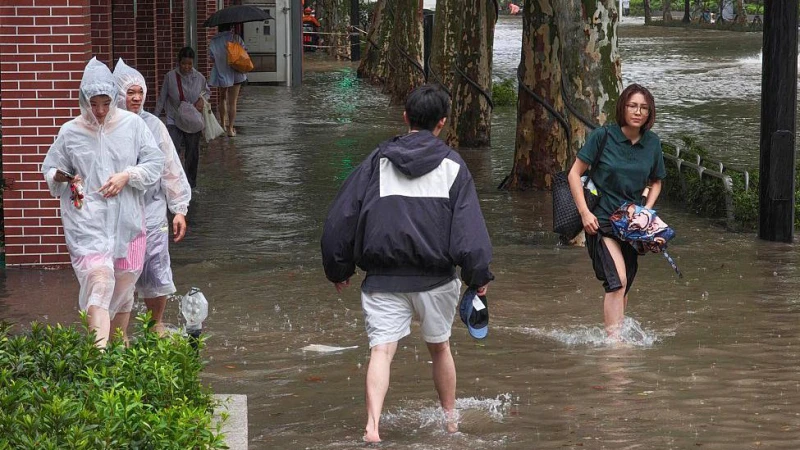
The heavy rainfall accompanying the storm caused massive flooding in many areas, including Shanghai city, where a major weather station recorded a record 313 millimeters of rainfall within 24 hours. This was the highest value recorded in the city in over 150 years, with another station reporting nearly 400 millimeters of rainfall. Roads, homes, and commercial complexes were submerged, and knee-deep water severely disrupted traffic. The average rainfall in Zhejiang province was also recorded at 173 millimeters.
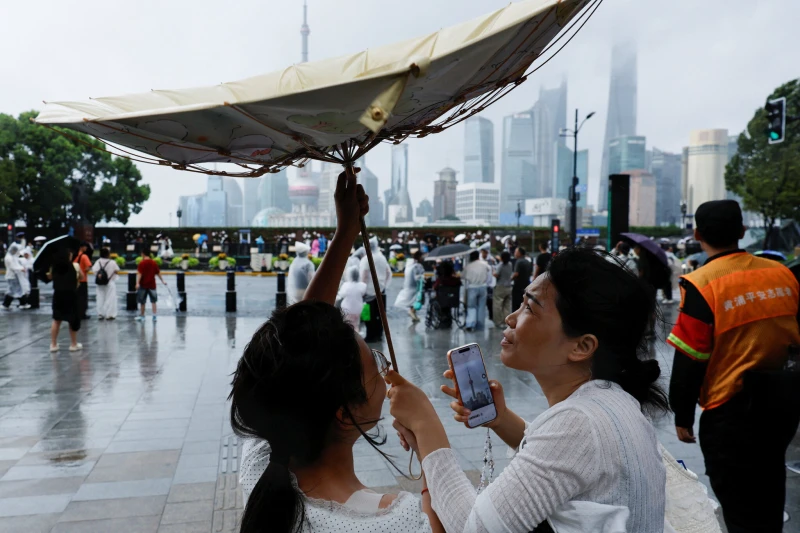
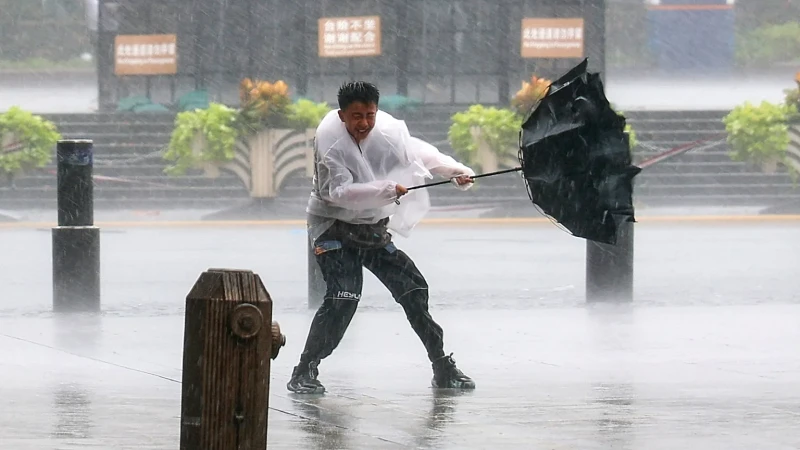
The transportation sector was also severely affected by the storm, with approximately 1,300-1,500 flights suspended on Sunday and another 943 flights on Monday from Shanghai's two main airports. Hundreds of flights were also canceled in Hangzhou, and train, ferry, and highway traffic were disrupted. A lorry traveling on the highway overturned due to the strong winds, which were so severe that umbrellas were turned inside out.
Although no direct fatalities were reported from the storm, a 9-year-old boy in Zhejiang was swept out to sea by a massive wave and went missing, and two individuals who spread false information about the storm were taken into police custody. Additionally, this storm system contributed to a record high temperature in Hong Kong. The remnants of the storm were moving inland to provinces including Anhui, Jiangsu, Shandong, and Henan, and severe rainfall warnings had been issued for the capital city of Beijing. China's robust early warning and evacuation systems helped minimize the potential damage from such a massive storm.