![Gossip Lanka News [English]](https://blogger.googleusercontent.com/img/a/AVvXsEhYm2aFFq-bIW1nWX-RrqnPFoIsVos6_VCVz8BpLt0QJi55GNXHXC2fugeRvL0qUStEuCfs7Sfu6ZiSlhrkldxfGuE_wzy5gitY6rMZ2KSi8VBbGvkgXLks37RwZV-4-HKbWiNLRxB8C_r1e4z3mpxFTMPDJPEADoG8E-bZteWFipeD5KNGbjvCfqEfKw=s300 "Gossip Lanka News [English]")
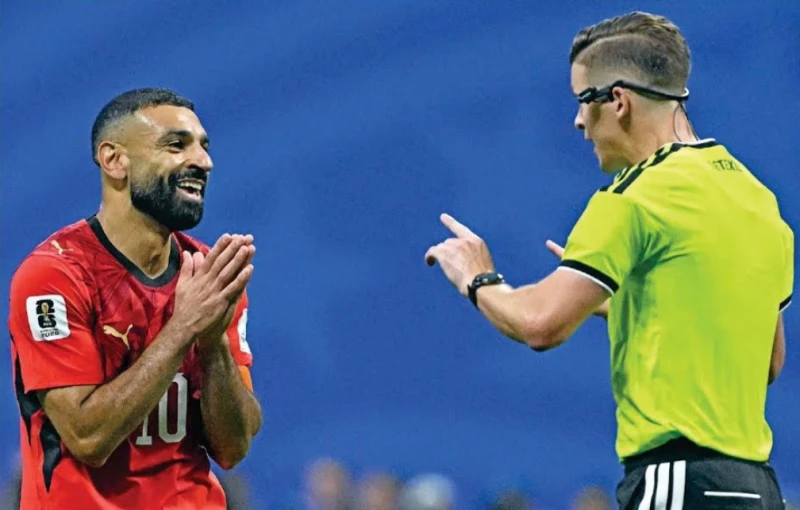
The Round of 16 match between Argentina and Egypt in the World Cup football tournament has once again revealed to the world both the beauty of the game and the highly controversial nature of referee decisions. The Egyptian team, which was leading 2-0 until the 79th minute of the match and was on the verge of its greatest victory in history, ultimately had to face a 3-2 defeat against Argentina.
With this unexpected defeat, millions of Egyptians are deeply saddened, and they accuse that unfair referee decisions and the controversial use of the Video Assistant Referee (VAR) system directly influenced the outcome of the match.Specifically, a goal scored by Mostafa Sideka in the second half of the match was disallowed by the referees using VAR technology, based on a foul committed by an Egyptian player in an earlier instance. Egyptian coach Hossam Hassan expressed his strong disapproval of this decision at the post-match press conference. Furthermore, the failure to award Egypt a penalty in the 92nd minute when Mohamed Salah fell inside the Argentine box, with the score tied at 2-2, also caused significant controversy. It is the strong opinion of Egyptian football fans that the referees snatched victory from their team through these decisions.
However, veteran Argentine sports journalist Alejandro Magdaleno points out that such referee decisions have been a source of various conflicts of opinion throughout football history. He states that it is common for the winning team to claim referee decisions were fair, while the losing team asserts that an injustice occurred. He adds that the referees correctly identified the foul against Lautaro Martínez before Argentina's second goal, and that there was not enough of a foul to warrant a penalty when Salah fell.
Football fans like Sherouk Zakaria, an Egyptian national residing in Dubai, state that how everything changed in the last 10 minutes was incredibly heartbreaking. She also questions why the referees did not issue yellow cards for fouls committed by Argentine players. Meanwhile, Jorge Ferrari, an Argentine national residing in Dubai, points out that tactical errors by the Egyptian coaching staff, rather than referee decisions, influenced the change in the match's outcome. His analysis is that with the score tied at 2-2, Egypt's unnecessary aggression in pursuit of a third goal in the remaining limited minutes, instead of trying to take the game to extra time, led to a lapse in defense, allowing Argentina the opportunity to score the final goal.
This incident has also managed to revive old memories in football history. Examples include the lingering doubt to this day about whether Geoff Hurst's shot crossed the goal line in the 1966 World Cup final, Diego Maradona's famous 'Hand of God' goal scored with his hand in the 1986 World Cup quarter-final, and the anger among Argentinians regarding the penalty awarded to Germany against Argentina in the 1990 World Cup final. This match has once again confirmed that despite how controversial referee decisions can be, the unexpected and emotional nature inherent in football is the true appeal of the sport.