![Gossip Lanka News [English]](https://blogger.googleusercontent.com/img/a/AVvXsEhYm2aFFq-bIW1nWX-RrqnPFoIsVos6_VCVz8BpLt0QJi55GNXHXC2fugeRvL0qUStEuCfs7Sfu6ZiSlhrkldxfGuE_wzy5gitY6rMZ2KSi8VBbGvkgXLks37RwZV-4-HKbWiNLRxB8C_r1e4z3mpxFTMPDJPEADoG8E-bZteWFipeD5KNGbjvCfqEfKw=s300 "Gossip Lanka News [English]")
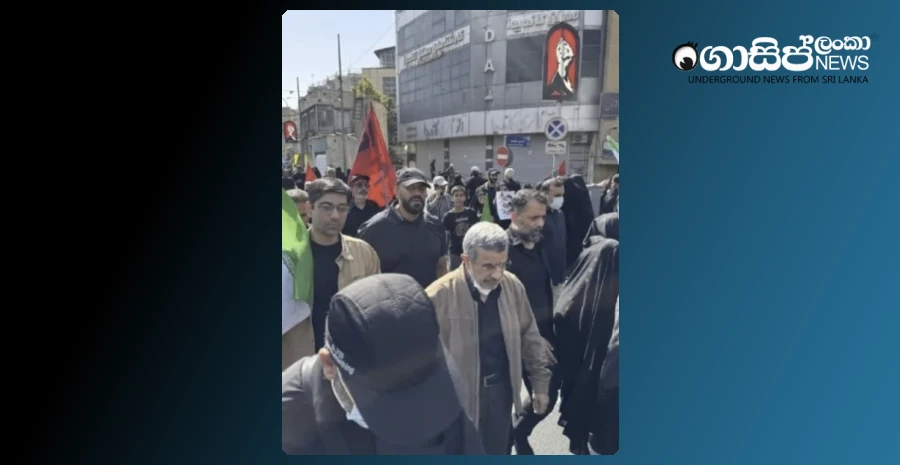
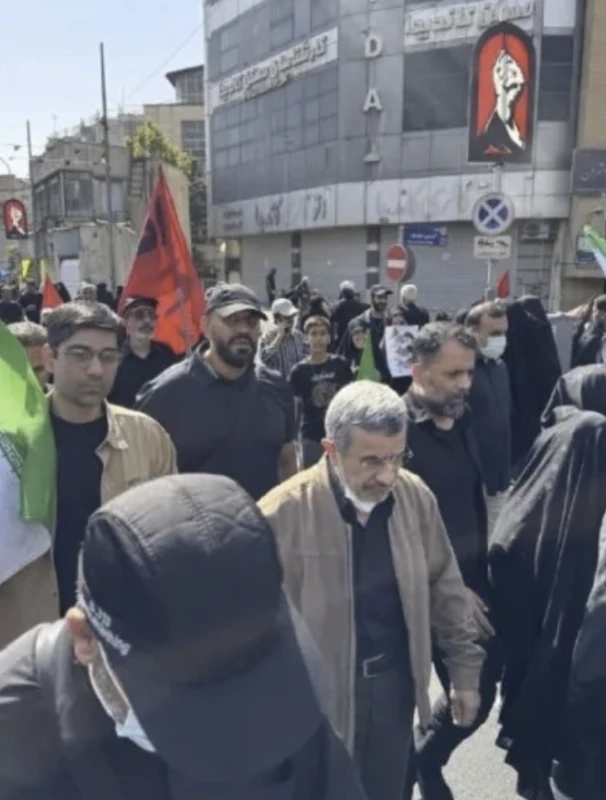
Amidst the severe crisis in Iran, the reappearance of former President Mahmoud Ahmadinejad in public after a long time has drawn international attention. He participated in the massive state funeral procession of Ayatollah Ali Khamenei held in Tehran on or around July 6, 2026, which was widely publicized by Iranian state media, international news agencies, and social media.
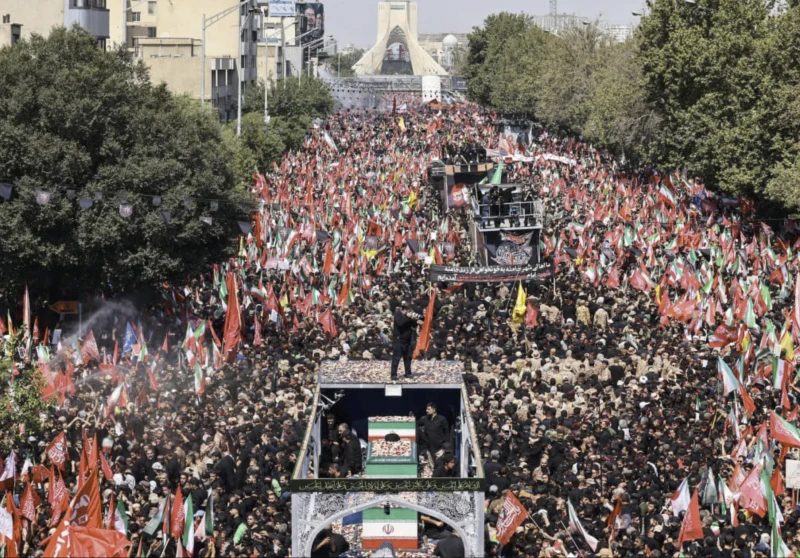
Due to unconfirmed reports circulating for several months that he had either died or been seriously injured in Israeli and American airstrikes during the Iran War, which began in 2026, his appearance has been widely discussed by international media under headlines such as "Ahmadinejad Rises from the Dead." Rumors that Ahmadinejad had also died when his bodyguards were killed in an attack on a house in Tehran's Narmak district have been completely disproven by this appearance. With previous travel restrictions eased due to the chaotic situation in the country, footage released by media outlets, including the "Dolati Bahar" Telegram channel, confirms him walking among mourners and dignitaries of the Kata'ib Hezbollah organization, dressed in black.This funeral ceremony was organized for Supreme Leader Ayatollah Ali Khamenei, who was assassinated in a joint US and Israeli airstrike on his official residential complex in Tehran on February 28, 2026. Several members of his family also died in the attack, and due to security reasons in the prevailing war situation, the delayed funeral proceedings began in early July. An enormous crowd of between 12 and 15 million people attended in Tehran alone, with people carrying coffins adorned with flowers and national flags filling the area around Azadi Tower. Chanting slogans like "Death to America, Death to Israel" and displaying banners against Trump and Netanyahu, these people demonstrated their national resilience and unity to the world amidst the war. The funeral procession, which began in Tehran, passed through Qom and, after special programs in Iraq, was scheduled for burial in Mashhad on July 9.
Analysts say that despite past political tensions between Ahmadinejad and Khamenei, his attendance at this funeral could be a sign of a new factional realignment in Iranian politics. Ahmadinejad, a figure discussed with suspicion by American and Israeli authorities as a potential successor to Khamenei, was born on October 28, 1956, in Aradan, near Garmsar. His family later migrated to Tehran, where his father was a blacksmith and grocer, and the family's original surname, Sabaghian, was changed. Holding a Ph.D. in Transportation Engineering from Iran University of Science and Technology, he actively participated in the 1979 revolution and the Iran-Iraq War as a member of the Revolutionary Guard Corps. Later, as a governor and Mayor of Tehran from 2003-2005, he worked to reverse previous reforms and adopt a hardline populist approach.
During his tenure as President of Iran from 2005 to 2013, with strong hardline conservative support, he became internationally controversial due to his populist economic policies, advocacy for the nuclear program, and strong anti-Western and anti-Israeli statements. He drew global attention particularly for denying the Holocaust and making statements like "Israel must be wiped off the map," and later clashed with reformists and Khamenei's close associates. After his presidency, he distanced himself somewhat from politics and was later banned from running in subsequent elections, yet he remains a controversial nationalist figure. This instability in the Middle East directly affects countries like Sri Lanka, potentially leading to rising global oil prices, reduced foreign remittances, and geopolitical shifts. Sri Lanka, which has historical ties with Iran, particularly regarding crude oil imports, must pay close attention to these regional power vacuums, rising energy costs, and the impact on Sri Lankan migrant workers in the Middle East.