![Gossip Lanka News [English]](https://blogger.googleusercontent.com/img/a/AVvXsEhYm2aFFq-bIW1nWX-RrqnPFoIsVos6_VCVz8BpLt0QJi55GNXHXC2fugeRvL0qUStEuCfs7Sfu6ZiSlhrkldxfGuE_wzy5gitY6rMZ2KSi8VBbGvkgXLks37RwZV-4-HKbWiNLRxB8C_r1e4z3mpxFTMPDJPEADoG8E-bZteWFipeD5KNGbjvCfqEfKw=s300 "Gossip Lanka News [English]")
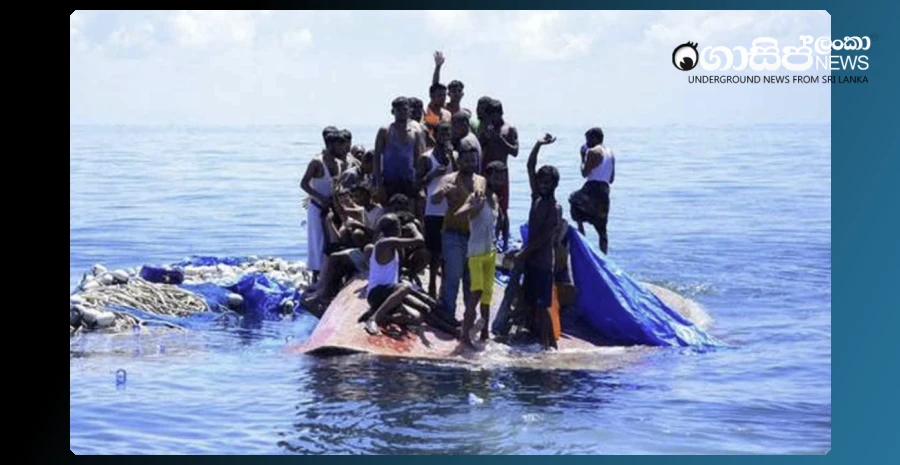
It is strongly suspected that over 500 people may have died or gone missing after two boats carrying Rohingya refugees disappeared off the coast of Myanmar in the Bay of Bengal. According to a statement issued on July 16, 2026, by United Nations agencies, including the International Organization for Migration (IOM) and the United Nations High Commissioner for Refugees (UNHCR), this tragedy occurred in late June or early July.
This is reported as one of the most severe and deadliest maritime accidents to have occurred on this sea route in recent history.According to available information, these two boats commenced their journey from Myanmar's western Rakhine State in late June. The first boat carried approximately 250 people, and communication with it ceased completely shortly after its departure. The second boat, carrying about 280 people, is believed to have sunk off the Ayeyarwady coast of Myanmar on or around July 8. These perilous journeys were organized outside of normal sea travel schedules, amidst severe monsoon weather, heavy rainfall, and flood conditions, which significantly heightened the risk. Although the official death toll has not yet been fully confirmed, the United Nations expresses grave concern that this could be a massive loss of life, given that a large number of people are likely to have perished.
The majority of the passengers who faced this accident are Rohingya, a stateless Muslim minority in Myanmar. It is revealed that some of them returned to Rakhine State from overcrowded refugee camps in Cox's Bazar, Bangladesh, and then embarked on these perilous sea journeys. In Myanmar's Rakhine State, Rohingya have faced state-sponsored violence and severe restrictions for decades, with the United States classifying these actions as genocide. Following the Myanmar military's crackdown in 2017, over a million Rohingya fled to Bangladesh, while another 630,000 or so live in Rakhine State amidst severe hardships. Limited opportunities in Bangladeshi camps and recent incidents of heavy rain and floods affecting Cox's Bazar camps, leading to deaths including children, have increasingly pushed refugees towards such dangerous journeys.
The civil war situation in Myanmar following the 2021 military coup has also been a major reason for the increase in these migrations. Conflicts between the military regime and armed groups like the Arakan Army, which has gained significant power in Rakhine State, have led to over 100,000 deaths to date, creating a severe humanitarian crisis. This unstable environment and intense pressure have led to a noticeable increase in sea migrations undertaken in dilapidated boats with the help of human traffickers.
The Andaman Sea and the Bay of Bengal are considered one of the deadliest maritime migration routes in the world. Prior to this latest tragedy, nearly 300 people traveling on this route have died or gone missing in 2026 alone. According to data from the United Nations High Commissioner for Refugees (UNHCR), approximately 6,500 people attempted to travel along this route in 2025, with nearly 900 dying or going missing, making it the deadliest year in history. Due to ongoing conflicts and the lack of safe alternatives, thousands of Rohingya lives, including women, children, and infants, are being lost at sea. For these reasons, the International Organization for Migration (IOM) and the United Nations High Commissioner for Refugees (UNHCR) are making an urgent appeal to the regional and international community to strengthen search and rescue operations, provide safety and protection to refugees, and take strong action against human trafficking networks.