![Gossip Lanka News [English]](https://blogger.googleusercontent.com/img/a/AVvXsEhYm2aFFq-bIW1nWX-RrqnPFoIsVos6_VCVz8BpLt0QJi55GNXHXC2fugeRvL0qUStEuCfs7Sfu6ZiSlhrkldxfGuE_wzy5gitY6rMZ2KSi8VBbGvkgXLks37RwZV-4-HKbWiNLRxB8C_r1e4z3mpxFTMPDJPEADoG8E-bZteWFipeD5KNGbjvCfqEfKw=s300 "Gossip Lanka News [English]")
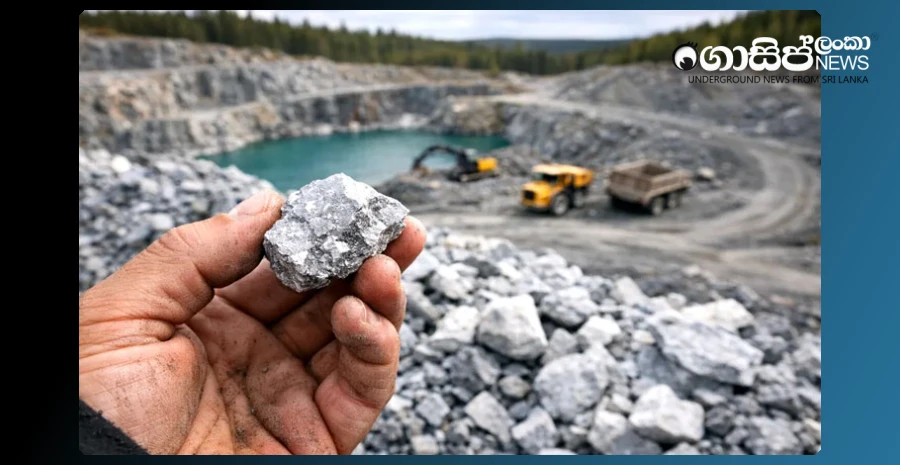
Lithium mining operations are expanding to produce batteries for green energy, with the aim of boosting South Africa's economy. However, this has met with strong opposition from thousands of farmers who fear that these projects will turn their fertile farmlands into open-pit mines.
Since 2023, numerous lithium mining licenses have been issued along the southeastern coast, forcing farming communities who have lived there for generations to abandon their homes. According to Department of Mineral Resources data, the land allocated for these mining operations is approximately 73,000 hectares, an area larger than the city of Pretoria. This includes 117 farms and coastal areas. The existing mine is also planned to be expanded to 150 hectares of pits and 180 hectares of waste disposal sites.
The 'South Coast Guardians Association' (SCGA) points out that this situation threatens approximately 30,000 jobs in the agricultural and tourism sectors. Heather Macleod, the General Manager of the organization, states that this will have a devastating impact on factories that handle about 2 million metric tons of sugarcane harvest from thousands of small and large-scale farmers, as well as on local businesses.
South African President Cyril Ramaphosa informed Parliament last February that the country possesses mineral resources worth approximately $2.39 trillion (40 trillion Rand), calling it an "emerging industry" that can create jobs and strengthen the industrial base. However, villagers like 62-year-old Albert Mthembu, who lives in Magog village in KwaZulu-Natal province, have faced cracks in their homes due to mining blasts and lung ailments caused by dust. Mine workers have completely demolished one of his friend's houses and destroyed seven other homes.
Ian Harbottle, director of SA Lithium, states that 150 farmers have voluntarily relocated and that over 1000 jobs have been created around the mines. He also claims that no water from the mines flows into rivers. However, locals and individuals like 51-year-old sugarcane farming consultant Joe Nkala express deep concern that these mining operations, spanning 6000 hectares, will pollute water and soil, completely destroying the future of agriculture.