![Gossip Lanka News [English]](https://blogger.googleusercontent.com/img/a/AVvXsEhYm2aFFq-bIW1nWX-RrqnPFoIsVos6_VCVz8BpLt0QJi55GNXHXC2fugeRvL0qUStEuCfs7Sfu6ZiSlhrkldxfGuE_wzy5gitY6rMZ2KSi8VBbGvkgXLks37RwZV-4-HKbWiNLRxB8C_r1e4z3mpxFTMPDJPEADoG8E-bZteWFipeD5KNGbjvCfqEfKw=s300 "Gossip Lanka News [English]")
Thirty-one-year-old Pau, holding a white cane in one hand and the hand of her six-year-old son Noel tightly in the other, embarks on a difficult two-hour journey through the busy and rough streets of Mexico City, not to seek anyone's pity. She is going to play football.
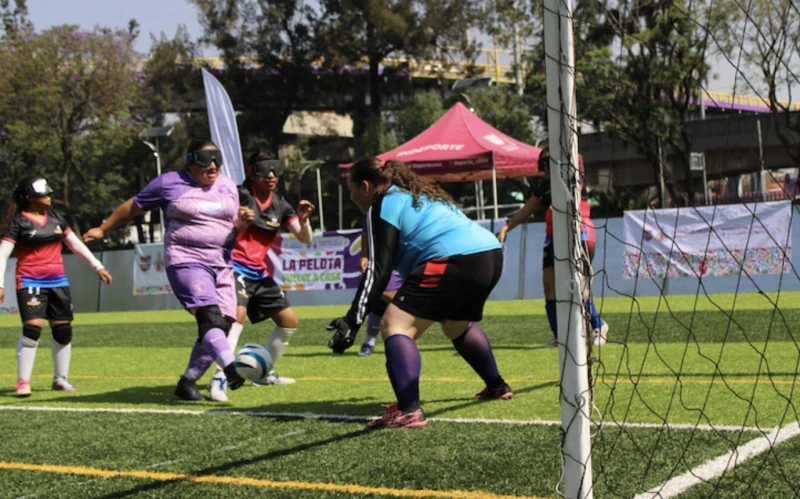
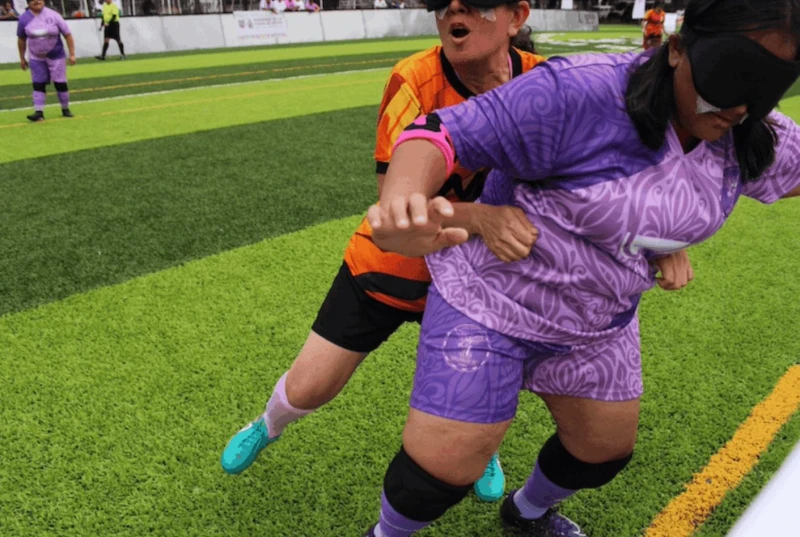
"Football has completely changed the way I see myself as a visually impaired woman. I'm proving to my son that there are no limits," she says, with the light of determination in her heart despite her inability to see. Noel proudly tells others that his mother plays football.Pau represents 'Chilangas FC', a football team for visually impaired women in Mexico, founded in 2022 by coach Wendy del Rio. There are only six such women's teams in all of Mexico. This team plays according to a unique set of rules, bringing female participation to a sport that had been limited to men for over two decades. In this sport, which consists of four players and a sighted goalkeeper, wearing eye masks is mandatory to equalize the vision levels of all participants. They run across the field guided by a special football that emits sound from bells inside, spatial memory, and the vocal instructions of their coaches.
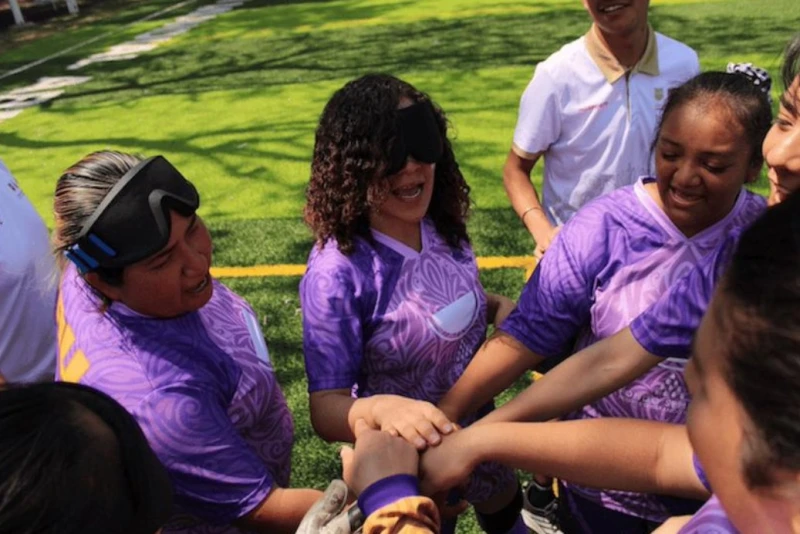
This playing field is not just a place where they seek victory, but a supportive family where they understand each other. Twenty-year-old player Alexandra Ramirez says this is a beautiful responsibility entrusted to her. Over 16 million people in Mexico suffer from some level of visual impairment, and more than half a million of them are completely blind. However, only a small number, about 45 women, are involved in organized visually impaired women's football across the entire country. This team has succeeded in breaking the traditional framework that confined visually impaired women to their homes or family care, transforming them into independent, self-confident, and exemplary figures.
However, their journey is not without obstacles. Urban infrastructure unsuitable for the visually impaired, safety risks when women travel alone, and the lack of playing fields or financial resources are the main challenges they face. Amidst the current World Cup football fever, the next goal for these courageous athletes is to qualify for the 'Copa América' tournament, to be held in São Paulo, Brazil, in September 2026. For this, they are making a strong effort to raise approximately one million Mexican pesos through public support. Recognized as a Paralympic sport since 2004 under the International Blind Sports Federation (IBSA), this sport has now proven to be a powerful tool for social transformation.
This struggle of the Chilangas players in Mexico sends a powerful message to countries like Sri Lanka. In our country too, the traditional attitude towards the disabled community must change. There is a strong need to empower them not merely as 'recipients of pity, dependent on others for care,' but as athletes, leaders, and social role models. Although sports like 'Goalball' for the visually impaired are somewhat popular in Sri Lanka, opportunities for visually impaired women and girls to engage in sports are still limited. Within our country's sports-loving culture, expanding such sports programs nationwide is a timely necessity to overcome the social isolation faced by disabled women and to enhance their physical and mental health.
For that, what we need is not mere expressions of pity or sorrow, but to provide proper opportunities and patronage for their talents, paving the way for them to conquer the whole world through the sound of the ball echoing on the playing field.