![Gossip Lanka News [English]](https://blogger.googleusercontent.com/img/a/AVvXsEhYm2aFFq-bIW1nWX-RrqnPFoIsVos6_VCVz8BpLt0QJi55GNXHXC2fugeRvL0qUStEuCfs7Sfu6ZiSlhrkldxfGuE_wzy5gitY6rMZ2KSi8VBbGvkgXLks37RwZV-4-HKbWiNLRxB8C_r1e4z3mpxFTMPDJPEADoG8E-bZteWFipeD5KNGbjvCfqEfKw=s300 "Gossip Lanka News [English]")
The ceasefire established in early 2026 is currently in severe crisis due to the latest conflicts that have erupted around the Strait of Hormuz. This situation further escalated with the crash of an American AH-64 Apache attack helicopter belonging to the US Army, which was on patrol off the coast of Oman on June 9.
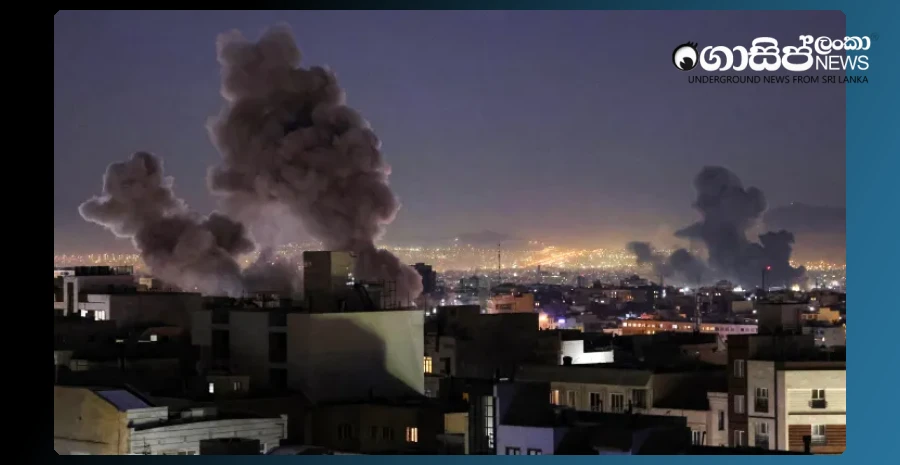
US President Donald Trump directly accused Iran of the attack and warned of a strong response. The two crew members from the crashed helicopter were safely rescued by an unmanned American naval vessel, marking a significant milestone in the history of such operations. However, Iran has rejected the accusations regarding the incident, speculating that it might have been an accident or due to another technical malfunction. Iran's blockade of the strait has also severely impacted global maritime traffic and the energy market.In response to the helicopter crash, the US Central Command (CENTCOM) launched attacks on several targets along the southern Iranian coast. These attacks specifically targeted Iranian air defense systems, radar stations, and other military installations located in areas around Bandar Abbas, Qeshm Island, Sirik, and Jask. US authorities stated that this operation, carried out under President Trump's direct order, was a limited measure aimed at preventing further aggression. Iranian media reported that these attacks also affected civilians and created a risk of damage to oil infrastructure.
In response to the American attacks, the Iranian Islamic Revolutionary Guard Corps (IRGC) launched a series of drone and missile attacks targeting the US Fifth Fleet headquarters in Bahrain, as well as airbases in Kuwait and Jordan. These attacks reportedly affected approximately 21 targets, including locations housing US F-35 fighter jets and command centers, and an American MQ-9 drone was shot down. Following the attacks, air raid sirens sounded in Bahrain and Kuwait, and Kuwaiti and Jordanian defense forces successfully destroyed several incoming missiles and drones. Iran stated that this was a severe response to American aggression and warned that it would take stronger measures if the US launched further attacks.
Concurrently with the escalating tensions in the Gulf region, the regional crisis has been further complicated by Israel's attacks on southern areas of Lebanon, including Tyre. In response, Hezbollah also launched drone and rocket attacks targeting Israeli military positions. Peace talks between the US and Iran are also in severe crisis due to Iran's condition that it will not agree to a ceasefire until Israeli military operations in Lebanon cease. Diplomatic efforts, indirectly mediated through Pakistan, are also faltering amidst this situation, and violent actions by West Bank settlers have further contributed to regional instability. The crisis in the Strait of Hormuz has also created significant instability in global crude oil prices and the global market, and the number of casualties continues to rise.