![Gossip Lanka News [English]](https://blogger.googleusercontent.com/img/a/AVvXsEhYm2aFFq-bIW1nWX-RrqnPFoIsVos6_VCVz8BpLt0QJi55GNXHXC2fugeRvL0qUStEuCfs7Sfu6ZiSlhrkldxfGuE_wzy5gitY6rMZ2KSi8VBbGvkgXLks37RwZV-4-HKbWiNLRxB8C_r1e4z3mpxFTMPDJPEADoG8E-bZteWFipeD5KNGbjvCfqEfKw=s300 "Gossip Lanka News [English]")
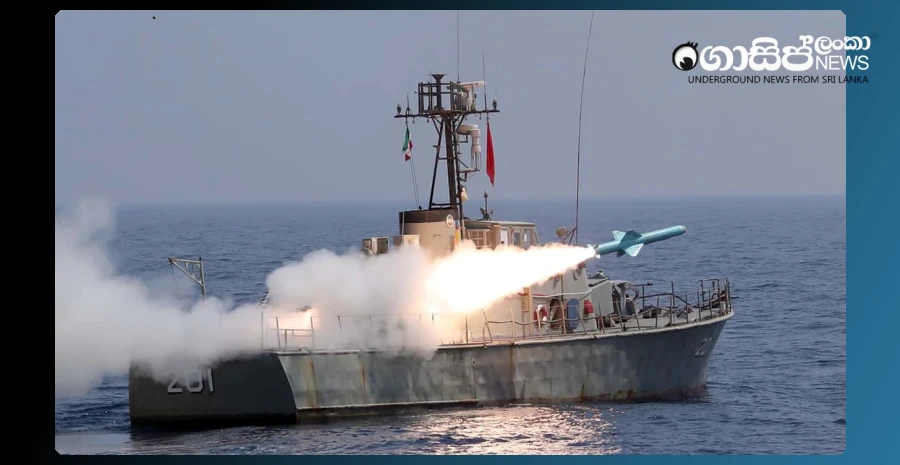
The fragile ceasefire established for the Iran war has completely collapsed, with a series of direct exchanges of attacks reported between American and Iranian forces over the past 24 hours. This latest escalation of conflict was triggered by the crash of an American military Apache helicopter near the Strait of Hormuz.
Consequently, the US Central Command (CENTCOM) launched powerful airstrikes on Iranian targets on June 10, and in response, Iran has taken steps to completely close the Strait of Hormuz.US forces launched a second round of self-defense strikes targeting air defense systems, radar stations, and communication networks in southern and western Iran until dawn on June 11. These attacks were directed at Bandar Abbas, Qeshm Island, Hengam Island, and the suburbs of Tehran. Iranian state media confirmed the attacks but stated that the damage was minimal. The US claims these strikes, carried out under the direction of President Donald Trump, were a response to Iranian aggression, while Iran condemns them as a violation of its sovereignty.
Significantly impacting previous ceasefire agreements, the Iranian Joint Armed Forces Command has completely closed the Strait of Hormuz, a major route for oil transport to the world market, since the night of June 10. Following this decision, the Iranian Revolutionary Guard Corps (IRGC) attacked two commercial vessels attempting to pass through the strait, while US forces attacked a Palau-flagged vessel transporting Iranian oil in the Gulf of Oman, resulting in three Indian sailors going missing. As approximately twenty percent of the world's seaborne oil and liquefied natural gas passes through this region, this closure will have a severe impact on the global economy.
In retaliation for the attacks on its territory, Iran has launched missile and drone attacks on Bahrain and Kuwait, where US military and naval headquarters are located. Consequently, Kuwait closed its airspace and diverted flights, calling Iran's actions a brutal aggression. This situation has escalated beyond a direct US-Iran conflict, taking on a dangerous form that could draw all allied Gulf countries into the war.
The immediate catalyst for this entire chain of conflicts was the crash of a US military Apache helicopter near the Strait of Hormuz on June 9. Although the crew was safely rescued, the US President directly blamed Iranian drone interference and vowed retaliation. This incident has completely derailed diplomatic talks aimed at nuclear agreements and the lifting of sanctions.
Despite the war atmosphere, a delegation from Qatar arrived in Tehran on June 10 as mediators and held limited discussions. The US President stated that there was progress towards a nuclear agreement, while also warning that if Iran delayed talks, a full victory would be declared within a few weeks. However, Iran's UN Ambassador emphasized that his country would never surrender to coercive threats.
Regionally, while direct conflicts between Iran and Israel have temporarily ceased, Israel is launching intense attacks against Hezbollah in southern Lebanon. These attacks have killed more than twelve people, including aid workers, and residents of the capital Beirut are reportedly engaged in strong protests. Any changes in the Gulf region directly impact the Lebanese front, placing regional leaders at significant risk.
Looking at the global economy, with the closure of the Strait of Hormuz, the price of a barrel of crude oil in the world market has risen beyond the US$93 mark. This will disrupt fuel supplies to the Asian region and lead to increased costs for air travel, fertilizer production, and food production. Import-dependent countries like Sri Lanka are also facing indirect economic pressure due to rising energy and transportation costs.