![Gossip Lanka News [English]](https://blogger.googleusercontent.com/img/a/AVvXsEhYm2aFFq-bIW1nWX-RrqnPFoIsVos6_VCVz8BpLt0QJi55GNXHXC2fugeRvL0qUStEuCfs7Sfu6ZiSlhrkldxfGuE_wzy5gitY6rMZ2KSi8VBbGvkgXLks37RwZV-4-HKbWiNLRxB8C_r1e4z3mpxFTMPDJPEADoG8E-bZteWFipeD5KNGbjvCfqEfKw=s300 "Gossip Lanka News [English]")
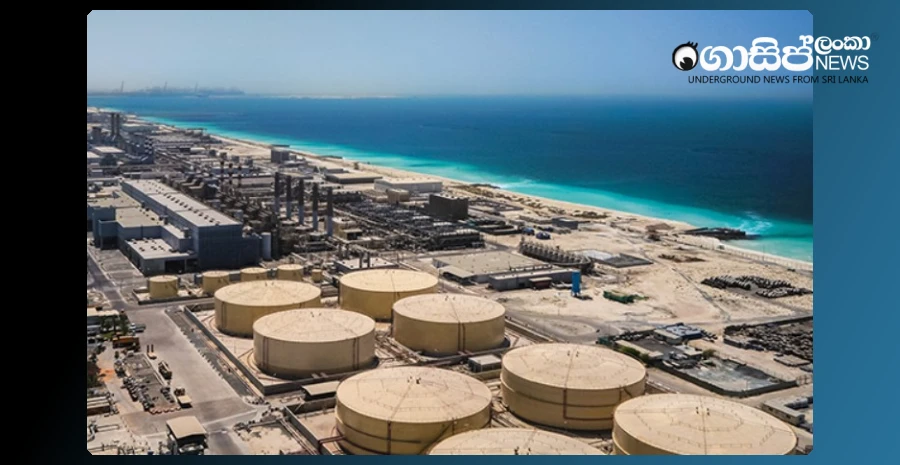
The National Water Supply and Drainage Board (NWSDB) has focused its attention on purifying seawater to meet drinking water needs in order to successfully face the severe heat and drought conditions that may arise in the country in the future. The globally growing El Niño climate change is the main reason for this, and meteorology experts predict that its maximum impact will be felt in Sri Lanka between January and April next year.
Due to this El Niño Southern Oscillation (ENSO) phenomenon, which occurs due to an unusual rise in temperature in the Pacific Ocean, regional countries such as Sri Lanka, India, and Australia receive less rainfall than average, significantly increasing the likelihood of a severe water shortage.However, Engineer A. M. P. C. T. Bandara, Chairman of the National Water Supply and Drainage Board, states that the public should not panic unnecessarily in the face of this situation. He points out that there is no risk of the country's main water catchment areas completely drying up and assures that there is no need to fear a severe water shortage as the existing water supply infrastructure and water reserves can meet the current demand. Nevertheless, he mentioned that as a precautionary measure, steps are being taken to strengthen seawater desalination efforts using Reverse Osmosis (RO) technology. Although the Board is already successfully operating a seawater purification unit in the Jaffna area, producing 24,000 cubic meters of drinking water daily, the Chairman further emphasized that there are limitations to expanding this process to other parts of the island due to the high financial cost and large amount of electricity required.
Meanwhile, Mr. K. G. Dharmatilake, Additional Secretary (Administration) of the National Disaster Relief Services Centre, points out that if the El Niño condition becomes unusually severe as predicted, authorities will have to purify seawater as an essential step to meet emergency drinking water needs. He states that according to international climatic conditions, there is a risk of even major water sources drying up, and in such a widespread water shortage, the current number of water bowsers held by the disaster center is absolutely insufficient for emergency distribution. Since Sri Lanka has not faced such severe conditions before, and considering the warnings issued by the Sri Lanka Department of Meteorology that drought symptoms may emerge in the upcoming July and August months, it has become essential to focus on options for purifying and distributing seawater. The fact that the World Meteorological Organization had previously warned of a globally strong El Niño condition further confirms the importance of this preparedness.