![Gossip Lanka News [English]](https://blogger.googleusercontent.com/img/a/AVvXsEhYm2aFFq-bIW1nWX-RrqnPFoIsVos6_VCVz8BpLt0QJi55GNXHXC2fugeRvL0qUStEuCfs7Sfu6ZiSlhrkldxfGuE_wzy5gitY6rMZ2KSi8VBbGvkgXLks37RwZV-4-HKbWiNLRxB8C_r1e4z3mpxFTMPDJPEADoG8E-bZteWFipeD5KNGbjvCfqEfKw=s300 "Gossip Lanka News [English]")
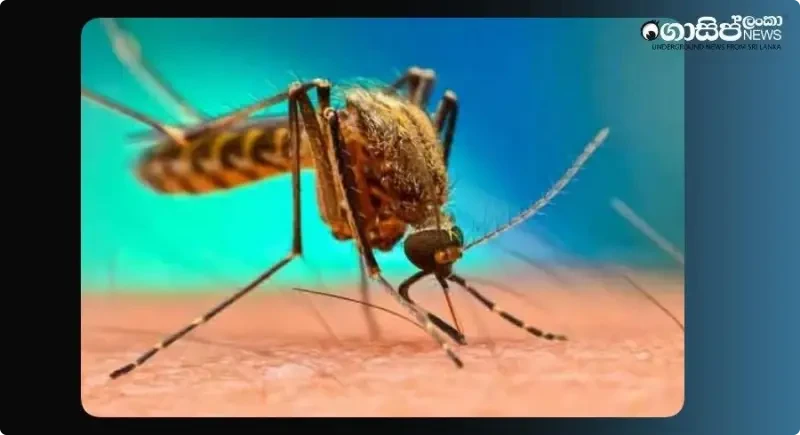
Health authorities warn that with the heavy rainfall affecting the island, there could be a rapid increase in mosquito-borne diseases such as dengue, filariasis, and malaria. Emphasizing this at a special press conference held on the 12th at the Ministry of Health and Mass Media auditorium to raise public awareness, Community Medical Specialist Dr. Prashila Samaraweera of the National Dengue Control Unit stated that 27,754 dengue patients and 14 deaths have been reported in the country so far this year.
These dengue patients have been reported from all 25 districts of the island, with 50% of the total patients being reported from the Western Province, which is noteworthy. The highest number of patients has been identified from Colombo, Gampaha, Matara, Galle, Ratnapura, Kalutara, and Kandy districts. The doctor further pointed out that with the activation of monsoon rains, the risk of disease spread has further increased, and this year shows a clear increase in dengue prevalence compared to last year.
A point that particularly needs attention here is that there is a higher tendency for mosquitoes to breed in schools, religious places, workplaces, as well as government and private institutional premises, rather than in homes. Dr. Prashila Samaraweera further stated that if symptoms such as high fever, body aches, headache, vomiting, nausea, and red spots on the skin are present, one should immediately consult a qualified doctor without delay, and that the public can easily control this situation by identifying and destroying mosquito breeding sites in their surroundings.
Dr. Prasanga Serasinghe, Director of the Filariasis Control Program, who also participated in the press conference, stated that although Sri Lanka received certification from the World Health Organization in 2016 as a country that has eliminated filariasis as a public health problem, this does not mean the disease is completely absent from the country. The disease remains at a very low level, and a small number of patients are still reported through continuously operating surveillance processes. In the past year 2025 alone, a total of 68 filariasis patients were identified, comprising 34 local patients and 34 foreign workers who came to work in the country.
Unlike dengue and malaria, filariasis is not reported from all parts of the island; it is prevalent only in the districts of Hambantota, Matara, Galle, Kalutara, Colombo, Gampaha, and Kurunegala. The director stated that filariasis can be completely cured with proper treatment and also explained that disease-carrying mosquitoes can be controlled by keeping the surrounding environment and water sources clean.
Community Medical Specialist Dr. Arun Kumara of the Malaria Control Program, speaking at the event, stated that although Sri Lanka has been considered a country that eliminated malaria since 2016, there is a high risk of the disease re-entering the country through individuals arriving from foreign countries. Therefore, the doctor made a special request to the public that anyone arriving in the country from a foreign country should arrange to undergo the relevant malaria test.