![Gossip Lanka News [English]](https://blogger.googleusercontent.com/img/a/AVvXsEhYm2aFFq-bIW1nWX-RrqnPFoIsVos6_VCVz8BpLt0QJi55GNXHXC2fugeRvL0qUStEuCfs7Sfu6ZiSlhrkldxfGuE_wzy5gitY6rMZ2KSi8VBbGvkgXLks37RwZV-4-HKbWiNLRxB8C_r1e4z3mpxFTMPDJPEADoG8E-bZteWFipeD5KNGbjvCfqEfKw=s300 "Gossip Lanka News [English]")
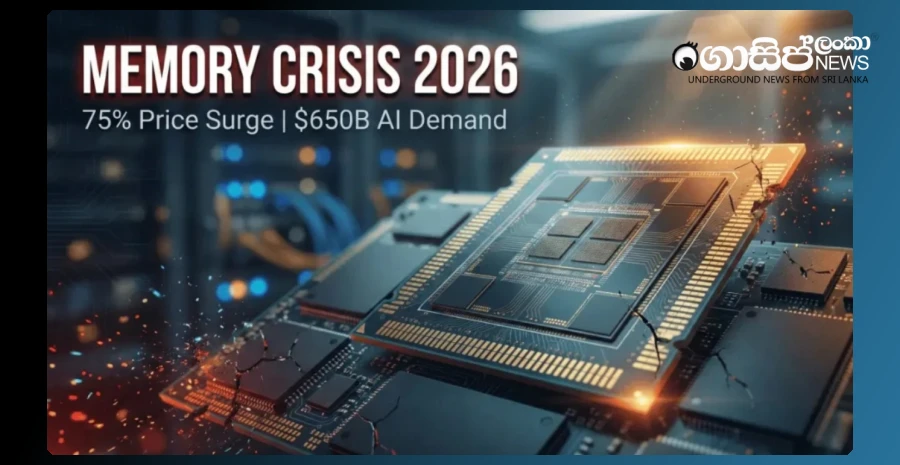
Due to a global memory chip (DRAM and NAND flash) shortage in 2026, prices of devices from Apple, Samsung, Xiaomi, Google Pixel, and leading computer manufacturers are rapidly increasing. Industry analysts like IDC and Counterpoint Research confirm that this is not merely speculation but a real crisis that has delivered a 'tsunami-like shock' to the consumer electronics supply chain.
Francisco Jeronimo of IDC describes this as a tsunami-like shock originating from the memory chip supply chain. As a result, Apple device prices have already increased by $100 to $400 above their normal levels.This crisis, which began to intensify in late 2025, is primarily caused by the exploding demand for Artificial Intelligence (AI) data centers. It is expected that massive tech companies will spend $650 billion on AI computing in 2026 alone, an 80% increase compared to the previous year. Consequently, manufacturers like Samsung, SK Hynix, and Micron have allocated most of their production capacity to high-profit AI chips (HBM). Data centers, which historically used only about 35% of global memory chip production, are now consuming 70% of the total output, pushing the consumer market into a severe crisis.
This massive transformation has severely restricted the supply of chips for ordinary electronic devices. According to IDC data, DRAM supply growth in 2026 will be a historically low 16%, and NAND growth will be 17%. As a direct result, DRAM prices, which rose by approximately 60% in 2025, are increasing by another 30% to 90% in the first quarter of 2026. This has led to severe cost problems for smartphone manufacturers, with component costs for low-end phones increasing by 25%, and for mid-range and high-end phones by 15% and 10% respectively.
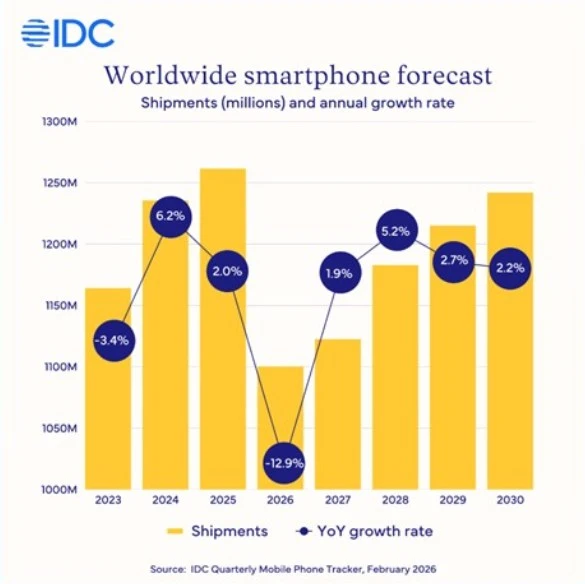
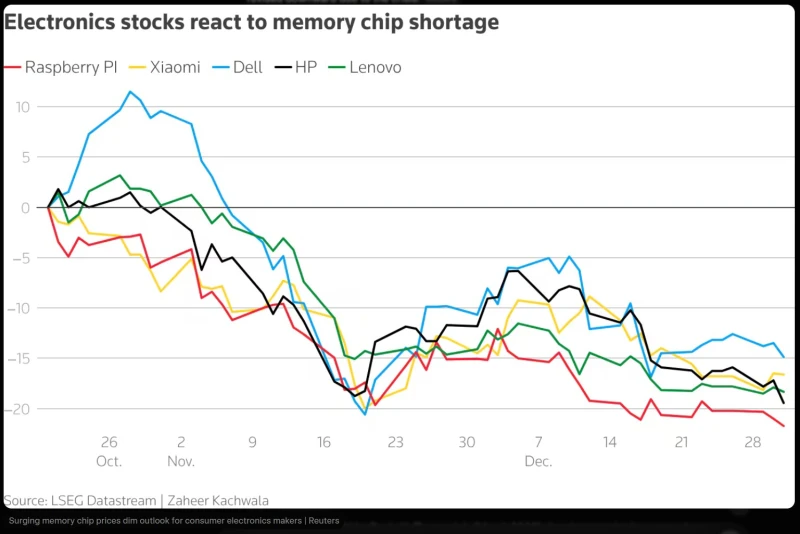
The impact on the overall market is extremely serious. IDC forecasts that global smartphone shipments will shrink by 12.9% in 2026, marking the largest decline in recorded history. The average selling price of a smartphone is expected to rise to a record high of $523. The market for phones priced between $100 and $400 has been hit hardest by this crisis, with some low-end models even facing the risk of disappearing from the market entirely. Concurrently, production activities of computer manufacturers like HP, Lenovo, and Dell, as well as automotive companies like Tesla, have been delayed, and a rapid decline in the stock prices of these companies is also observed.
Even companies like Apple, with massive supply agreements and financial strength, are not entirely immune to this crisis. Apple CEO Tim Cook acknowledged in early 2026 that memory chip prices would significantly increase and that the company is currently chasing suppliers. Prices for the new M5 MacBook models released in March 2026 have already risen. However, Apple is trying to absorb the increasing costs as much as possible to keep the starting prices of its upcoming iPhone 18 series stable, and they may continue to dominate the market in the future.
On the other hand, Android manufacturers like Samsung, Xiaomi, and Google Pixel face a tougher challenge. Samsung has increased the prices of memory chips used in its smartphones, leading to a 15% to 20% increase in production costs for mid-range and low-end Galaxy phones. Chinese companies like Xiaomi and TCL will have to either reduce the number of phone models in their $400-600 category or pass on a price increase of 10% to 20% directly to consumers.
Experts warn that this is not a short-term problem but a structural change in the entire technology industry. Nabila Popal of IDC describes this situation not as a mere temporary setback but as a 'structural reset.' Industry experts, including the CEO of Synopsys, predict that this chip shortage will persist until 2027 and possibly even 2028, even with new factories scheduled to open in the coming years. Consequently, although companies are adopting alternative strategies such as entering new long-term agreements and limiting high-tech features to only expensive phone models, it will take several more years for prices in the tech world to return to normal.