![Gossip Lanka News [English]](https://blogger.googleusercontent.com/img/a/AVvXsEhYm2aFFq-bIW1nWX-RrqnPFoIsVos6_VCVz8BpLt0QJi55GNXHXC2fugeRvL0qUStEuCfs7Sfu6ZiSlhrkldxfGuE_wzy5gitY6rMZ2KSi8VBbGvkgXLks37RwZV-4-HKbWiNLRxB8C_r1e4z3mpxFTMPDJPEADoG8E-bZteWFipeD5KNGbjvCfqEfKw=s300 "Gossip Lanka News [English]")
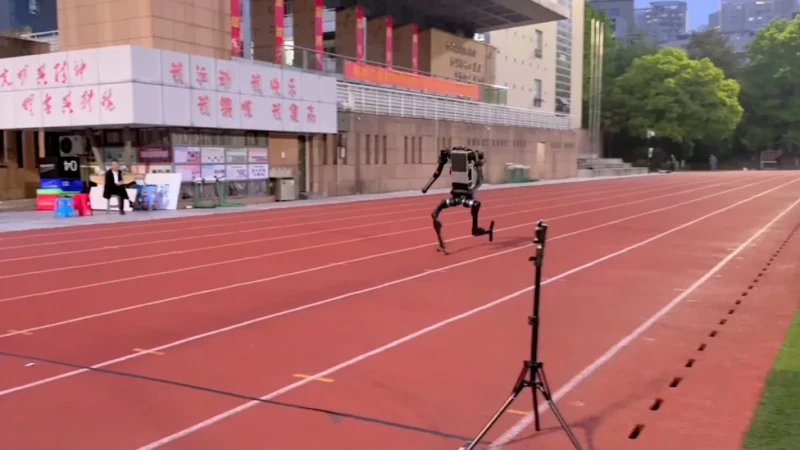
Do you know that the image of slow-moving, heavy robots etched in your mind is now completely outdated?
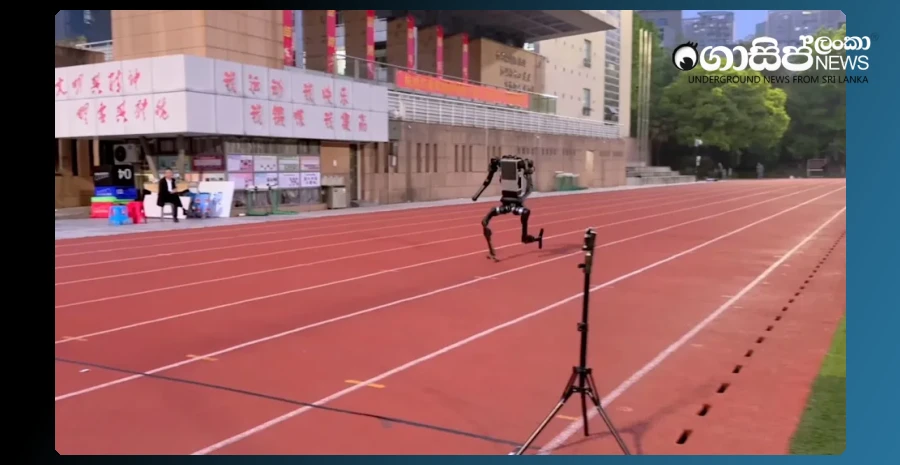
The humanoid robot named H1, created by China's Unitree Robotics company, recently recorded a speed of 10 meters per second (22.4 miles per hour) during a test run. This is so fast that it is powerful enough to complete a 100-meter distance in exactly 10 seconds, and this robot has managed to come very close to the world record of 10.44 meters per second held by the world-renowned short-distance runner Usain Bolt. This event, which feels like an ordinary family car suddenly competing head-to-head with a Formula 1 racing car, is a massive turning point that fundamentally changes our understanding of what machines can do.
Astonishing competitors in the Western world, the speed of this H1 robot has increased by 200 percent in a short period of just 17 months, which is truly remarkable. This 62-kilogram robot, which traveled at an average speed of 3.3 meters per second in March 2024, has now reached the speed of a world-class athlete. According to robotics researchers, this massive leap is not merely due to changes in hardware, but rather the result of significant advancements in software and control technology.
This situation is further heating up because this is not merely the achievement of one company. Another Chinese company named MirrorMe Tech also claims to have previously recorded a similar speed with its 'Bolt' robot, creating a cold war between companies. However, Unitree is not prepared to stop merely setting speed records. They are ready to introduce an R1 robot model, which consumers can purchase for around US$4,000, to the North American and European markets via AliExpress. Accordingly, humanoid robots, which were previously limited to laboratories and the wealthy, will soon become a part of ordinary people's daily lives.
However, there are a few other things you should consider before buying a robot for your household tasks. Just because a robot can run extremely fast over short distances does not mean it is entirely suitable for practical life. Many issues such as battery life, navigating obstacles on the path, and performing complex real-world tasks flawlessly still remain challenges for robotics technology.
One day in the future, your robot assistant will be able to run to the store faster than you; but it still has a long way to go to walk without falling flat on its face on the street and to be sensitive enough to pick a perfectly ripe avocado from the market.