![Gossip Lanka News [English]](https://blogger.googleusercontent.com/img/a/AVvXsEhYm2aFFq-bIW1nWX-RrqnPFoIsVos6_VCVz8BpLt0QJi55GNXHXC2fugeRvL0qUStEuCfs7Sfu6ZiSlhrkldxfGuE_wzy5gitY6rMZ2KSi8VBbGvkgXLks37RwZV-4-HKbWiNLRxB8C_r1e4z3mpxFTMPDJPEADoG8E-bZteWFipeD5KNGbjvCfqEfKw=s300 "Gossip Lanka News [English]")
Real change in Iran will not come from aerial bombardments, but instead from the millions of Iranian people who have already risen up against the regime multiple times and are determined to change it from within. The fact that the regime did not collapse even in the face of a 12-day war with Israel, the assassination of the Supreme Leader and many key commanders and figures, and a severe weakening of the power structure, clearly confirms what the Iranian resistance movement has been saying for a long time.
Under the current circumstances, the war has become an obstacle to popular uprisings, and it is difficult to expect people to take to the streets in protest when the entire country is at risk of bombardment and they are focused on protecting their families and children. In such a context, where the people have faced repression and massacres by the regime in recent years, the authorities are trying to rebuild their lost support through this war atmosphere, by reiterating the slogan 'We will continue the war until the end,' even as the country heads towards destruction.
The Fars news agency reports that the regime has intensified the militarization of urban areas concurrently with the war, indicating that security patrols on the streets have tripled. In addition to police forces and Revolutionary Guards, paramilitary groups such as the Fatemiyoun Brigade, composed of Afghan mercenaries of the Revolutionary Guards, and the Zeynabiyoun, composed of Pakistani mercenaries, have also been mobilized to strengthen the repressive apparatus. These groups patrol the streets at night with the aim of creating an atmosphere of intimidation and preventing social protests.
In this situation, Iranian Police Chief Ahmad-Reza Radan openly declared that if anyone takes to the streets to protest at the enemy's behest, they will not be considered mere protesters but will be treated as enemies. He further stated that all his forces have their fingers on the trigger to protect the revolution and support the people and the homeland. Additionally, General Salar Abnoush, a member of the regime's parliamentary security committee, also declared on March 5 that anyone who takes to the streets to protest will be targeted and attacked.
Concurrently with widespread social discontent, an organized force called 'Resistance Units,' created by the People's Mojahedin Organization of Iran, has been active within the country since 2016. This force, rooted in several provinces, is considered an operator of change within the country, and in the past year alone, this network has launched 3,000 actions against repression. These units played a crucial role in organizing and spreading protests, including national-level uprisings in January, and during that uprising, over 2,000 members of the Resistance Units went missing, but it has not yet been revealed how many of them were arrested or killed.
One of the most significant recent turning points was the attack by Resistance Units on Ali Khamenei's headquarters, one of the regime's most secure command centers, on February 23, before it was destroyed by a bombing on February 28. Of the 250 militants who participated in this operation, which the regime made great efforts to conceal, 82 were either killed or arrested.
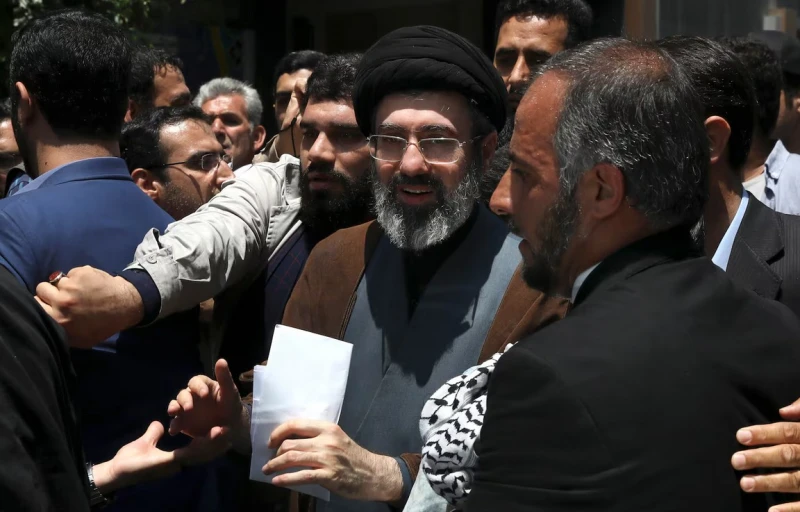
Mojtaba Khamenei, son of the deceased Supreme Leader, has been appointed as his successor, clearly demonstrating the political crisis faced by the regime as a system calling itself a 'republic' transforms into a hereditary power structure. Having supported his father for decades in internal repression and creating crises in the region, he announced in his very first message the closure of the Strait of Hormuz and the opening of new war fronts. However, a regime that was already nearing its end under Ali Khamenei will certainly not be saved by the arrival of his weaker version. The appointment of Khamenei's son as Supreme Leader truly confirms that this regime has no other option left for its continued existence.